


Small group tours have become a go to option for travelers who want a ready made itinerary, built in social life, and local expertise without spending weeks planning every detail. Among the biggest names in the space, G Adventures stands out, with hundreds of itineraries across all seven continents and a strong focus on responsible travel. But with so many competing tour companies and rising travel costs, is G Adventures actually worth booking for your next trip?
Get the latest updates straight to your inbox!
Who G Adventures Is And How Their Trips Work
G Adventures is a Canadian based small group tour operator founded in 1990. It has grown into one of the largest adventure travel companies in the world, offering more than 700 itineraries in over 100 countries. Trips range from classic two week highlights tours, like a “Best of Thailand” route from Bangkok to Chiang Mai and the islands, to more niche options such as Arctic expedition cruises or trekking heavy itineraries in Patagonia.
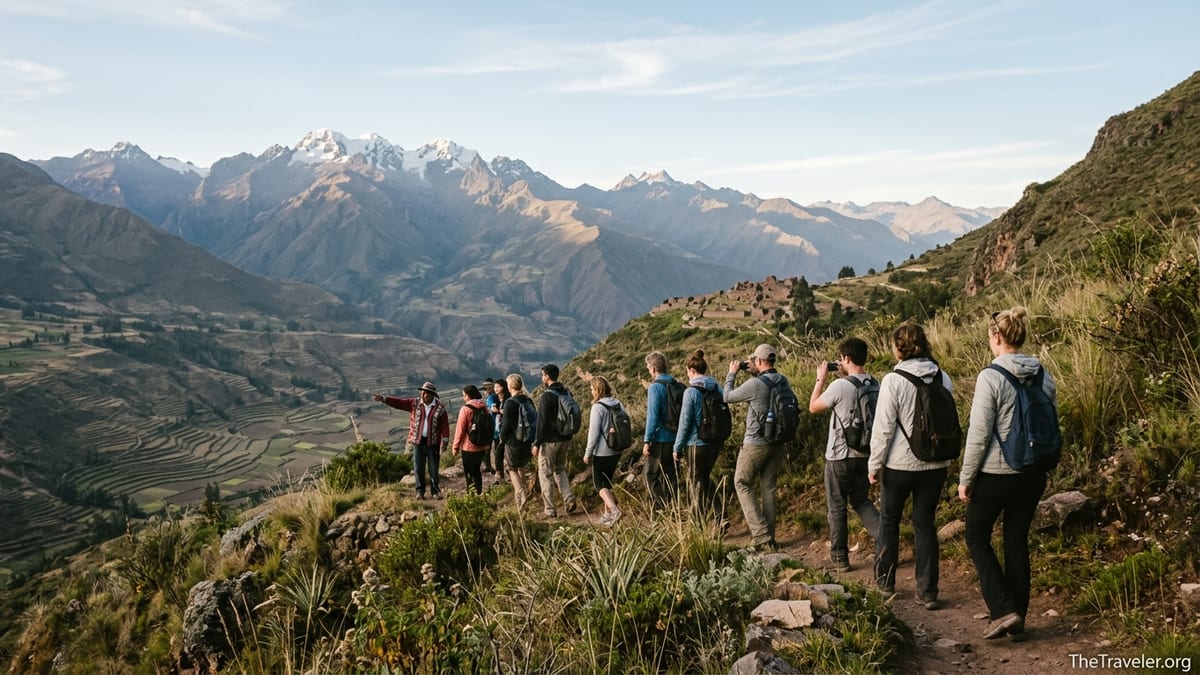
Groups are intentionally small compared with large coach operators. Company materials describe average group sizes of around 12 travelers on most land tours, with a posted maximum that typically falls between 12 and 16, depending on the itinerary. In practice, that means your Peru “Machu Picchu Adventure” might run with 10 people in shoulder season, while a summer “Highlights of Japan” or “Costa Rica Quest” could be nearly full.
Every trip is led by a local guide that G Adventures calls a Chief Experience Officer, or CEO. These guides handle logistics, coordinate transport and accommodations, and often lead walking tours or organize optional activities. Many travelers report that a strong CEO can make the difference between a good trip and a great one, particularly in complex destinations such as Morocco, Vietnam, or multi country overland routes through southern Africa.
The itineraries are usually a mix of included activities and free time. A typical 10 day tour might include city walking tours, a few key site entries such as Machu Picchu or Angkor Wat, and some included meals in more remote regions. Optional add ons, from cooking classes in Hoi An to hot air ballooning in Cappadocia, are sold on the ground and can noticeably increase your total spend, something budget conscious travelers should factor into their decision.
What A G Adventures Trip Actually Costs
At first glance, G Adventures prices can look appealing compared with private itineraries or luxury group tours, but it is important to look beyond the headline figure. In mid 2026, many classic itineraries in popular regions price out in the range of roughly 150 to 300 US dollars per day, not including airfare. For example, a week long “Costa Rica Quest” in the greener seasons often lands in the mid four figure range per person, while a 14 day “Highlights of Morocco” or “Explore Vietnam” itinerary can edge toward 3,000 dollars or more depending on departure date.
Marine trips and expedition cruises sit at a higher price point. A Galápagos small ship itinerary, for instance, can easily climb above 5,000 dollars per person for roughly a week, while polar expeditions to Antarctica are in line with industry norms in the five figure range. Those prices usually include a larger proportion of meals and activities, but they put G Adventures squarely in the “trip of a lifetime” bracket rather than an impulse buy.
Accommodation categories shape value perception. Many of the company’s “Classic” trips advertise comfortable mid range hotels and guesthouses, though travelers frequently note that standards vary from city to city. Some itineraries, particularly in Southeast Asia and Latin America, include a mix of small hotels, homestays, and overnight trains. Newer “Solo ish” adventures cater to solo travelers who want their own room without a huge single supplement, while the long running “18 to Thirtysomethings” style keeps costs down with more basic lodging and shared rooms.
Travelers considering whether G Adventures is worth it should run a simple comparison: price out the same or similar route independently, including mid range hotels, city to city transport, and a few guided day tours. In many places, such as Japan or parts of Western Europe, independent travelers can often undercut the package price by handling logistics themselves. In regions with limited infrastructure or more complex logistics, like remote parts of Peru, southern Africa safaris, or overland routes in Central Asia, the gap often narrows and the convenience factor becomes a larger part of the value equation.
Strengths: Convenience, Community, And Responsible Travel
For many travelers, the greatest strength of G Adventures is convenience. A first time visitor to South America who books a 10 day Peru itinerary that includes Lima, Cusco, the Sacred Valley, and Machu Picchu is effectively outsourcing everything from train tickets to site entry times and luggage transfers. The same holds true for a traveler who wants to see multiple Balkan countries in one trip or link several national parks on a safari route in Kenya and Tanzania without deciphering regional bus networks or domestic flight schedules.
Another major draw is community. Small group tours naturally attract solo travelers and friends traveling together who want an instant social circle. Recent travelers posting about trips in Japan, Costa Rica, and China frequently describe making close friendships on tour and continuing to travel with fellow group members afterward. For many, this social aspect alone justifies the premium over a fully independent trip, especially for those who might otherwise hesitate to travel solo.
G Adventures also emphasizes responsible and community based tourism. The company describes itself as a social enterprise and highlights partnerships that channel spending into local businesses and community projects, often through its non profit partner focused on community tourism initiatives. On the ground, this can mean staying in family run guesthouses in rural Morocco, visiting a women’s weaving cooperative in Peru, or joining a community hosted meal in a village outside Siem Reap rather than dining exclusively in large international hotels.
For travelers who want to feel that their money supports local communities rather than bypassing them, this focus can be a significant plus. It also distinguishes G Adventures from large coach operators that rely more heavily on chain hotels and fixed restaurant contracts. However, as with any responsible travel claims, the on the ground experience can vary by tour, guide, and destination, so travelers who prioritize this should read recent traveler accounts for the specific itinerary they are considering.
Trade Offs And Common Complaints Travelers Report
Despite strong overall ratings on many independent review platforms, G Adventures is not without its critics. One recurring theme in recent traveler reports is inconsistency in guide quality. Many reviewers rave about CEOs who went above and beyond, especially on trips in Costa Rica, southern Africa, and Peru, citing guides who handled logistics smoothly, shared deep local knowledge, and made shy travelers feel included. Others describe less engaged guides, sometimes in Japan or parts of East Asia, who offered minimal assistance beyond basic logistics or seemed more focused on their own routines than on group cohesion.
Another pain point is transparency around costs and optional activities. Some travelers report frustration at discovering how many experiences on a given itinerary are labeled as optional once on the ground, from cooking classes in Southeast Asia to desert excursions in Morocco. While G Adventures typically outlines what is included in advance, the sheer number of options and the on tour sales dynamic can leave some feeling that the base price understates the real cost if you want to join most group activities.
Post trip communication and feedback also attract mixed reviews. A few detailed accounts from travelers who completed multi day tours in North Africa in 2026 describe feeling pressured to give perfect scores on company surveys because guides explained that anything less could negatively affect their performance metrics. Those travelers also reported difficulty getting nuanced critical feedback acknowledged when they contacted customer service after returning home, which left them questioning how seriously the company takes constructive criticism.
Travelers with specific accessibility needs or sensory preferences sometimes find small group dynamics challenging. Deaf travelers, for example, have discussed needing to self advocate heavily on tour, since interpreters are not provided and information is delivered verbally by the CEO. Similarly, travelers who are introverted or neurodivergent occasionally find the constant group environment tiring, especially on fast paced itineraries with multiple early starts, long transit days, and shared meals.
Flexibility, Safety Nets, And Booking Policies
When you are deciding if a tour company is worth booking, flexibility and protection if plans change are almost as important as the price. G Adventures currently markets a “G Got You Covered” promise that includes several policies designed to reduce booking risk. One headline feature is the Lifetime Deposit concept: if you cancel, your initial deposit can be used as a credit on a future trip, transferred to another traveler, or even donated, and it does not expire. This is appealing for those booking long in advance in an uncertain world, though it is still money tied to the company rather than refunded to your bank account.
The company also offers the ability to change many bookings up to a certain number of days before departure, often around 60 days for standard tours and 90 days for expedition cruises or higher end itineraries. The specifics vary, and fare differences can apply, so it is essential to read the current terms for your exact departure rather than assuming full flexibility. Many travelers who booked during volatile periods in recent years have appreciated having options to shift dates without losing their entire investment.
G Adventures promotes guaranteed departures on a large number of its tours, which reduces the chance that your trip will be canceled due to low numbers at the last minute. For someone who has already booked international flights to join a “Highlights of India and Nepal” or “Best of the Balkans” itinerary, that guarantee can provide real peace of mind. That said, not every single date is guaranteed, and a few travelers still report late cancellations or consolidations in very low demand periods, so it is wise to double check your status before locking in nonrefundable flights.
As with any organized tour, comprehensive travel insurance remains essential. Particularly on more active trips, such as multi day treks in the Andes or cycling heavy itineraries, some G Adventures tours require proof of insurance that covers medical care and emergency evacuation. Even when it is not mandatory, most experienced travelers treat insurance as part of the total cost of joining a group trip, not an optional extra.
How G Adventures Compares To Other Tour Companies
To understand whether G Adventures is worth booking, it helps to see how it compares with its closest competitors. In the small group adventure space, many travelers cross shop G Adventures with companies such as Intrepid Travel, as well as more regional or niche operators. Across a range of popular itineraries, prices among these companies tend to be broadly similar, often clustering in the same 150 to 300 dollars per day range in mid 2026, with differences emerging more in style and level of comfort than in raw cost.
G Adventures leans into a slightly more informal, social atmosphere on many of its departures, especially in the “18 to Thirtysomethings” and “Solo ish” lines, which appeal to younger or solo travelers looking for connection. Its classic line aims at a broader age range, and some departures see groups spanning from people in their 20s to travelers in their 70s. By contrast, some rival companies segment more tightly by comfort level or age, such as explicitly “premium” tours with upgraded hotels and fewer long transport days.
In terms of responsible travel credentials, G Adventures is widely recognized as one of the larger operators that foregrounds community tourism, though it is not alone in this space. Many itineraries include visits to community based projects or locally owned enterprises that are positioned as core to the experience rather than optional add ons. For travelers who want to know that at least some share of their trip cost supports local initiatives, this can be a major tick in G Adventures’ favor, though those who prefer fully private or luxury experiences may be less concerned by this distinction.
Customer service experiences vary widely across companies, and G Adventures is no exception. For every traveler who reports quick, helpful responses and smooth rebooking during disruptions, there is another who describes long chat queues or form letter responses when trying to raise concerns. This variability is typical across the sector, and underscores the importance of reading recent, itinerary specific reviews rather than relying solely on brand reputation or aggregate scores.
Who G Adventures Is Best For (And Who Should Think Twice)
G Adventures tends to work best for travelers who value logistics handled for them, enjoy meeting new people, and are comfortable with a moderate level of comfort rather than luxury. A late 20s solo traveler booking a two week Southeast Asia highlights tour, a couple in their 40s joining a small group safari through southern Africa, or a retired traveler who prefers not to navigate public transport in a country where they do not speak the language are all profile types that often come away feeling the experience was worth the price.
It can also be a strong choice for first time visitors to regions where independent travel requires more research and resilience. For example, someone planning their first trip to Peru who wants to combine Lima, Cusco, the Sacred Valley, and Machu Picchu without worrying about train tickets and altitude logistics may find a G Adventures itinerary good value. Likewise, travelers curious about destinations such as Jordan, Morocco, or overland routes through multiple Balkan countries can benefit from the safety net and structure a guided group provides.
On the other hand, G Adventures may not be the ideal fit for everyone. Highly independent travelers who enjoy crafting their own itineraries, choosing every hotel, and making spontaneous changes often find structured group days restrictive. Those who are extremely sensitive to group dynamics or require a high level of predictability in daily schedules may struggle with the human factor inherent in small group travel, where personalities, energy levels, and social norms differ widely from one departure to the next.
Travelers expecting consistent hotel standards at a four or five star level should also think carefully. While some G Adventures trips do partner with comfortable boutique properties, many itineraries mix in simpler guesthouses, overnight buses or trains, and occasional homestays, especially in the more budget friendly styles. If you know you sleep poorly in basic lodging or are unwilling to compromise on comfort, you may be happier with a more upscale operator or a tailor made private itinerary, even at a higher price point.
The Takeaway
So is G Adventures worth booking for your next trip? The answer depends less on the company in the abstract than on your travel style, expectations, and the specific itinerary you are considering. For travelers who want a sociable, small group experience with logistics handled, are comfortable with mid range accommodations, and value a measure of responsible travel built into their plans, G Adventures can offer good value and memorable experiences across a wide spread of destinations.
Where things become less compelling is for highly independent travelers who enjoy planning, those expecting consistently upscale hotels at mid range prices, or anyone who would find the variability in guides, group dynamics, and optional extra costs frustrating. In those cases, building your own itinerary or choosing a different style of operator may better match your priorities.
The most practical approach is to treat G Adventures like any significant purchase. Narrow down a specific trip, then read a range of recent reviews for that exact itinerary, paying special attention to comments on guide quality, pace, accommodation, and hidden costs. Compare the tour’s price against a realistic independent version of the same route, including your time and stress in planning, not just the raw numbers.
If, after that comparison, the structure, safety net, and social side of a small group tour feel worth the premium, G Adventures can be a solid choice for your next adventure. If not, you will still have gained a clearer sense of how you like to travel and what you truly value in a trip, which is ultimately the best compass for planning journeys that feel right for you.
FAQ
Q1. Is G Adventures a good option for solo travelers?
Yes, many solo travelers choose G Adventures because the small group format provides instant company and shared experiences. The company also offers “Solo ish” departures that are marketed specifically to solo travelers and typically include options for single rooms at a lower premium than many traditional tours.
Q2. How big are G Adventures tour groups on average?
Most land based G Adventures tours aim for small group sizes, often averaging around a dozen travelers, with maximums that usually fall between about 12 and 16 people. Expedition cruises and some marine trips can be larger due to ship capacities but still operate on a small ship model compared with mainstream cruises.
Q3. Are G Adventures trips worth the price compared with planning my own?
It depends on the destination and your travel style. In regions with complex logistics or limited infrastructure, such as multi country safaris or remote trekking routes, the convenience, safety net, and local guidance can justify the premium. In easy to navigate destinations like parts of Western Europe, independent travelers can often build a similar itinerary for less if they are willing to do the planning.
Q4. What level of comfort should I expect on a G Adventures tour?
Most G Adventures trips sit in the mid range category, using a mix of comfortable but simple hotels, guesthouses, and sometimes homestays or overnight trains. Newer lines such as premium style partnerships feature higher comfort, while “18 to Thirtysomethings” trips keep costs lower with more basic lodging and shared rooms. Reading the detailed trip notes for your specific itinerary is the best way to gauge the comfort level.
Q5. How reliable are G Adventures guides?
Many travelers praise their Chief Experience Officers for being knowledgeable, organized, and fun, especially in adventure oriented destinations. However, as with any large operator, there is variability, and some recent reviews mention less engaged or less organized guides on certain routes. Looking for recent feedback on the exact itinerary you are booking gives the best indication of what to expect.
Q6. Does G Adventures really focus on responsible and community based travel?
Responsible travel is a core part of the brand identity, and many itineraries incorporate visits to community run projects, local cooperatives, or family owned guesthouses. While the depth of impact varies by destination and trip, travelers who prioritize supporting local communities generally find that G Adventures does more than many mainstream tour operators in this area.
Q7. What is G Adventures’ cancellation and change policy like?
G Adventures promotes flexible booking features such as Lifetime Deposits and the ability to change many bookings a set number of days before departure, often around 60 days for standard tours. Exact terms, fees, and deadlines can vary by trip type, so it is essential to check the current policy for your specific departure and consider travel insurance for additional protection.
Q8. Will I have free time or is every day tightly scheduled?
Most G Adventures itineraries balance planned activities with pockets of free time. You might have a morning city tour followed by a free afternoon, or a structured multi day trek followed by a slower day in a town. Fast paced trips and those covering long distances will naturally feel more scheduled, so choosing an itinerary that matches your preferred pace is important.
Q9. Is G Adventures suitable if I have dietary restrictions or accessibility needs?
Many travelers with dietary restrictions report that guides and local partners do their best to accommodate needs, especially for common requests such as vegetarian or gluten free meals, though options can be limited in remote areas. Accessibility varies widely by destination and trip style, and many active trips are not suitable for travelers with significant mobility limitations, so it is critical to discuss your needs with the company before booking.
Q10. How do I know if a specific G Adventures tour is right for me?
Focus on three things: the detailed day by day itinerary, the stated travel style and physical rating, and a broad sample of recent reviews for that exact trip. If the pace, comfort level, and past traveler experiences align with your expectations and budget, that itinerary is more likely to be a good fit than choosing based only on destination or headline price.