


More news on this day
Germany’s tourism giant TUI is sharpening its focus on Asia-Pacific, and Cambodia is emerging as a key beneficiary, with plans for a TUI SUNEO-branded opening in Phnom Penh aligning with a clear uptick in European visitor interest and a rapid build-out of the country’s travel infrastructure.
Get the latest news straight to your inbox!
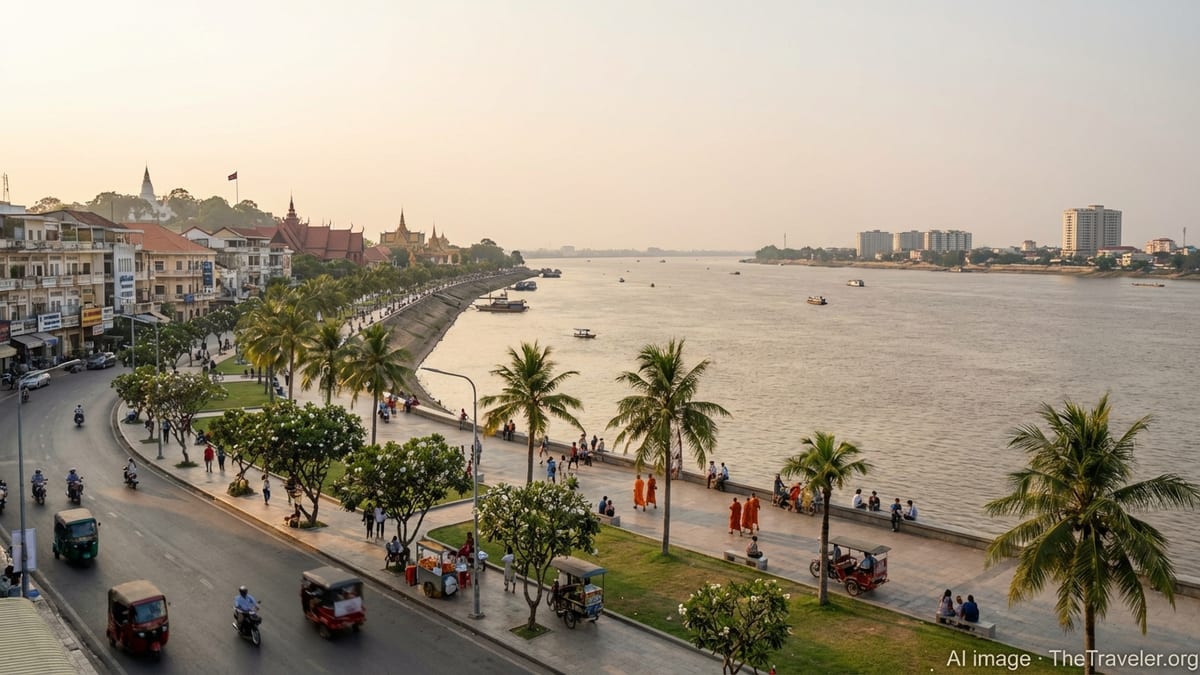
German Tourism Powerhouse Eyes Cambodia’s Capital
Publicly available information on TUI Group’s Asia strategy shows the company accelerating its hotel development pipeline in the region, using its TUI Blue, Riu, Robinson and TUI SUNEO brands to reach different customer segments. Recent announcements highlight new TUI SUNEO openings and signings across Asia, including China and Vietnam, positioned as value-focused, all-inclusive or semi-inclusive hotels that target cost-conscious but experience-driven travelers.
Within this broader push, hospitality analysts and regional media are increasingly flagging Phnom Penh as a logical next step for a TUI SUNEO launch. The Cambodian capital offers a combination of rising air connectivity, an expanding midscale hotel scene and growing interest from European travelers, especially from Germany and neighboring markets. Industry commentary notes that a TUI SUNEO Phnom Penh property would likely focus on urban discovery, short city breaks and twin-center itineraries that combine the capital with the country’s coastal or heritage destinations.
While TUI has not yet detailed a specific Phnom Penh opening date, the brand’s pattern of clustering properties around emerging city and resort hubs in Asia is seen by observers as a clear signal. A move into Cambodia’s capital would extend the company’s Asia-Pacific footprint beyond its more established strongholds in Thailand and China, reinforcing Germany’s role as a driver of outbound European tourism to the region.
For the hospitality sector, the prospect of a TUI SUNEO in Phnom Penh is significant because of the brand’s distribution power. TUI’s German and wider European customer base, combined with its tour operating, airline and digital platforms, can rapidly shift demand toward new urban destinations, often reshaping booking patterns within a few seasons.
European Arrivals to Cambodia Gain Momentum
Tourism statistics issued by Cambodia’s Ministry of Tourism show a steady recovery in international arrivals, with 2024 and 2025 data indicating a strong rebound from the pandemic slump. Europe remains a smaller source market compared with Asia and the Pacific, but it is one of the fastest-growing segments, delivering several hundred thousand visitors annually and generating above-average spend per trip.
Detailed ministry reports on 2025 arrivals highlight Germany among the leading European source markets, alongside France and the United Kingdom. The numbers point to consistent year-on-year growth in German visitors, reflecting both increased air connectivity via major hubs and the enduring appeal of Cambodia’s cultural and nature-based attractions. Industry-focused coverage notes that European travelers typically stay longer and are more likely to combine multiple destinations inside the country, from Phnom Penh and Siem Reap to coastal areas like Sihanoukville and the southern islands.
European interest is also benefiting from a shift in travel preferences toward more “authentic” and less crowded destinations in Southeast Asia. Cambodia’s positioning as a more low-key alternative to Thailand and Vietnam resonates with a segment of German and Northern European travelers who are looking beyond traditional mass-market beach holidays. This aligns closely with TUI’s more recent emphasis on experiential content, multi-center itineraries and curated excursions that go beyond the main gateways.
In this context, a TUI SUNEO Phnom Penh launch would give European visitors a branded, package-friendly base in the capital, potentially extending average length of stay and smoothing seasonality for local hotels and service providers.
Infrastructure Upgrades Transform Cambodia’s Connectivity
One of the main reasons global hospitality operators are paying closer attention to Cambodia is the pace of infrastructure development. A new international airport for Phnom Penh, Techo International Airport, has recently opened to commercial traffic, supported by a high-profile inauguration and positioned as a modern hub designed to handle future growth in passenger numbers. Aviation and travel trade reporting describes the facility as significantly expanding capacity compared with the city’s previous airport, with room for additional long-haul routes.
European access is improving as well. Airlines are gradually expanding their Southeast Asia networks to include Phnom Penh and other Cambodian gateways, often using regional hubs in the Middle East and East Asia to funnel travelers from Germany and the wider European Union. Announcements of new or upcoming routes, including long-haul links via Istanbul and Gulf carriers, are reinforcing the perception that Cambodia is becoming easier to integrate into multi-country Asia itineraries.
On the ground, new and upgraded ports, roads and tourism-related infrastructure are beginning to knit together Cambodia’s coastal, cultural and urban destinations. Reports on the tourism sector highlight recent openings such as international tourism ports and improved transport links that shorten travel times between Phnom Penh, the southern coast and border crossings. For hotel investors, this wider connectivity lowers the risk associated with committing capital to secondary cities and resort areas.
The combination of a modern capital-city airport, improving regional links and rising demand from Europe creates exactly the kind of environment that a brand like TUI SUNEO looks for when selecting new locations in Asia-Pacific, which is why investors across the hospitality value chain are tracking developments closely.
Why the TUI SUNEO Model Matters for Phnom Penh
The TUI SUNEO brand is designed around affordable, uncomplicated holidays, with a focus on inclusive meal plans, family-friendly facilities and straightforward pricing. In Europe and the Mediterranean, this model has proved effective at capturing budget-conscious travelers who still want the reliability of a major tour operator and the social atmosphere of a resort environment.
Translating this concept to Phnom Penh would mark a notable evolution in the city’s hotel mix. The Cambodian capital has seen an uptick in boutique and upscale properties over the past decade, but analysts note a relative shortage of internationally branded, value-oriented hotels that are tightly integrated into European distribution networks. A TUI SUNEO property could fill this gap by bundling flights, transfers, accommodation and excursions for German and other European guests.
The potential impact extends beyond a single hotel. Once a large tour operator establishes a dependable city base, it typically develops excursion portfolios, regional add-ons and cross-selling opportunities with beach or nature destinations. For Phnom Penh, that could mean more structured flows of visitors into nearby provinces, river cruises or overland circuits, supporting smaller operators that lack access to European markets on their own.
This is one reason hospitality watchers are monitoring any concrete steps toward a TUI SUNEO Phnom Penh launch. The move would signal confidence not only in the city’s appeal, but also in Cambodia’s regulatory environment, airport infrastructure and long-term demand from European travelers, particularly from Germany, TUI’s home market.
A Test Case for Cambodia’s Next Tourism Chapter
For Cambodia, attracting a high-profile European tour brand into its capital would underline broader efforts to diversify beyond its traditional Angkor-centric narrative. Sector reports and commentary frequently highlight the challenge of encouraging visitors to see the country as more than a one-stop heritage destination. Phnom Penh’s growing gallery, food and riverfront scenes, along with developing coastal and island offerings, are central to this repositioning.
Germany’s role is pivotal because German travelers are often early adopters of new long-haul routes and product concepts in Asia-Pacific. If a TUI SUNEO Phnom Penh opening successfully channels German and other European guests into more varied itineraries, it could help establish Cambodia as a more rounded destination in the European imagination, rather than a single-asset trip anchored solely on Angkor Wat.
At the same time, the project would test how effectively Cambodia’s new infrastructure, digital entry systems and tourism services can handle higher numbers of long-haul visitors who expect consistent standards. Recent regulatory changes such as the introduction of electronic arrival procedures and targeted incentives for tourism businesses are being closely watched by hotel groups and investors assessing the market’s maturity.
As TUI accelerates its Asia-Pacific expansion and European arrivals to Cambodia continue to climb, the anticipated TUI SUNEO Phnom Penh launch sits at the intersection of two powerful trends. The outcome will offer important signals for global hospitality players weighing where to place their next bets in Southeast Asia.