


More news on this day
Hundreds of passengers were left facing missed connections and unexpected overnight stays as live tracking data on June 9 indicated 228 delayed flights and two cancellations affecting Lufthansa, easyJet, KLM and British Airways services across Germany’s key hubs in Berlin, Munich, Frankfurt, Hamburg and Stuttgart.
Get the latest news straight to your inbox!
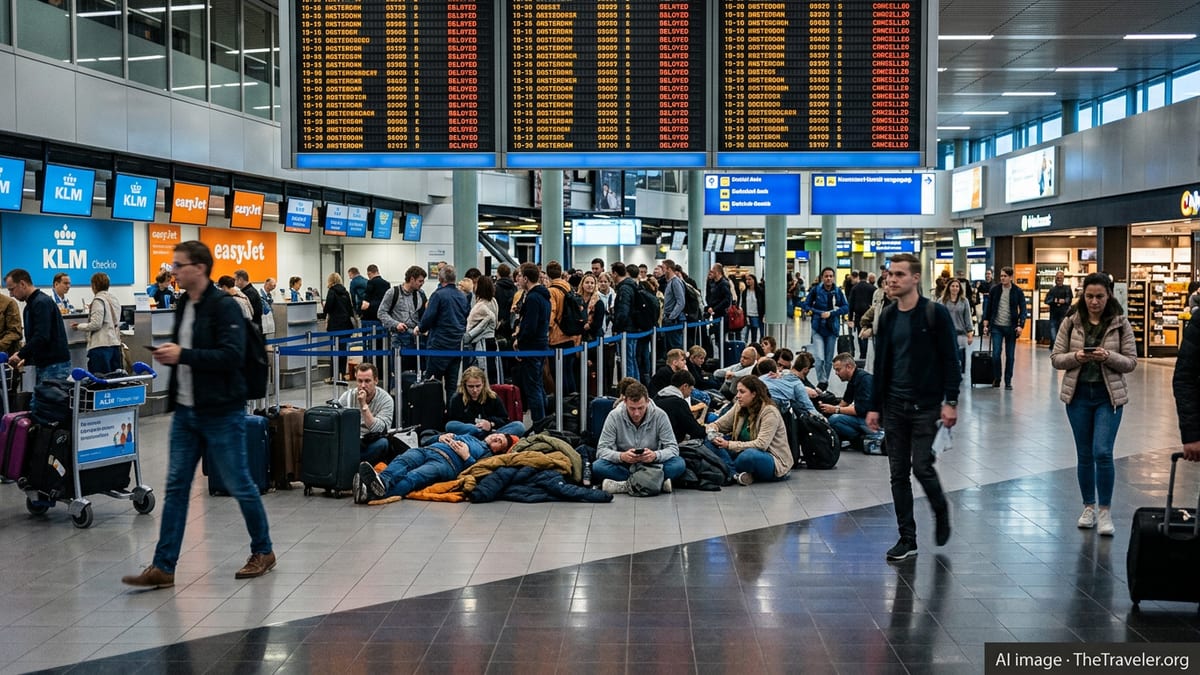
Wide Disruptions Across Germany’s Busiest Airports
Publicly available flight-tracking boards for Sunday, June 9, show a fresh wave of operational disruption at major German airports, with 228 flights running late and at least two services cancelled on routes operated by or involving Lufthansa, easyJet, KLM and British Airways. The pattern of delays stretches across Berlin Brandenburg, Munich, Frankfurt, Hamburg and Stuttgart, underscoring how quickly issues in one part of Europe’s crowded airspace can ripple across multiple hubs.
The disturbances come at the start of the summer travel build up, a period when German airports already face heavy pressure after months of intermittent strikes, weather systems and staffing constraints that have affected airlines and ground operations. In recent months, travelers in Germany have repeatedly confronted large-scale cancellations, including strike-related actions that wiped out hundreds of flights in a single day at Frankfurt and Munich and left tens of thousands of passengers seeking alternative routes.
The latest disruption is smaller in scale than those strike days but still significant for individual travelers, particularly those on complex itineraries. With many delayed departures clustered around morning and evening peak periods, knock-on effects continue throughout the day as aircraft and crews rotate through Europe’s dense network of short-haul and connecting flights.
While overall operations at the affected airports remain functional, the figures highlight how fragile schedules can be when several major European carriers experience simultaneous punctuality problems, even without a single acute trigger such as a strike or major IT failure.
Airlines Under Pressure After Months of Operational Strain
Lufthansa and its partner airlines have been at the center of several recent disruption episodes, ranging from large strike actions in April that grounded hundreds of flights and affected close to 100,000 passengers, to earlier operational challenges linked to staff shortages and technical problems. In guidance published on its customer information pages, Lufthansa outlines measures such as rail vouchers and rebooking options when flights are delayed or cancelled at short notice, reflecting how routine such contingency planning has become.
Other European carriers named in Sunday’s disruption tally are also navigating a difficult operating environment going into summer. Recent independent analyses of flight data have highlighted elevated delay and cancellation levels across KLM, easyJet and British Airways networks on multiple dates in 2025 and 2026, often tied to congested hubs like Amsterdam Schiphol and London Heathrow, as well as weather and air traffic control constraints across the continent.
Travel-rights advocacy platforms have repeatedly noted that Germany figures prominently in their disruption statistics this year, due both to its role as a key connecting market and to domestically driven events such as industrial action and localized operational bottlenecks. On some recent peak days, reports indicate that Germany has seen hundreds of cancellations and over a thousand delays, putting airports like Frankfurt, Munich, Hamburg and Berlin among the most affected in Europe.
For airlines, the cumulative effect of rolling disruption has meant higher costs for crew repositioning, aircraft swaps, ground handling and passenger care. For customers, it has meant a greater risk that even modest schedule changes at one hub can cascade into significant itinerary changes across several countries.
Impact on Passengers at Berlin, Munich, Frankfurt, Hamburg and Stuttgart
Passengers departing Berlin Brandenburg, Frankfurt and Munich on June 9 appear to bear the brunt of the latest wave of delays, with longer waits at departure gates and crowded customer service desks as travelers seek rebooking or updated information. Frankfurt and Munich serve as primary long-haul and transfer hubs for Lufthansa and its partners, so even relatively small numbers of delayed or cancelled feeder flights can disrupt onward journeys to North America, Asia and the Middle East.
Hamburg and Stuttgart, while smaller than Frankfurt or Munich, play important roles in Germany’s domestic and intra-European network. Stuttgart in particular has become a regular destination for easyJet and British Airways alongside Lufthansa services, which increases the potential for cross-carrier knock-on effects when schedule reliability deteriorates. In Hamburg, where Lufthansa has a strong presence, regional and European services are particularly sensitive to short-notice changes because of tight turnaround times.
For many travelers caught up in Sunday’s delays, the practical consequences range from missed family events and business meetings to additional accommodation and meal costs. Some passengers are able to secure same-day alternatives via other German or nearby European airports, but limited last-minute seat availability on popular routes can turn even modest disruptions into extended unplanned stopovers.
Reports from recent disruption episodes suggest that queues at service counters can grow quickly when irregular operations hit several airlines at once. Travelers relying on third-party bookings or separate tickets for different legs of a journey can be particularly exposed, as they may have fewer automatic rebooking protections when one carrier’s schedule disruption causes a missed connection on another airline.
Passenger Rights and What Travelers Can Do
Under European passenger protection rules, travelers departing from German airports with European carriers such as Lufthansa, easyJet, KLM and British Airways may be entitled to assistance, refunds or financial compensation when flights are significantly delayed or cancelled, depending on the cause and length of the disruption. Consumer-focused platforms that monitor flight data emphasize that compensation is generally available if arrivals are delayed by several hours or if flights are cancelled at short notice for reasons within the airline’s control.
Publicly available guidance advises passengers to document their situation carefully when disruptions occur, including keeping boarding passes, booking confirmations and receipts for any extra expenses. Travelers are also encouraged to check real-time flight status tools provided by airports and airlines before leaving for the airport, since same-day schedule adjustments may not always be immediately communicated through all channels.
Travel advisers frequently recommend that passengers build extra buffer time into itineraries involving critical connections, especially when connecting through large hubs such as Frankfurt, Munich or Amsterdam, which have experienced repeated waves of delays and cancellations in recent seasons. Booking through-tickets on a single carrier or alliance, rather than separate point-to-point tickets, can also help ensure more robust rebooking options when disruptions strike.
As airlines and airports work to stabilize operations ahead of the core summer holiday period, observers note that irregular operations are likely to remain a recurring feature of European air travel. For those flying to or from Germany in the coming weeks, staying flexible on routing and departure times, monitoring flight status closely and understanding basic passenger rights remain key strategies for navigating an increasingly unpredictable travel landscape.