


More news on this day
Germany’s effort to upgrade its railway gateways has reached a symbolic milestone, with 70 train stations across the country now modernised under a dedicated national program aimed at improving comfort, accessibility and reliability for passengers.
Get the latest news straight to your inbox!
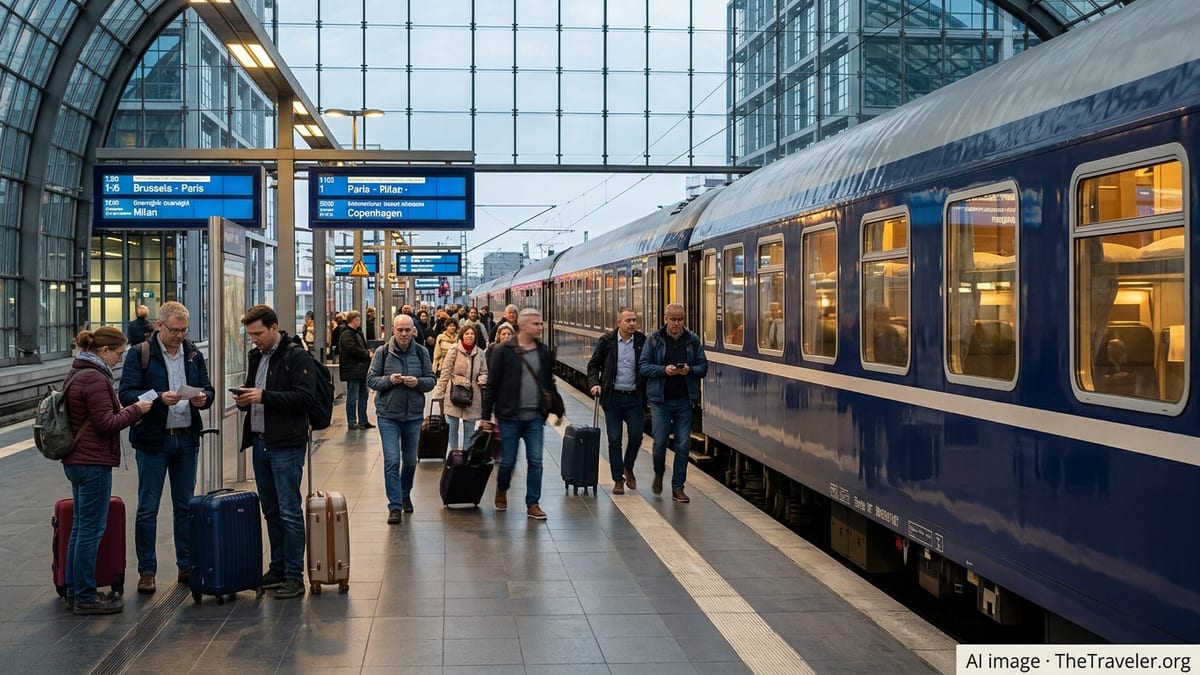
A milestone in Germany’s “stations of the future” program
Publicly available information from Deutsche Bahn shows that the 70th upgraded station was recently marked at Berlin Olympiastadion, part of a broader initiative to transform selected stops into “stations of the future.” The program focuses on modernising buildings, platforms and forecourts, rather than just carrying out isolated repairs, to create more welcoming and efficient hubs for rail travel.
The station initiative forms one pillar of Germany’s wider “Strong Rail” strategy, which seeks to expand capacity, shift more journeys from road and air to rail, and stabilise operations through targeted infrastructure investment. Reports indicate that the station program is being coordinated by Deutsche Bahn’s infrastructure company InfraGO, with financial support from the federal government and, in many cases, individual federal states.
According to recent company reports, the station upgrades are being bundled with corridor modernisation and high performance maintenance on key routes, so that passengers experience better stations at the same time as improved tracks, signalling and punctuality. This integrated approach is intended to avoid situations in which a shiny new concourse still sits on top of an unreliable network.
The 70-station mark is described in current disclosures as a halfway milestone in a larger package of around 130 sites that are due to be comprehensively upgraded over the coming years. The list spans everything from large urban interchanges to medium sized regional stops that are important for tourism, commuting and long distance connections.
What has changed for passengers on the ground
Descriptions of the completed projects show a consistent set of improvements aimed at day to day passenger comfort. Many of the modernised stations have received brighter LED lighting, new seating, clearer information displays and refurbished waiting areas. In Berlin Olympiastadion, for example, images released with the latest announcements highlight new furniture, upgraded fittings and cleaner platform environments.
Accessibility has been a major focus. At numerous locations, access routes have been redesigned with step free paths, lifts or ramps to connect platforms, concourses and surrounding streets. Tactile guidance strips and clearer signage are being installed to support passengers with reduced mobility or visual impairments. For travellers hauling luggage or travelling with small children, these changes can significantly reduce the stress of changing trains or navigating busy hubs.
The program also emphasises safety and cleanliness. In parallel to the long term station initiative, a separate “immediate program” for safer and cleaner stations has targeted heavily used hubs with additional cleaning, security presence and small scale repairs. Government communications indicate that key nodes such as Berlin, Hamburg and Cologne have been early beneficiaries, which is particularly relevant for international visitors using Germany as a gateway to Europe.
While much of the work is highly visible on the platforms and concourses, some elements are less obvious to casual travellers. Technical systems including lighting control, public address and monitoring equipment are being renewed or standardised, intended to improve incident response and reduce the number of breakdowns in daily operations.
Regional examples highlight the breadth of the effort
Recent announcements from regional governments illustrate how widely the station modernisation drive is being applied across Germany. In Schleswig Holstein, for instance, passengers at Schwarzenbek and Büchen are already benefiting from upgraded facilities, while finishing work continues at the smaller stop of Müssen. State level press material points to renewed platforms, improved access and more attractive station forecourts that are intended to tie local town centres more closely into the national rail network.
Elsewhere, Deutsche Bahn’s disclosures cite example projects such as Baruth in Brandenburg, where the entire station environment has been redesigned in line with the “stations of the future” handbook that sets consistent standards for design, accessibility and passenger services. Similar work is under way at a series of hubs listed in the company’s recent integrated and sustainability reports, including major central stations that serve both long distance and regional traffic.
The spread of upgraded locations across different federal states suggests that the program is not limited to flagship cities, but is instead being used to raise the baseline quality of medium sized and regional stations. This is particularly relevant for tourism along popular holiday routes to the North Sea and Baltic coasts, Alpine destinations in the south and historic cities in central Germany, where first impressions are often formed on the station platform.
For daily commuters, the improvements tend to be incremental rather than spectacular, but the accumulation of better lighting, shelter, information and cleanliness at dozens of stations is gradually shifting the perception of rail travel. Public communications from regional transport ministries frame the modernisations as part of a broader push to make rural and suburban public transport more attractive compared with private cars.
Timelines, funding and what comes next
The 70 completed stations represent only part of a complex, multi year infrastructure agenda that also includes the general overhaul of several mainline corridors. Background material in federal and company reports notes that the sequencing of these large scale track possessions has been adjusted, with some major corridor refurbishments delayed and rephased over the decade, while station projects continue to advance.
Financing for the station program comes from a mix of federal transport funds, Deutsche Bahn’s own investment budget and, in some cases, contributions from state and municipal partners who co finance station forecourts or interchanges with buses and trams. The German government has highlighted the station upgrades as one visible return on its broader rail funding packages that also cover digital signalling and the roll out of the European Rail Traffic Management System.
Looking ahead, Deutsche Bahn’s current strategy documents describe the station program as an ongoing process rather than a one off intervention. Once the initial group of around 130 “stations of the future” is completed, experience from those sites is expected to feed into standard refurbishment schemes at hundreds of other locations. The goal is to establish common design elements and service levels that passengers can expect across the country.
For travellers planning rail journeys in Germany over the next few years, this means that more stations are likely to be under scaffolding or subject to temporary access changes as construction progresses. At the same time, the growing list of completed stations suggests that those short term inconveniences are increasingly being offset by tangible gains in comfort, accessibility and perceived security.
Implications for international and long distance travel
The station modernisation milestone is particularly significant for long distance rail passengers using Germany as a hub between western, central and eastern Europe. Many of the upgraded locations act as interchange points between high speed Intercity Express services, regional trains and local transport, so improvements to wayfinding and platform access can reduce missed connections and ease travel for visitors unfamiliar with the network.
Travel industry observers note that these physical upgrades arrive alongside new and expanded services from both Deutsche Bahn and other operators on key routes. Infrastructure reports point to additional long distance offerings sharing upgraded corridors and stations, which may increase seat capacity and frequency on tourist heavy axes such as Berlin to the Baltic coast or Hamburg to southern Germany.
For international tourists, the cumulative effect of renovated stations, clearer information and a more stable timetable could help reinforce Germany’s image as a rail friendly destination. The ongoing work, however, means that travellers are still advised to check for engineering works and temporary arrangements at specific stations, particularly where general refurbishments or corridor overhauls coincide with peak holiday periods.
As the modernisation program moves beyond the 70 station mark, the balance of construction sites and finished showcases will continue to shape visitors’ impressions of German rail travel. The latest milestone suggests that the long term strategy of pairing network upgrades with more welcoming stations is beginning to become visible on the ground, even as the most ambitious phases of corridor renewal are still ahead.