


More news on this day
Drivers and public transport users in Glasgow are being warned to expect severe disruption this weekend as all 16 lanes of the M8 through the city close from Saturday evening for major bridge works.
Get the latest news straight to your inbox!
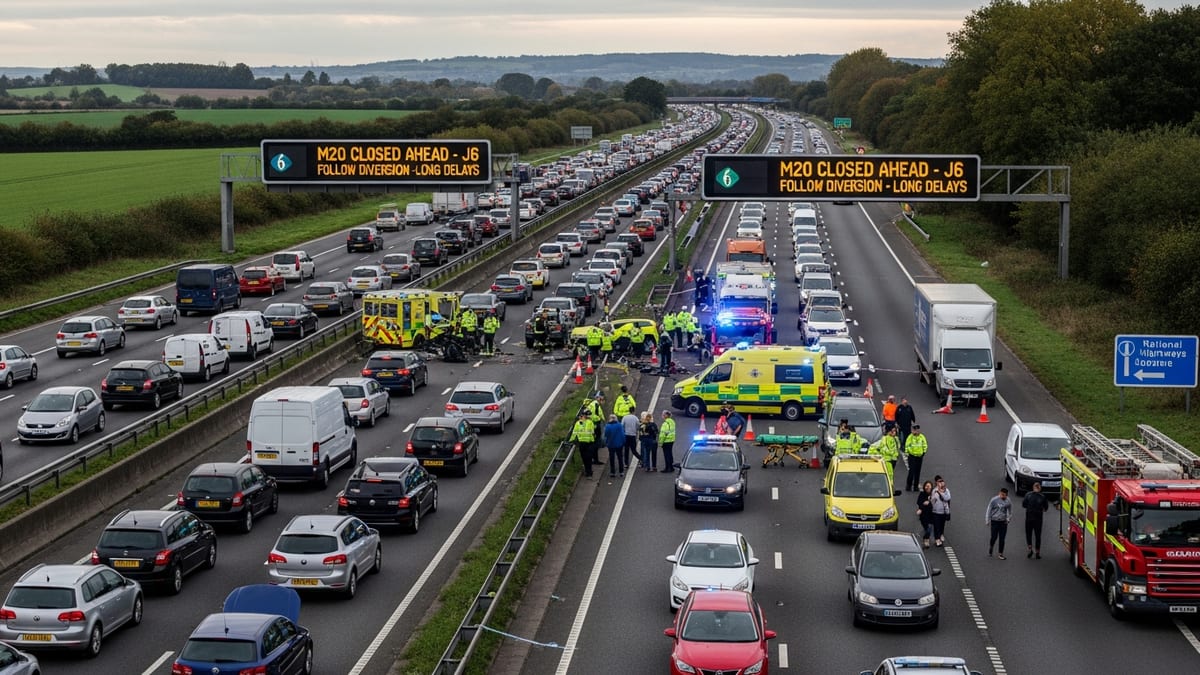
When the M8 will close and which stretch is affected
According to information published by Traffic Scotland and road operator Amey, the second phase of a major footbridge reinstatement scheme will shut the M8 in both directions between Junction 19 Anderston and Junction 24 Helen Street from 6 p.m. on Saturday 14 November until 1 p.m. on Sunday 15 November 2026. All 16 lanes of the motorway through this section will be closed, including the main carriageway and associated slip roads at several junctions.
The closure follows an earlier weekend of disruption on 7 and 8 November, when the same stretch was partially shut for preparatory works on the Cornwall Street and Kirkwood Street footbridges that span the motorway to the south west of Glasgow city centre. Reports indicate that the second weekend involves more complex lifting operations, requiring a full shutdown of the route.
Transport updates state that during the works, sections of the connecting M77 and M74 approaches will also be affected, with some ramps into the M8 closed to keep traffic away from the work site. Drivers are being advised that delays on parallel local routes could extend well beyond the formal closure times as congestion builds before 6 p.m. on Saturday and eases only gradually after the motorway reopens on Sunday.
Road operators are strongly encouraging motorists who do not need to enter the city to remain on alternative motorway corridors around Glasgow, rather than attempting to cut through the closure zone on local streets.
Signed diversion routes and expected congestion hotspots
Published diversion plans show that long distance traffic on the M8 westbound will be directed off the motorway near the Kingston Bridge and routed via the M74 and local roads before rejoining at Junction 24 Helen Street. Eastbound traffic approaching Glasgow from the west will be diverted off before Junction 24 and sent along Paisley Road West and other arterial streets toward the city centre and the M74 connection.
Traffic notices highlight key diversion corridors including Paisley Road West, Helen Street, Dumbreck Road and the approaches around Kinning Park and Shields Road. At several points, diverted motorway traffic will mix with normal city traffic and local bus services, creating likely bottlenecks at major junctions and around the south bank of the River Clyde.
Travel information services warn that journey times on these diversion routes could be significantly longer than usual, particularly on Saturday evening when many drivers will be heading to and from events, shopping destinations and football fixtures. Earlier phases of the project and similar closures in recent years produced queues of up to an hour on approach roads, and current forecasts suggest broadly comparable delays.
Motorists are being advised to leave additional time, avoid leaving signed diversion routes, and consider switching to rail where practical, as parking pressures and traffic restrictions are expected to affect much of the west side of the city centre during the shutdown.
Impact on Glasgow Airport traffic and key bus services
Glasgow Airport has issued its own warning that access from the city will be heavily affected while the M8 closure is in place. The motorway is the principal road link between the airport and central Glasgow, and closures between Junctions 19 and 24 will push much of the usual airport traffic onto local streets through Govan, Ibrox and Cardonald.
Airport guidance urges passengers with flights on the evening of Saturday 14 November and the morning of Sunday 15 November to allow significantly longer than normal for road journeys and to check live traffic and public transport updates before setting off. Travellers using taxis or private cars from the city centre are likely to follow the same diversion corridors as general motorway traffic, exposing them to the same congestion.
First Bus has set out detailed diversions for its Glasgow Airport Express Service 500 and other routes that normally use the M8 through the closure area. Publicly available service updates show that the 500 will be diverted between Glasgow city centre and the airport, serving restricted stops in the centre around Waterloo Street and Hope Street before routing via alternative roads to reach the motorway network further west. Passengers are being advised that journey times will be extended and that some intermediate stops may be temporarily omitted.
Other city routes that cross the diversion zone, including services along Dumbarton Road, Paisley Road West and around the Scottish Event Campus, are expected to face knock‑on delays even where their official routes remain unchanged. Operators are encouraging passengers to factor in extra time and to be prepared for last minute changes to stopping patterns if congestion worsens.
Subway and rail options during the motorway shutdown
While the M8 is closed, the Glasgow Subway will continue to operate, but with some planned restrictions that may affect late evening journeys. The Subway typically runs on a roughly 6 to 8 minute frequency on both Inner and Outer Circles, with last trains from many central stations shortly after 11 p.m. on Saturdays. Travellers heading to or from events on Saturday night are being urged to check the latest timetables from Strathclyde Partnership for Transport and to be aware of any short‑term station closures linked to crowd management or local roadworks.
For airport passengers, the Subway can provide an indirect alternative by linking the city centre with Queen Street and Central rail stations, where rail and express coach services to Paisley Gilmour Street or dedicated airport buses can be boarded. However, this is not a direct replacement for the M8 corridor, and connections will be less convenient for travellers with heavy luggage or very early departures on Sunday morning.
ScotRail services between Glasgow Central and Paisley Gilmour Street are expected to run broadly as normal during the motorway works, offering one of the most reliable alternatives to driving along the affected stretch of the M8. From Paisley, local buses and taxis provide short onward connections to Glasgow Airport. Published information from operators notes that these rail links are not directly impacted by the bridge reinstatement project, although services may be busier than usual if significant numbers of drivers choose to park at stations outside the main diversion zone.
Travellers are being encouraged to consider park‑and‑ride options at rail stations west of the city, where car parking is available outside the most heavily affected road network, then complete their journeys by train into central Glasgow or toward Paisley.
Advice for drivers, event visitors and commuters
Transport bulletins emphasise that the M8 closure is scheduled to coincide with relatively quieter overnight traffic, but planners acknowledge that many key trips still take place during the affected period. Saturday evening hospitality, late‑night shopping and cultural events in Glasgow city centre, as well as football fixtures and concerts on the city’s west side, are all expected to add pressure to diversion routes.
Those attending events near the Scottish Event Campus, Ibrox or in the city centre are being urged to use rail, Subway or walking routes where possible, and to check venue guidance for any specific recommendations on arrival and departure times. Some venues have circulated their own warnings, echoing official advice to avoid driving into the area unless absolutely necessary while the M8 is shut.
Regular commuters who work night shifts in healthcare, hospitality and logistics are being advised to plan alternative routes in advance, as sat‑nav systems may not always reflect the full diversion plan or temporary restrictions on smaller streets. Publicly available information stresses that drivers who leave the signed motorway diversion and attempt to cut through residential areas may encounter local traffic measures such as temporary restrictions or bus gates.
Road managers state that the weekend shutdown is intended to complete the heaviest part of the bridge reinstatement in a single continuous operation, reducing the need for repeated overnight closures through the winter. Once the works are complete, both Cornwall Street and Kirkwood Street footbridges are expected to return to full use, restoring important walking and cycling links across the M8 between communities on the south side of Glasgow.