


More news on this day
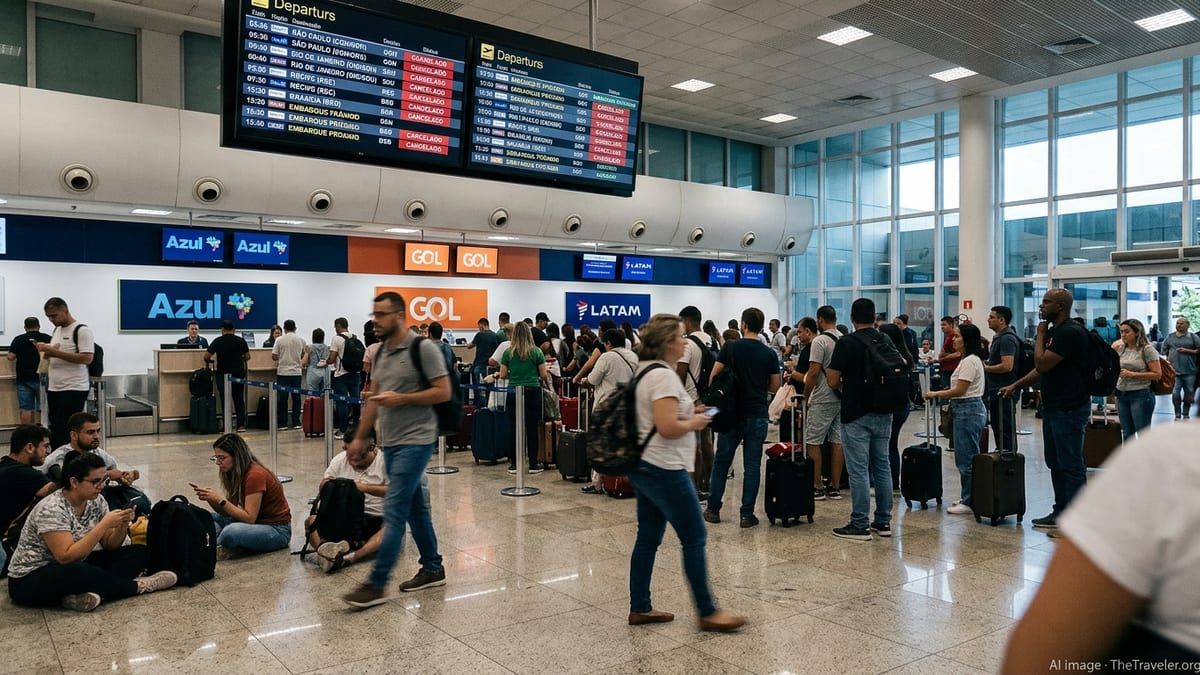
Air travelers across Brazil faced fresh disruption on June 10 as at least six flights operated by GOL, Azul and EuroAtlantic were grounded, with São Paulo’s key hubs and Campinas’ Viracopos airport among the most affected.
Get the latest news straight to your inbox!
Grounded Flights Ripple Through Brazil’s Busiest Air Corridor
According to publicly available flight-tracking data and local media reports, a cluster of cancellations and extended delays on June 10 involved aircraft operated by Brazilian carriers GOL Linhas Aéreas and Azul Linhas Aéreas, as well as charter and wet-lease specialist EuroAtlantic Airways. The affected services were concentrated on routes linking São Paulo with other major Brazilian cities, alongside at least one international rotation using Campinas as a gateway.
The disruptions unfolded across São Paulo’s Guarulhos and Congonhas airports and Campinas’ Viracopos International Airport, a key domestic hub frequently branded as São Paulo/Campinas. While individual flights varied in destination and timing, data reviewed on June 10 indicated at least six grounded services tied to the three operators, including departures that failed to leave the gate and return-to-stand incidents after boarding.
Brazil’s domestic air network is particularly sensitive to operational issues in this corridor, as the São Paulo metropolitan area and nearby Campinas form the country’s most heavily trafficked aviation cluster. Even a limited number of grounded aircraft can trigger schedule knock-on effects, forcing airlines to reshuffle aircraft rotations and crews across multiple cities.
Published coverage suggests that the June 10 disruptions did not stem from a single nationwide systems failure, but rather a combination of aircraft technical checks, crew availability constraints and localized weather or congestion. However, the concentration of problems at São Paulo and Viracopos resulted in a notably difficult day for passengers connecting through the region.
São Paulo Guarulhos and Congonhas See Cascading Delays
Flight-status boards for São Paulo’s Guarulhos International, the country’s largest airport, showed an uptick in cancellations and long delays among domestic services operated by GOL and Azul on June 10. Aircraft that were initially listed as delayed in some cases were later marked as canceled, indicating that turnaround problems or unresolved technical inspections prevented them from operating their planned sectors.
At Congonhas, São Paulo’s centrally located domestic airport, timetable irregularities were less extensive but still noticeable on key business routes. Publicly available information pointed to GOL canceling at least one intra-Brazil rotation after extended ground time, compounding congestion in peak-period slots that are already tightly allocated.
Analysts note that São Paulo’s airports routinely operate near capacity during busy periods, which means that even a small series of grounded flights can lead to crews and aircraft being out of position for subsequent departures. On June 10, some services that did operate left with significant delays, while others were removed from the schedule as airlines attempted to stabilize operations with the resources available.
While there were no widely reported safety incidents linked to the disruptions, the irregular operations highlight how fragile scheduling can be when multiple carriers experience overlapping operational stress at the country’s primary air hub.
Viracopos in Campinas Hit by Technical Issues and Cancellations
Campinas’ Viracopos International Airport, a major base for Azul and an increasingly important cargo and charter gateway, was also hit hard on June 10. Flight-tracking tools and recent Brazilian press coverage show that in the days around June 10, Azul had already faced technical issues on long-haul services from Viracopos to the United States, including an Orlando-bound aircraft that was forced to return to Campinas earlier in the week for safety checks.
On June 10 itself, several Azul domestic flights from Viracopos were either significantly delayed on the ground or ultimately canceled, with aircraft held at the stand while maintenance inspections were carried out or while crews were reassigned. Local media accounts and online passenger reports referenced flights that boarded and then returned to the gate, as well as services that never began boarding before being scrubbed from the departure boards.
Viracopos has grown into a central pillar of Brazil’s domestic aviation network, and Azul relies on the airport as a key connection point for travelers from medium-sized cities across the country. As a result, any concentration of grounded flights there can quickly affect itineraries far beyond São Paulo state, forcing last-minute rebookings, missed connections and overnight stays for passengers traveling onward to other regions.
Airport movement statistics for recent years show that Viracopos has been handling increasing passenger volumes, supported largely by Azul’s network. The June 10 disruptions therefore arrived at a time when the airport is under pressure to maintain punctuality despite higher traffic and a complex mix of domestic, international and cargo operations.
EuroAtlantic’s Role Highlights Charter and Wet-Lease Vulnerabilities
The involvement of EuroAtlantic Airways in the June 10 grounding pattern underscores how charter and wet-lease operations can both support and complicate airline schedules. The Portuguese carrier, which has a history of operating long-haul services into Brazil and providing aircraft and crews to other airlines, appears to have had at least one Brazil-linked flight grounded or delayed on June 10, based on publicly available schedule and tracking data.
These types of operations are often used by airlines to add seasonal capacity or cover for fleet shortages, but they can also introduce cross-border operational dependencies. If a EuroAtlantic aircraft assigned to a Brazilian route experiences a technical issue or crew-hour limitation, the impact can cascade across multiple airlines relying on that capacity, particularly when flights are operating under codeshare or wet-lease arrangements.
Aviation analysts observing the June 10 disruptions noted that charter and supplemental operators face additional logistical hurdles, including coordinating maintenance support away from their home bases and managing crew rest rules across different regulatory environments. When such flights are grounded in Brazil, rebooking passengers can be more complex than for regular scheduled services because inventory is limited and replacement aircraft are not always readily available.
For passengers, the distinction between a flight operated by a home carrier and one operated by a partner such as EuroAtlantic is often only visible at the boarding gate. The June 10 events highlight the importance for travelers of checking operating-carrier information and allowing extra buffer time when connecting from or to long-haul chartered services.
Travelers Face Missed Connections and Limited Rebooking Options
For travelers, the immediate impacts of the June 10 groundings were missed connections, extended waits inside terminals and in some cases unexpected overnight stays. Social media updates and traveler forums featured accounts of passengers left searching for alternative options as their flights in and out of São Paulo and Campinas were canceled or heavily delayed.
Brazilians and international visitors transiting through the region frequently build tight itineraries that depend on punctual feeder flights into Guarulhos, Congonhas or Viracopos. When multiple services on the same day are grounded, rebooking can become difficult, as remaining flights rapidly reach capacity. Travelers reported being shifted to later departures or rerouted through alternative cities, stretching journeys that ordinarily take a few hours into day-long odysseys.
Consumer advocates point out that Brazil’s air passenger rights framework gives travelers a range of protections in the event of cancellations or lengthy delays, including assistance with meals, accommodation in certain circumstances and rerouting to final destinations. However, accessing these benefits often requires persistence at airport service counters, particularly on days when airline staff are handling a high volume of disrupted passengers.
For upcoming trips in Brazil’s busy winter holiday and business-travel season, observers suggest that travelers build in additional time for connections at São Paulo-area airports and monitor flight status closely, especially on days when weather, maintenance checks or crew rotations appear to be placing stress on the system.