

More news on this day
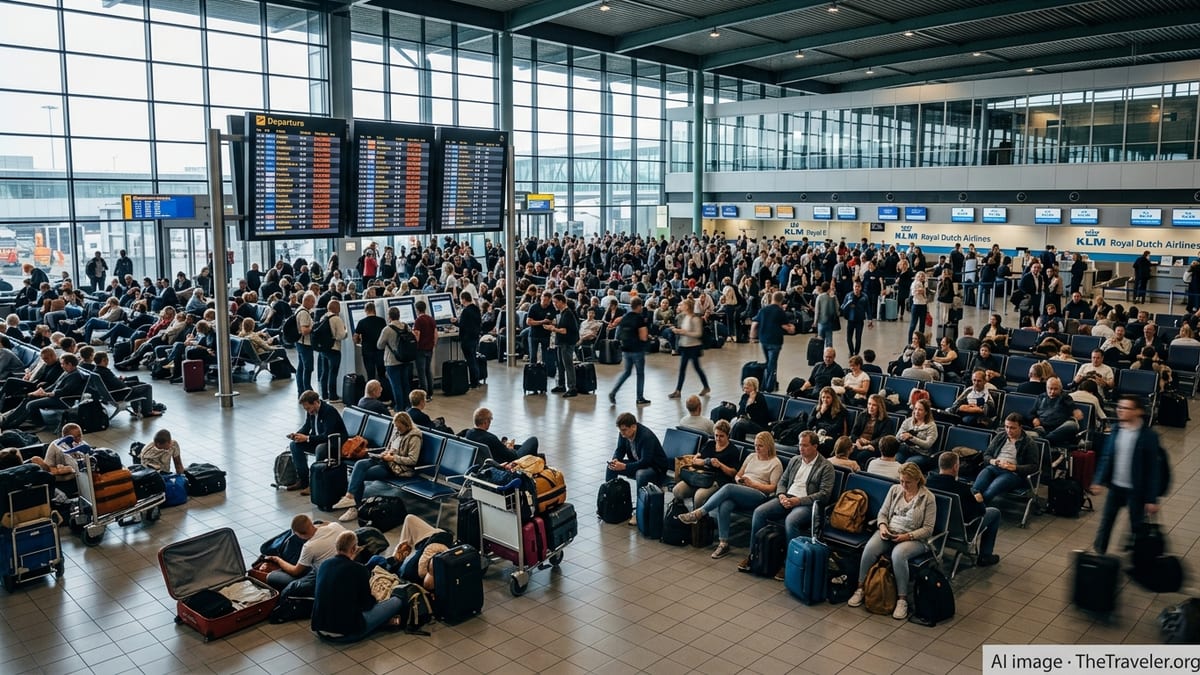
Hundreds of travelers were stranded at Amsterdam Schiphol Airport in the Netherlands after operational data showed 255 flights delayed and 20 canceled in a single day, disrupting services operated by KLM, Delta Air Lines, British Airways, Lufthansa and other carriers on busy routes to London, New York, Paris, Dubai and beyond.
Get the latest news straight to your inbox!
Operational Ripple Effect Across Major Airlines
Publicly available flight tracking data for early June 2026 indicate that the concentrated disruption at Schiphol translated into a day of severe schedule distortion for multiple airlines that use the Dutch hub as a key transfer point. While the number of outright cancellations remained comparatively limited at around 20 flights, the far larger tally of 255 delayed departures and arrivals created widespread knock-on effects for onward connections.
Services operated by KLM Royal Dutch Airlines were most visibly affected, reflecting its role as the dominant hub carrier at Schiphol. Reports show that delays to KLM’s short haul European network, including rotations to London and Paris, cascaded into late departures on long haul sectors such as New York and Dubai as aircraft and crew were held out of position. Delta Air Lines, which partners with KLM on transatlantic services, saw its joint operations impacted as shared aircraft and codeshares encountered rolling schedule changes.
Additional disruption was recorded on flights run by British Airways, Lufthansa and other major European airlines serving Amsterdam from their home bases. Aviation data reviewed for the day highlight instances where inbound aircraft from London, Frankfurt and other hubs arrived significantly behind schedule, compressing turnaround times and, in some cases, prompting further delays on return legs as ground handling and baggage processing struggled to keep pace with the altered timetable.
Industry-focused coverage emphasizes that at large transfer airports like Schiphol, even a relatively modest number of cancellations can be overshadowed by the operational strain created by hundreds of delayed flights. Aircraft that miss assigned slots may be forced to wait longer on the ground, crew duty time limits become more difficult to manage, and passengers with complex itineraries face missed connections that require extensive rebooking.
Hubs to London, New York, Paris and Dubai Hit Hard
Route analysis of the disrupted schedule shows that some of the busiest city pairs in the network bore the brunt of the operational difficulties. Flights between Amsterdam and London, a corridor jointly served by KLM, British Airways and low cost carriers, experienced repeated knock backs in departure times as congestion built throughout the day. Short haul shuttles that usually depart at frequent intervals were forced into less predictable patterns, complicating onward travel for passengers relying on tight connections.
Long haul services to New York were also affected as late inbound aircraft and crew availability constraints forced airlines to adjust departure times. Publicly accessible timetables for the day show several Amsterdam to New York flights leaving behind schedule, in some cases compressing overnight connection windows on arrival in the United States or creating missed links for travelers heading onward to domestic destinations.
Paris and Dubai, both key international gateways with heavy transfer traffic of their own, saw downstream impacts when Schiphol origin flights arrived late. For Paris Charles de Gaulle, delayed Amsterdam feeds meant some travelers were no longer able to board long haul departures to Africa, Asia and the Americas, while at Dubai International Airport, late inbound flights disrupted itineraries for passengers connecting onward to South and Southeast Asia, Australia and regional Gulf destinations.
According to analysis in specialized aviation and passenger rights coverage, these kinds of ripple effects are characteristic of highly interconnected hub networks. When one node, such as Amsterdam, encounters a period of concentrated disruption, delays can continue to propagate for many hours across far flung destinations as aircraft, crew and passengers attempt to realign with a schedule that no longer matches the original plan.
Scenes of Congestion and Overnight Stranding at Schiphol
Images and reports circulating on news and travel platforms from the day in question depict crowded terminal halls at Schiphol, with long lines forming at airline service desks and self service kiosks as passengers sought information, rebooking options and accommodation. Seating areas near departure gates and in public spaces appeared at or beyond capacity, with many travelers resorting to floors and improvised resting places while awaiting updates.
Coverage focused on Schiphol notes that passengers whose flights were canceled outright often faced overnight stays in Amsterdam, particularly those traveling from long haul origins or with complex onward itineraries. In some cases, hotels near the airport quickly reached high occupancy levels as disrupted travelers competed for available rooms, pushing some passengers to remain in the terminal until morning departures.
Baggage handling was another pressure point. When flights are delayed for hours or re timed multiple times, luggage may remain in sorting areas while airlines decide whether to offload, re tag or keep bags on assigned flights. Reports from recent disruption episodes at Schiphol describe instances where passengers reached their final destination long before their checked baggage, which arrived on later flights or required manual tracing by airline staff.
Observers of European aviation trends point out that Schiphol has experienced several high profile disruption events over the past year linked to weather, staffing pressures and technical issues. These previous episodes have exposed vulnerabilities in the airport’s ability to absorb sudden spikes in irregular operations without visible passenger impact, making each new wave of delays and cancellations a test of the system’s resilience.
Passenger Rights and Compensation Under European Rules
The disruption at Schiphol unfolded under the framework of European Regulation EC 261, which sets out standardized rules for compensation and assistance when flights originating in the European Union, or operated by EU carriers, are significantly delayed or canceled. Passenger rights organizations explain that travelers whose flights are canceled or arrive at their final destination more than several hours late may be eligible for financial compensation, depending on the distance of the flight and the cause of the disruption.
Guidance from consumer advocacy groups stresses that eligibility often hinges on whether the root cause is considered within an airline’s control. Situations linked to technical issues, crew scheduling problems or other operational factors may strengthen the case for compensation, while severe weather and certain air traffic control restrictions can qualify as extraordinary circumstances where payouts are not required. Nonetheless, in most scenarios airlines are still obliged to provide basic care, including meals, refreshments and, where necessary, hotel accommodation.
Specialist platforms that monitor disruptions at Schiphol have noted a rise in travelers turning to online tools to verify potential compensation claims in the wake of sizable delay events. These services typically ask passengers to input their flight number, date and routing, then cross reference the details against operational databases to determine whether the circumstances meet EC 261 thresholds.
Travel analysts recommend that affected passengers retain boarding passes, booking confirmations and receipts for out of pocket expenses such as food, transportation and lodging, as these documents can assist in any later claim. They also advise that travelers familiarize themselves with airline specific policies, which may offer goodwill vouchers, flexible rebooking options or refunds even in situations where formal compensation under European law is not mandated.
What Travelers Can Do Ahead of Summer Peak
The Schiphol disruption comes as Europe heads into the core summer travel season, a period when airports and airlines typically operate at or near capacity and have less room to absorb irregular operations. Aviation data and recent coverage suggest that recurring strains, including staffing limitations, airspace congestion and constrained runway capacity during bad weather, could make further episodes of large scale delay more likely in the months ahead.
Travel experts point to a number of practical steps that passengers can take to mitigate risk when itineraries route through busy hubs like Amsterdam. Booking longer connection windows, particularly when linking short haul European sectors with long haul flights to destinations such as New York or Dubai, can create a buffer against moderate delays. Where possible, selecting earlier departures in the day may also reduce exposure to cumulative knock on effects that build as schedules slip.
Publicly accessible guidance from airlines and airports increasingly encourages travelers to make full use of digital tools. Airline apps, airport displays and subscription based notifications can provide early warning of developing disruption, enabling some passengers to adjust plans or request rebooking before queues form at service desks. Checking in online and traveling with carry on baggage only, where feasible, can further reduce complexity when last minute gate or routing changes occur.
For those already affected by major delays or cancellations, passenger rights organizations underscore that persistence is often necessary. If initial claims for assistance or compensation are denied, travelers may seek a written explanation and, where appropriate, escalate through formal complaint channels or independent dispute resolution bodies. As the Schiphol episode demonstrates, the cumulative impact of hundreds of delayed flights and a relatively small number of cancellations can leave many travelers out of position, making awareness of available protections more important than ever.