


Few cities in the world offer a shopping experience as intense and historic as Istanbul. At the heart of it all are two legendary markets: the Grand Bazaar and the Spice Bazaar. They sit only about 15 minutes apart on foot, yet they feel like very different worlds. Understanding how they differ in size, atmosphere, products and prices will help you decide where to spend your time, your energy and your lira.
Get the latest updates straight to your inbox!
Two Icons, Two Different Origins
The Grand Bazaar and the Spice Bazaar were both born in the Ottoman era, but they served very different purposes. The Grand Bazaar grew out of a 15th century covered market commissioned shortly after the Ottoman conquest of Constantinople, intended as a central hub for valuable goods such as textiles, jewelry and precious metals. Over centuries it expanded into a sprawling, semi-organic labyrinth of lanes, hans and courtyards. Today it covers more than 60 streets and hosts thousands of shops, making it one of the largest covered markets in the world.
The Spice Bazaar, also known as the Egyptian Bazaar, is younger and more specialized. Completed in the 17th century and attached to the New Mosque complex in Eminönü, it was financed partly by taxes on goods arriving from Egypt, which is how it acquired its alternative name. Its L-shaped plan is compact, with a single main axis and side alcoves, and it was historically the place to buy imported spices, medicinal herbs and luxury edibles arriving by sea.
These different origins still shape the way each market feels. The Grand Bazaar was the commercial city within the city, where guilds clustered together and merchants might spend their entire careers. The Spice Bazaar was more like a dedicated gourmet depot, handling fragrant, high-value commodities from across the empire. When you step into them today, you are feeling the echo of those original roles, even if the wares now include phone cases and vacuum-packed Turkish delight.
For travelers, this history translates into a simple rule of thumb: the Grand Bazaar is where you go for “things” such as carpets, lamps and jewelry, while the Spice Bazaar is where you go for “flavors” such as saffron, sumac and coffee. Both are touristy, but they are touristy in very different ways.
Layout, Scale and How Overwhelmed You Might Feel
The most immediate difference is scale. The Grand Bazaar is a full neighborhood under a roof. Official counts vary, but you can expect several thousand shops divided across more than 60 narrow streets and alleys. There are over twenty different gates, and it is common for first-time visitors to lose their sense of direction within minutes. You might enter at Beyazıt Gate thinking you are walking towards the main jewelry section, only to realize half an hour later that you are deep in a leather corridor on the opposite side.
By contrast, the Spice Bazaar is compact and legible. Inside the main historic hall there are roughly a hundred or so units, many of them larger, with goods stacked vertically to the vaulted ceiling. From the Eminönü square you enter through one of just a few gates and the central spine stretches in a simple L-shape. Even if you wander into the short side arms, it is hard to be lost for more than a few minutes. This makes the Spice Bazaar far less intimidating if you only have an hour and want a quick, focused visit.
The way you move through each space reflects this difference. In the Grand Bazaar, it is worth planning at least a rough route. For example, you might start at Nuruosmaniye Gate, follow the main avenue of jewelry shops, then cut into the carpet and kilim sections, and finally exit towards Çemberlitaş for a tram or a hammam visit. Expect to spend two to three hours if you want to see a meaningful slice of the bazaar and actually buy something. In the Spice Bazaar, people often pop in for 45 minutes between a Bosphorus cruise and a ferry back to Karaköy, picking up a bag of pistachios and some apple tea on the way.
Another practical difference is verticality. Many Grand Bazaar shops are tiny showrooms at street level but connected to storage or additional display space upstairs or downstairs. You might be invited up for tea to see “better carpets” that are not on the ground floor. In the Spice Bazaar, most of what you see is what is available, stacked in jars, pyramids of spices or glass cases, and there is less emphasis on hidden stock and upstairs showrooms.
What You Actually Buy: Goods vs Flavors
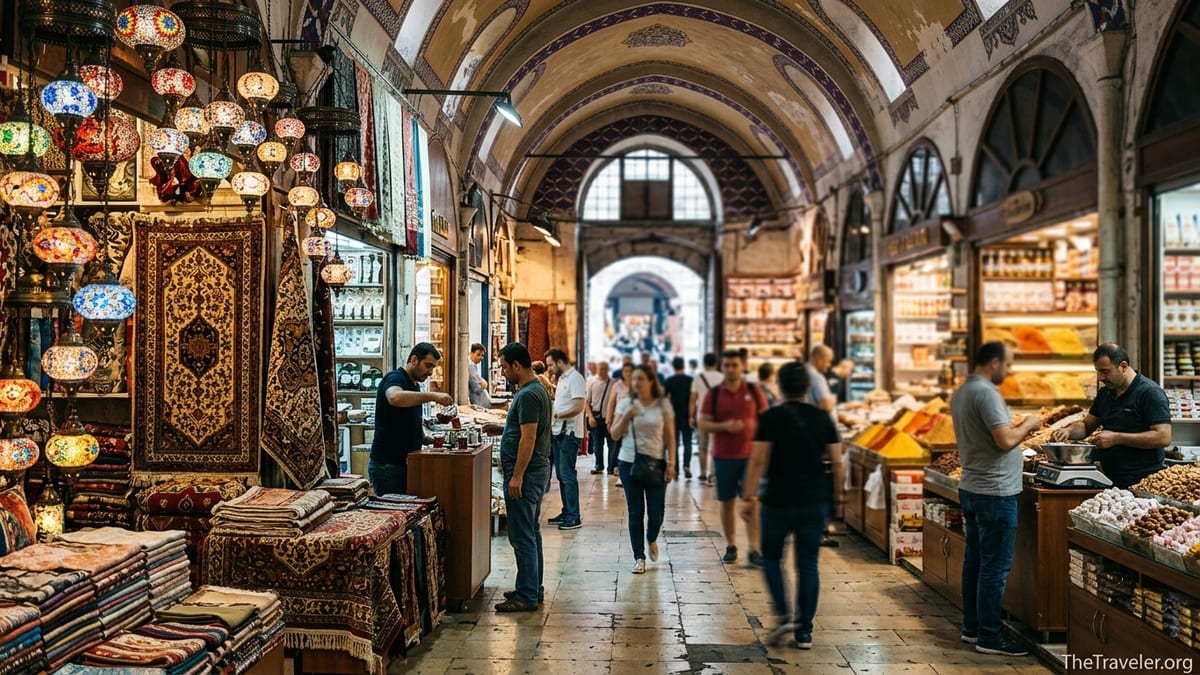
A walk through the Grand Bazaar feels like a crash course in Turkish and Near Eastern crafts. You will see hand-knotted carpets from central Anatolia, silk scarves from Bursa, filigree silver from the Black Sea region, ceramic plates inspired by İznik designs, intricate brass coffee sets, mosaic lamps and endless displays of leather bags and jackets. There are also gold and diamond jewelry shops that would not look out of place in a modern mall, as well as vendors selling high-quality counterfeits of international fashion brands.
Typical purchases here might include a small handwoven kilim for a living room, a set of two or three mosaic table lamps, or a piece of silver jewelry. As a rough, highly variable example, a medium-sized wool kilim might start from a few hundred euros equivalent and go well into four figures depending on age and provenance. A simple glass mosaic table lamp might be quoted in the low thousands of Turkish lira, though final prices depend heavily on your bargaining skills and the specific shop. Leather jackets and bags can range from relatively affordable mass-produced stock to very expensive custom pieces.
In the Spice Bazaar, the products are more consumable. The majority of stalls sell mounds of powdered red pepper, cumin, sumac, saffron-like threads, dried mint, mixed spice blends labeled “meat seasoning” or “chicken mix,” herbal teas, dried fruits, dates, nuts, honey, molasses and Turkish delight. You will also see rows of vacuum-sealed spice sets aimed squarely at tourists, pre-packed tea assortments and tins of Turkish coffee from well-known brands. Some stands run continuous tasting sessions, handing you cubes of pistachio lokum or rose-flavored delight on toothpicks.
Current guides and on-the-ground reports suggest that good quality spices in central Istanbul can run to the equivalent of a few euros per 100 grams, with premium items like saffron at much higher prices. In practice, you might pay a moderate sum for a 250 gram bag of high-grade isot pepper or a selection of mixed nuts, and considerably more for beautifully packaged gift boxes. Compared with neighborhood markets or supermarkets, the Spice Bazaar is usually marked up, but what you get in return is concentrated variety, attractive presentation and the experience of shopping in a centuries-old hall.
Atmosphere, Senses and Crowd Patterns
Atmosphere is where the two bazaars diverge dramatically. The Grand Bazaar feels like a covered city: arched ceilings painted in soft colors, stone and tile floors worn smooth by centuries of feet, and constant movement in every direction. The soundscape is dense: shopkeepers calling out, a mix of Turkish, English and many other languages, rolling carts rattling over the stones, and the occasional echo of azan from a nearby mosque courtyard.
The Spice Bazaar is defined more by its smell. Even before you cross the threshold from Eminönü square, you are likely to catch a warm cloud of chili, cinnamon, dried orange peel and coffee. Inside, the scents mix with the sweetness of Turkish delight and the sharper note of dried herbs. Visually it is just as colorful as the Grand Bazaar but in a different way: instead of piles of textiles, you see rows of glass jars, cone-shaped mounds of powdered paprika, and pyramids of nougat stacked on marble counters.
In terms of crowd patterns, the Grand Bazaar spreads people out more because of its size. It can feel intense around the main arteries and at peak times in summer, yet you can still duck into quieter side alleys where locals shop for everyday items like work clothes, household textiles or wholesale packaging. The Spice Bazaar, on the other hand, often feels packed from wall to wall in the central corridor, especially on weekends and just before religious holidays when locals also come to stock up on nuts and sweets for family visits.
The rhythm of each place through the day also differs. The Grand Bazaar typically opens in the morning and winds down by early evening, with many shops closing by early evening hours and the building itself secured by heavy gates. The Spice Bazaar keeps similar daytime hours, but because it sits right next to ferry piers, tram stops and the Galata Bridge, it remains surrounded by crowds even after its official closing time, with the surrounding streets of Eminönü staying lively well into the night.
Location, Logistics and How Long to Spend
Location matters when you are stitching the bazaars into a wider Istanbul itinerary. The Grand Bazaar sits on the hill between Beyazıt Square and Çemberlitaş, roughly midway between the Süleymaniye Mosque and the Blue Mosque. It is an easy walk from major Old City sights like the Hagia Sophia and Sultanahmet Square, although the climb back up can be a little steep on hot days. Tram stops at Beyazıt and Çemberlitaş make it straightforward to reach from other parts of the city.
The Spice Bazaar occupies a prime position in Eminönü, at the foot of the Galata Bridge and next to the New Mosque. It is surrounded by tram lines, ferry piers and busy bus stops. For many travelers staying in Sultanahmet, a common pattern is to take the tram or walk downhill to Eminönü in the late morning, explore the Spice Bazaar and nearby streets, perhaps enjoy a fish sandwich by the waterfront, and then decide whether to continue across the bridge to Karaköy or head uphill towards the Grand Bazaar.
In terms of time investment, you can experience the essence of the Spice Bazaar in under an hour if you are selective. For example, you might enter from the waterfront gate, taste a few Turkish delight samples, buy a half kilo of mixed nuts and a tin of Turkish coffee, and be back outside in 40 minutes. The Grand Bazaar is less suited to quick hits. Even with a focused shopping list, you should expect at least 90 minutes, and three hours can easily disappear if you are comparing carpets or lamps across multiple shops.
Both markets are open daily most of the year, with some exceptions on major public holidays when many shops close. Schedules can change, so it is sensible to double-check opening hours close to your travel dates, especially around religious festivals when the mood and crowd levels surge noticeably.
Prices, Bargaining and Value for Money
Both bazaars are tourist-heavy, which means prices start high and bargaining is expected. In the Grand Bazaar, negotiation is almost part of the theater. For big-ticket items like carpets, lamps or leather jackets, initial quotes can be several times higher than what a final customer might pay after a long conversation, multiple cups of tea and careful comparison between shops. For example, a vendor might open with a price in the hundreds of euros equivalent for a small handmade rug, and if you show real hesitation, that figure can come down significantly as you discuss materials, knot density and origin.
When it comes to smaller souvenirs like ceramic bowls, Nazar amulets or basic cotton scarves, margins remain high but the room for negotiation shrinks. You might be quoted a mid-range price for a set of small hand-painted bowls and bargain down by 20 to 30 percent if you buy several pieces together. Many travelers also discover that similar items can be cheaper in less central markets such as Mahmutpaşa, which lies downhill from the Grand Bazaar and caters more to locals with wholesale clothes, household goods and budget-friendly lamps.
In the Spice Bazaar, bargaining culture is more subdued because many items are sold by weight and labeled with per-kilo prices. You can still negotiate on pre-packaged gift sets or bulk purchases, but discounts tend to be modest. A stall might reduce the total bill by a small percentage if you are buying multiple kilos of mixed nuts and an assortment of vacuum-packed delights. For basic herbs and spices, however, you are more likely to compare across different stalls than to haggle fiercely at one.
From a value perspective, neither bazaar is the cheapest place in Istanbul to buy everyday goods. Supermarkets and neighborhood markets typically undercut Spice Bazaar prices on staples like black tea, basic Turkish delight or standard-grade pistachios. Likewise, some travelers prefer to buy ceramics or lamps from workshops in less central districts or from stores around the Grand Bazaar that focus more on locals than on tour groups. What you are paying for inside both bazaars is a mix of product and experience: the setting, the tastings and the story behind the purchase.
Touristy vs Local: Who Actually Shops There?
Another key difference lies in how each bazaar is perceived by locals. The Grand Bazaar still functions as a commercial hub for jewelry, gold and specialty crafts, and many Istanbul residents do come here for specific purposes such as wedding gold or custom-made pieces. Wholesale buyers from across Turkey and beyond also use it as a sourcing point. That said, large stretches of the bazaar are now primarily oriented towards visitors, stocked with souvenirs, logo-heavy t-shirts and Instagram-ready lamp displays rather than the everyday goods that Istanbulites buy on a weekly basis.
The Spice Bazaar enjoys a slightly more mixed clientele. Its central hall is clearly curated for visitors, with lavish displays and multilingual staff. Yet the surrounding streets of Eminönü and the adjacent open-air markets still draw a strong local crowd, especially for nuts, olives, cheeses and cured meats. On the days leading up to major religious holidays, you will see long lines of residents buying kilos of baklava and lokum to take to relatives, and prices in the side streets are often more competitive than inside the historic hall itself.
If you are trying to gauge authenticity, pay attention to packaging and language. Shops that label everything only in English and stock heavily photographed gift boxes are targeting tourists. Stalls where labels appear first in Turkish, where staff are serving regulars as well as visitors, and where packaging looks more utilitarian tend to provide a more local, less inflated experience. This applies around both bazaars, but you feel it especially in the streets spilling downhill from the Spice Bazaar and around Mahmutpaşa near the Grand Bazaar.
For many travelers, the sweet spot is to explore the historic cores for atmosphere, then make actual purchases in the adjacent streets where prices often drop and interaction feels less scripted. Buying a kilogram of mixed nuts from a busy side-street shop full of locals in Eminönü usually tells you more about daily Istanbul life than an air-conditioned stall selling vacuum-packed sets at double the price.
Planning Your Visit: Which Bazaar First and When
Because the Grand Bazaar and the Spice Bazaar are relatively close together, you can comfortably visit both in a single day, but the order matters. One popular strategy is to start at the Grand Bazaar in the morning when crowds are slightly calmer and shopkeepers are particularly eager to make their “first sale of the day,” which some believe brings luck. You can then wander downhill towards the Süleymaniye Mosque and continue to Eminönü, arriving at the Spice Bazaar by early afternoon when the food tastings are in full swing.
Alternatively, especially in summer heat, you might reverse the order. Start at the Spice Bazaar when it opens, enjoy the coolness of the vaulted hall, taste some Turkish delight before lunch and then make your way uphill to the Grand Bazaar once you have a feel for general prices. Having seen the Spice Bazaar first can make you more aware of how much certain items, such as nuts and tea, are marked up between different parts of the city.
Time of week plays a role too. Weekends are busy everywhere, but Saturdays around midday can feel particularly intense in the Spice Bazaar as both tourists and locals converge. Weekdays in the late morning often offer a better balance of atmosphere and space to move. The Grand Bazaar is busy most days in peak season, yet you can still find relatively quieter moments in the mid-afternoon, especially further from the main jewelry and souvenir arteries.
Whatever your plan, it helps to carry cash in Turkish lira for small purchases, although many shops in both bazaars now accept cards, especially for higher-value transactions. If you are buying per-kilo items in the Spice Bazaar, consider bringing a small reusable bag or two so you are not juggling multiple plastic bags on crowded trams and ferries afterwards.
The Takeaway
At first glance the Grand Bazaar and the Spice Bazaar might seem interchangeable, just two historic markets packed with tourists and souvenirs. In reality, they offer different kinds of Istanbul experiences. The Grand Bazaar is a city of crafts under painted arches, where you can spend hours comparing carpets and ceramics, sipping tea with merchants and navigating a dense urban maze that has been evolving since the 15th century. It is the place to hunt for objects you will live with for years: a kilim that becomes a centerpiece at home, a lamp that throws colored light across your living room, a piece of jewelry with a story.
The Spice Bazaar is more of a sensory snapshot. It concentrates the aromas and flavors of Turkey into a single, manageable hall where you can taste, sniff and sample your way through regional peppers, dried fruits, nuts and sweets. It lends itself to shorter visits and practical souvenirs: packets of herbs you will sprinkle on roasted vegetables back home, tins of Turkish coffee for weekend rituals, or a modest selection of lokum to share in the office.
Rather than asking which is “better,” it is more useful to ask what you want from your time in Istanbul. If you have only one afternoon and your priority is edible gifts, the Spice Bazaar makes more sense. If you crave the full theatrical experience of bargaining over heirloom objects in a historic labyrinth, the Grand Bazaar is the stronger choice. And if your schedule allows, visiting both, plus the more local streets that surround them, will show you how Istanbul has always lived at the crossroads of trade, taste and craftsmanship.
FAQ
Q1. Which is better for first-time visitors, the Grand Bazaar or the Spice Bazaar?
For a classic “only in Istanbul” experience, most first-timers gravitate to the Grand Bazaar because of its size, history and variety. If you are short on time or mainly want edible souvenirs, the Spice Bazaar is more focused and easier to navigate in under an hour.
Q2. How much time should I plan for each bazaar?
Plan at least 90 minutes to three hours for the Grand Bazaar, especially if you intend to compare prices and negotiate. For the Spice Bazaar, 45 to 90 minutes is usually enough to browse, taste a few samples and buy spices, nuts or Turkish delight.
Q3. Are prices fixed or negotiable in the Grand Bazaar and Spice Bazaar?
In the Grand Bazaar, bargaining is expected for most non-food items, especially carpets, lamps, leather and souvenirs. In the Spice Bazaar, basic items sold by weight tend to have more standardized prices, but you can often negotiate on pre-packed gift boxes or larger purchases.
Q4. Is the Grand Bazaar more expensive than the Spice Bazaar?
They sell largely different categories of goods, so direct comparison is tricky. Both are more expensive than neighborhood markets for everyday items. The Grand Bazaar can be costly for big-ticket crafts, while the Spice Bazaar often has noticeable markups on spices and sweets compared with supermarkets or local markets.
Q5. Which bazaar is better for authentic local experiences?
The historic cores of both bazaars are oriented towards visitors, but the surrounding streets remain very local. Around the Grand Bazaar, areas such as Mahmutpaşa are full of everyday wholesale shops. Around the Spice Bazaar, the side streets of Eminönü draw locals buying nuts, olives, cheeses and sweets, especially before holidays.
Q6. Can I visit both bazaars in one day?
Yes. Many travelers visit the Grand Bazaar in the morning, then walk or take the tram downhill to Eminönü for the Spice Bazaar in the afternoon. Because they are roughly a 15-minute walk apart, it is easy to include both in a single Old City itinerary.
Q7. What are typical things to buy at each bazaar?
At the Grand Bazaar, popular purchases include carpets and kilims, mosaic lamps, ceramics, jewelry, leather goods and decorative metalwork. At the Spice Bazaar, visitors usually go for red pepper flakes, sumac, saffron-like threads, herbal teas, dried fruits, nuts, honey, Turkish delight and packaged Turkish coffee.
Q8. Are the bazaars open every day?
Both bazaars are generally open daily during daylight hours, though many shops close on major public holidays and exact times can shift seasonally. It is wise to confirm current hours close to your trip, especially if your visit coincides with religious festivals.
Q9. Is it safe to carry cash and shop in these bazaars?
Both bazaars are busy but generally feel safe, with a constant presence of shop staff and other visitors. Normal big-city precautions apply: keep wallets and phones secure, use cross-body bags if possible and count change carefully. Carry a mix of cash and card, and avoid flashing large sums when negotiating.
Q10. Are there good alternatives nearby if I find the bazaars too crowded or expensive?
Yes. For crafts and textiles, nearby streets outside the Grand Bazaar walls and adjacent areas like Mahmutpaşa often have lower prices. For food items, supermarkets and weekly neighborhood markets around the city offer spices, tea and sweets at more local rates, though without the historic atmosphere of the bazaars.