


The Grand Bazaar in Istanbul is legendary for its carpets, lamps and gold, but it is just as famous for hard bargaining and wildly variable prices. Two travelers can walk into the same shop on the same day and walk out with the same ceramic bowl, one having paid half of what the other did. Timing is one of the most overlooked tools for getting better deals here. When you go, not just how you haggle, can easily shift prices by 20 to 40 percent. Understanding the bazaar’s daily rhythm, weekly flow and seasonal highs and lows will help you shop smarter and spend less.
Get the latest updates straight to your inbox!
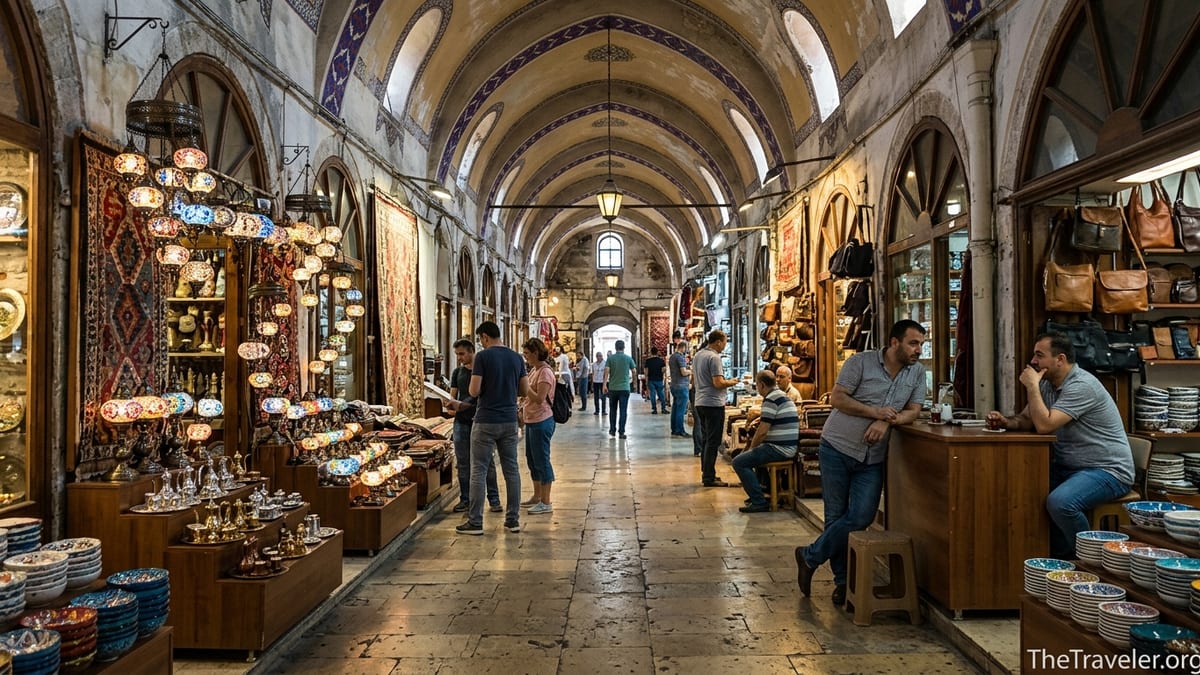
How the Grand Bazaar Works: Hours, Crowds and Pricing
The Grand Bazaar, or Kapalıçarşı, is open roughly from 9:00 a.m. to 7:00 p.m., Monday to Saturday, and closed on Sundays and on some major religious holidays. Shops start rolling up their metal shutters just before opening; by 9:30 a.m., most lanes are fully awake. From late morning through mid-afternoon, especially between about 11:00 a.m. and 4:00 p.m., the main arteries fill with tour groups and day-trippers. This is when the bazaar feels closest to a theme park and when prices tend to be least flexible because sellers know another buyer is two steps behind you.
Pricing is rarely fixed. For most textiles, lamps, ceramics, leather goods and even some jewelry, the first price is an opening move, not a final offer. Shopkeepers adjust those opening prices constantly, and crowd level, perceived budget and their own daily sales are major factors. On a packed Saturday in July, the same hand-painted tulip-motif bowl that is offered to you for the equivalent of 800 Turkish lira in the morning might start at 1,000 or more at noon when groups are pouring off buses and guides are funneling people down a particular lane.
Seasonal demand also shapes the bargaining environment. Istanbul’s tourism peaks from roughly late May through early October, with a second, smaller spike around Christmas and New Year’s. In these periods, many shops quietly raise their initial quotes, both to offset rising costs and because they are confident that someone will eventually pay close to those numbers. During shoulder or low season, sellers are noticeably more eager to close a deal, and that eagerness can translate into significantly lower final prices if you time your visit well.
Because of Türkiye’s inflation and the lira’s fluctuations, it is hard to assign permanent price tags, but recent traveler reports and 2026 guide updates suggest that a small machine-woven kilim might be quoted anywhere from the equivalent of 70 to 150 US dollars, depending almost entirely on your timing, negotiation and whether you have wandered into a high-rent, heavily touristed alley or a quieter side street.
Best Time of Day: When Shopkeepers Actually Cut Prices
For the cheapest prices at the Grand Bazaar, the sweet spots are typically weekday mornings shortly after opening and late afternoons in the final hours before closing. Many Istanbul-focused guides now explicitly recommend arriving between 9:00 and 11:00 a.m. on a Monday to Thursday, when crowds are thinner and shopkeepers are still settling into their day. Several local writers note that the “first sale of the day” is considered lucky, and shop owners will sometimes shave their margin to secure it. That can mean accepting your counteroffer more quickly or adding extras, such as a set of matching small bowls or a better-quality box, without raising the price.
Imagine walking into a lamp shop at 9:30 a.m. on a Tuesday. You point to a mid-sized mosaic chandelier and the vendor quotes 3,500 lira. You show polite interest but say that your budget is 2,200. Rather than sending you away, the owner calls it “a good morning price,” comes down to 2,600 and throws in a second, smaller pendant for an extra 500. Total: 3,100 lira for both, plus careful packing for your suitcase. If you repeat the same conversation at 1:30 p.m. when the shop is packed with a cruise ship group, the opening price is more likely to be 4,000 or higher, and the seller may not move much below 3,500 because there are plenty of other potential buyers in the lane.
The second window worth targeting is late afternoon, roughly 4:30 to 6:30 p.m. By then, some of the tour groups have drifted back toward their buses, and sellers start thinking about whether they have hit their target for the day. If a carpet dealer has had a slow Wednesday and you arrive at 5:15 p.m. seriously interested in a medium-size wool-on-cotton rug, you may find him more inclined to accept a thinner profit rather than risk no sale at all. In practical terms, that might mean getting a 1.8 by 1.2 meter kilim, originally quoted at the equivalent of 900 dollars, down to 550 or 600 with patient bargaining and a calm willingness to walk away.
By contrast, the most expensive and least pleasant window is usually late morning to mid-afternoon, approximately 11:00 a.m. to 3:00 p.m. The bazaar’s main corridors can feel jammed, and some shops adopt a slightly more aggressive style, knowing that many visitors are short on time and nervous about missing their chance. Prices at this time of day are less flexible because sellers view each interaction as one of dozens. If your priority is value, plan your serious shopping outside that peak band and use the midday crush for a quick tea break in one of the quieter courtyards instead.
Cheapest Days of the Week: Weekday Calm vs Weekend Surge
The bazaar’s weekly rhythm is just as important as the daily one. Monday through Thursday are generally calmer and better for bargains, especially in the morning. Friday can be mixed: some lanes slow down for the midday prayer, then pick up again afterward. Saturday is consistently the busiest day, as both international visitors and Istanbul locals descend on the area. On Saturdays in particular, many travelers report feeling more pressure and seeing fewer meaningful discounts, especially on popular gift items like pashmina-style scarves or boxed Turkish delight.
On a typical Tuesday outside high season, you may find that a shopkeeper selling Iznik-style tiles is willing to drop the price of a hand-painted 20-centimeter plate from a starting quote of 1,200 lira to about 700 or 750 after a friendly negotiation that includes tea and a chat about where you are from. The same plate on a Saturday in August might start at 1,500 or 1,600 lira, and even after bargaining you may struggle to get it under 1,000 because the seller has more walk-in customers and a shorter attention span for each.
Wholesale buyers and serious collectors also tend to shop on weekdays. If you walk through some of the quieter back streets near the leather and textile sections on a Wednesday morning, you might see local boutique owners and hotel managers checking fabric samples or ordering sets of bathrobes. When merchants know that experienced local buyers are in circulation, their opening prices for everyone can become a little more realistic, simply because inflated quotes are more likely to be called out.
Sundays, meanwhile, remove the Grand Bazaar from the equation entirely, as the complex is officially closed. Many visitors mistakenly plan a Sunday bazaar visit, only to arrive at locked gates. If your schedule is tight and you still want a market fix on a Sunday, you can explore the Spice Bazaar in Eminönü or neighborhood street markets instead, but expect a different mix of goods and bargaining dynamics from the main covered bazaar.
Seasonal Timing: When the Bazaar Is Quietest and Prices Softer
On a yearly level, Istanbul’s tourism ebbs and flows sharply, and so do bazaar prices. Late spring through early autumn, roughly late May to early October, is high season, with July and August as the busiest months. This is also when heat inside the covered lanes can become intense in the afternoons, making slow, thoughtful shopping harder. Shopkeepers know they are in a strong position: hotel occupancy is high, cruise ships are docked in Galataport and many visitors have the bazaar marked as a “must-see” in a short itinerary.
For cheaper shopping, look at the shoulder seasons: late March through April, and again from late October through early December, excluding any major holiday weeks. During these times, the weather is usually mild enough for comfortable wandering, yet there are noticeably fewer tour groups. A leather jacket that might be quoted at the equivalent of 300 to 350 dollars in mid-August could realistically be brought closer to 220 to 250 in late November, provided you negotiate well and pay in cash.
Winter, especially January and February, can be a surprisingly good time for bargain hunters willing to bundle up. Istanbul is cooler, with occasional rain or even a dusting of snow, and some tourism businesses see a lull. In the Grand Bazaar, many shops stay open on their usual weekday schedule, but there are fewer foreign tour groups. A jeweler who, in June, insists on selling a simple silver bracelet with Ottoman-style motifs for 1,000 lira might accept 700 or 750 in late January after a short, courteous back-and-forth, especially if it has been a slow day and you are paying cash.
One variable that especially affects foreign visitors is the exchange rate. The Turkish lira has been volatile in recent years, which means that local price increases are partly cushioned for those paying in dollars or euros. However, local inflation also pushes merchants to adjust tags more frequently. The combination makes shoulder-season and low-season travel even more attractive: you benefit from both lower demand and, in many cases, more favorable opening quotes that have not yet crept up to peak-season levels.
Real-World Price Examples: What Travelers Actually Pay
Although every purchase is unique, traveler accounts and recent 2026 guides paint a fairly consistent range for common bazaar items. For handwoven wool kilims in smaller sizes, recent visitors report opening quotes around the equivalent of 250 to 400 dollars, with final agreed prices often landing between 150 and 260 after firm negotiation, especially on weekday mornings outside peak season. For larger, hand-knotted carpets, starting quotes in the thousands of dollars are not unusual, but experienced buyers frequently bring those down by several hundred through patient bargaining and a willingness to compare multiple shops.
In lamp shops, a typical medium-sized hanging mosaic lamp might start around 2,500 to 3,500 lira for tourists who walk in at midday in high season. Travelers who visited on a calm weekday morning in late autumn report paying closer to 1,800 to 2,200 lira for similar pieces after some back-and-forth, sometimes with the seller including a sturdier bulb holder or better packaging in the final price. Sets of three small mosaic lamps mounted on a single stand might be quoted at 3,000 lira and negotiated down to around 2,100 or 2,200.
For ceramics, hand-painted plates and bowls vary widely in quality. A mass-produced, pattern-printed plate might be quoted between 300 and 500 lira, whereas genuinely hand-painted pieces of the same size can easily start near 1,000 lira. In quiet periods, travelers have reported getting a set of four small hand-painted bowls plus a larger serving bowl for roughly 1,800 to 2,000 lira after starting quotes totaling more than 3,000. The key is to visit when sellers are not juggling a dozen customers at once and to politely ask about the production process while you negotiate.
Smaller items like scarves, nazar amulets and boxed sweets show similar patterns, though the absolute numbers are lower. A silk-blend scarf initially quoted at 700 lira in June may drop to 400 or 450 with bargaining if you are early in the day and willing to buy more than one. A basic silver necklace with a blue evil-eye charm might go from 900 lira opening price to 600 or 650 in the quieter winter months. While you should avoid chasing exact “target numbers,” these examples illustrate how timing your visit to off-peak hours and seasons can noticeably tilt prices in your favor.
Practical Strategies: Combining Timing With Smart Bargaining
Choosing the right time to shop is powerful, but it works best when paired with a few practical tactics. First, separate your scouting and buying sessions. Use one midday walk through the bazaar just to get your bearings and note prices. Photograph items you like with the vendor’s permission, or jot down a lane name if it is visible. Then return the next morning, preferably on a weekday, to the shops where you felt most comfortable and begin serious bargaining. When a seller sees that you have come back specifically to them, they are more inclined to treat you as a committed customer rather than a one-off browser.
Second, anchor your bargaining in reality. Before heading inside, glance at similar items in less touristy parts of the city, such as the shops around the Spice Bazaar or smaller boutiques in neighborhoods like Kadıköy or Balat. If you know that a certain style of lamp is selling for around 1,500 lira outside the Grand Bazaar, it becomes easier to resist an opening quote of 4,000 and to counter confidently at a more reasonable level. Combine that knowledge with good timing, and you greatly increase your chances of bringing the price down to a fair figure.
Third, pay attention to body language and mood. In the first hour after opening or the last hour before closing, many shopkeepers are more relaxed and open to conversation. If the person you are dealing with looks rushed, distracted or impatient, consider coming back later rather than forcing a negotiation at a bad moment. A calm tea break while you wait for the lane to quiet slightly can be worth more than a dozen aggressive counteroffers.
Finally, remember that cash is often king. Many merchants are happy to accept credit cards, but they pay processing fees, and some quietly build those fees into quoted prices. In practice, that means you might hear something like, “The price is 2,500 lira, but if you pay cash, we can do 2,200.” This kind of flexibility shows up more often outside peak hours and seasons, when closing a deal at a lower margin is better than no deal at all.
The Takeaway
If your main goal at Istanbul’s Grand Bazaar is securing better deals rather than simply ticking a box on your sightseeing list, timing your visit is just as important as your haggling skills. The cheapest and calmest moments tend to be weekday mornings shortly after the bazaar opens and, to a lesser degree, late afternoons in the final hours before closing. Mondays through Thursdays outside the peak summer months typically offer the best combination of softer prices, more attentive shopkeepers and space to think clearly.
Seasonality matters too. Shoulder seasons like late March to April and late October to early December, as well as deep winter for those who do not mind the cold, can yield noticeably better prices on carpets, lamps, ceramics and jewelry. Crowd levels drop, merchants become more open to negotiation and your lira, dollars or euros stretch further.
Ultimately, there is no single “magic hour” when all prices collapse. But by avoiding the most crowded midday windows, planning your serious shopping for off-peak hours on weekdays and pairing good timing with calm, informed bargaining, you can transform the Grand Bazaar from an overwhelming tourist trap into a rewarding hunt for beautiful, fairly priced pieces of Turkish craftsmanship.
FAQ
Q1. What is the absolute best time of day to get cheaper prices at the Grand Bazaar?
The best window for value is usually between about 9:00 and 11:00 a.m. on weekdays, when the bazaar has just opened, crowds are thin and shopkeepers are keen to make their first sales of the day, often at more flexible prices.
Q2. Which days of the week are cheapest for shopping at the Grand Bazaar?
Monday through Thursday tend to be cheapest, especially outside major holidays and peak summer. Crowds are lighter, more local buyers are around and many merchants are more willing to bargain seriously than on busy Saturdays.
Q3. Is there a price difference between visiting in summer and winter?
Yes, in practice. In peak summer, opening prices are often higher because demand is strong and aisles are crowded. In winter and shoulder seasons, sellers see fewer tourists and are more likely to cut margins, so final prices after bargaining can be noticeably lower.
Q4. How much can good timing really save me on a typical purchase?
Exact amounts vary, but travelers who shop on weekday mornings or in low season often report paying 20 to 40 percent less than initial quotes given at busy midday hours in peak months, especially for higher-ticket items like carpets, lamps and leather.
Q5. Are evenings a good time for discounts at the Grand Bazaar?
Late afternoon, roughly 4:30 to 6:30 p.m., can be good for deals because some merchants want to finish the day with strong sales. However, the official closing time is around 7:00 p.m., so selection may be narrower and some shops may start shutting earlier.
Q6. Is the Grand Bazaar open on Sundays, and if not, where should I shop instead?
The Grand Bazaar is typically closed on Sundays. If you are in Istanbul that day, consider the nearby Spice Bazaar or neighborhood markets for a more local shopping experience, though the mix of products and bargaining style will be different.
Q7. Do shopkeepers really give better prices for the first sale of the day?
Many do. There is a common belief that the first sale brings luck, so early-morning customers sometimes find that their reasonable counteroffers are accepted more quickly, or that extras are included at no additional cost.
Q8. Is it worth visiting twice at different times of day for better deals?
Yes. A useful strategy is to browse briefly at midday to learn prices, then return the next morning to the shops you liked when it is calmer and merchants have more time. Many travelers find they can negotiate a better price on a second visit.
Q9. Are credit card prices higher than cash prices at the Grand Bazaar?
Often they are, though not always openly stated. Because card payments involve fees, some sellers either quote slightly higher for card payments or offer a small discount for cash. It is common to hear a lower “cash price” during negotiation, especially in off-peak times.
Q10. If I cannot avoid visiting at midday in high season, how can I still get a fair price?
In that case, do quick research in nearby non-touristy shops first, set a clear maximum budget, stay polite but firm in your counteroffers and be ready to walk away. Even at busy times, sellers will often come down if they sense you are informed and not in a rush.