


More news on this day
Grand Canyon National Park has reopened several major inner-canyon routes after August’s deadly flash floods, restoring access to some of its most famous trails while issuing some of the strongest safety warnings visitors have seen in years.
Get the latest news straight to your inbox!
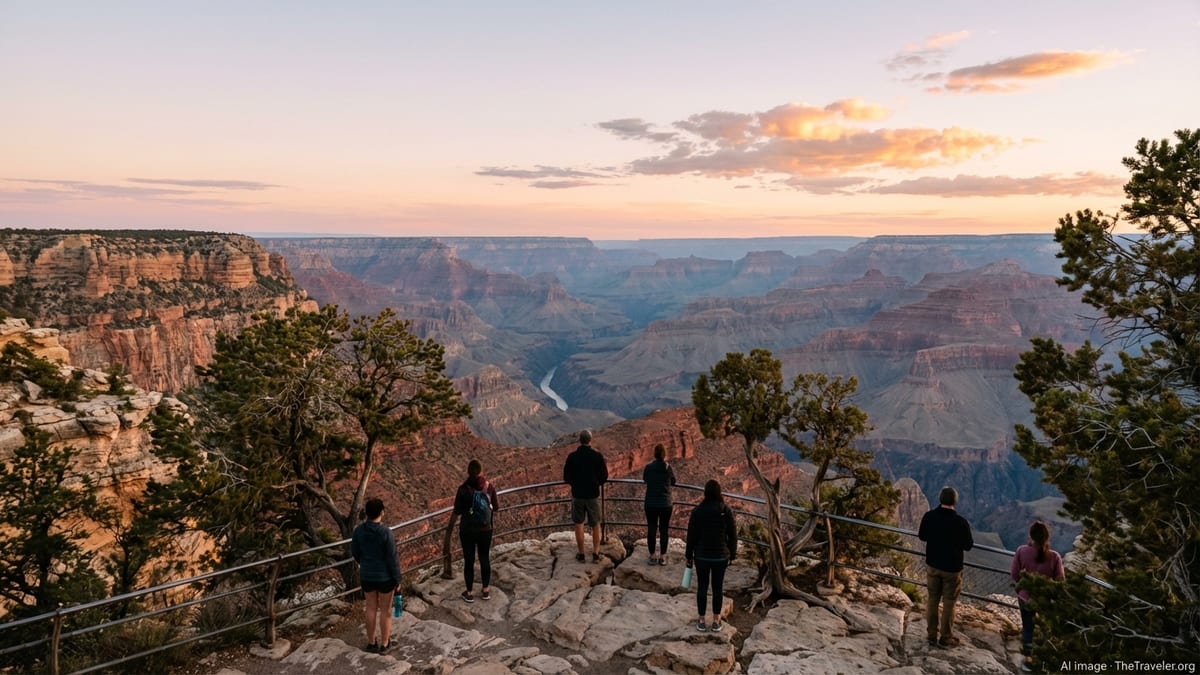
Popular Corridor Routes Reopen After August Flash Flood
Published updates indicate that parts of the park’s central corridor network, including sections of the Bright Angel and South Kaibab Trails, are again accessible to hikers following extensive damage from a 2026 flash flood that surged through Bright Angel Canyon on August 29. Reports describe washed-out trail segments, destroyed footbridges and debris piles that forced weeks of closures on routes normally used by thousands of visitors each season.
Information released in late October shows that Bright Angel Trail has reopened between the South Rim and Havasupai Gardens, with additional inner sections accessible on a limited basis. Regional coverage notes that this route had been closed below the Tonto junction while crews worked on unstable slopes and temporary crossings in steep terrain affected both by flooding and prior fire activity.
Public summaries of the reopening also highlight that the changes give hikers more options again for rim-to-river itineraries starting from the South Rim. However, some portions of the inner canyon remain off-limits, and services that many hikers once considered routine, such as potable water taps and overnight stays at Phantom Ranch, are still disrupted as damage assessments and repairs continue.
Information compiled from National Park Service bulletins and local news outlets stresses that visitors should not assume pre-flood conditions on any corridor trail. Real-time status for the main routes, including Bright Angel, South Kaibab and the River Trail, is being updated through the park’s Key Hiking Messages and operational notices as crews complete additional stabilization work.
North Kaibab and Phantom Ranch Area Remain Heavily Impacted
While sections of South Rim corridor routes are accessible again, the picture remains very different farther north. Park information and regional reporting indicate that the North Kaibab Trail, the primary inner-canyon route from the North Rim, is still closed in its entirety after the August flood heavily damaged the trail, footbridges and other infrastructure in Bright Angel Canyon.
According to those updates, the most severe impacts stretch through the narrow canyon leading toward Phantom Ranch. The flood followed earlier damage from the Dragon Bravo wildfire, which burned along upper portions of the North Kaibab corridor and left hillslopes susceptible to debris flows and rockfall. Publicly available information notes that visitors are being warned to expect unstable ground and potential flash-flood hazards in this burn scar once repairs eventually allow limited access.
The closure of North Kaibab means that classic north-to-south rim traverses are not available this season, and there is no firm timeline for full restoration of the route. Trail conditions in the inner canyon are still changing as engineers evaluate damaged bridges and assess how much permanent reconstruction will be required in Bright Angel Canyon.
In addition, reports from both the park and partner organizations emphasize that lodging and services in the Phantom Ranch area remain closed while cleanup and infrastructure work continue. Hikers planning overnight trips into the inner canyon are being directed toward other backcountry options, and reservations that depended on the Phantom Ranch corridor have in many cases been cancelled or refunded.
Severe Heat, Water and Flash-Flood Risks Dominate New Warnings
Even as some trails reopen, the language of recent advisories underscores that the inner canyon remains a high-risk environment, especially during the warm season. A June 2026 heat safety bulletin from the park, referenced in current coverage, strongly advises visitors to avoid strenuous inner-canyon hiking between 10 a.m. and 4 p.m. after a spike in heat-related incidents. Park information notes that shaded temperatures on some corridor trails can reach around 109 degrees Fahrenheit during peak summer afternoons, with even hotter conditions on sun-exposed slopes.
Public guidance for the current period continues to highlight that there may be no potable water available anywhere in the inner canyon, including at resthouses and Havasupai Gardens, when repairs or conservation measures are in effect. Key Hiking Messages state that hikers must be prepared to carry adequate water from the rim or collect and treat water from natural sources when inner-canyon taps are turned off.
Flash flooding is another central concern after the August disaster. Safety information stresses that dangerous floods can develop with little or no warning along the lower North Kaibab corridor and in the Phantom Ranch area, even when storms are not visible overhead. Visitors are being told to avoid narrow drainages and to pay close attention to weather forecasts, cloud build-up and any official alerts that are issued for the inner canyon.
The guidance is especially blunt about attempting rim-to-river hikes in a single day. Background information on the park and recent advisories describe such efforts as strongly discouraged, citing severe heat, steep elevation loss and gain, rocky footing and the lack of reliable water. The message is that recent trail reopenings do not reduce the physical demands of the routes or the consequences of misjudging conditions.
What Hikers Can Expect This Season on Reopened Routes
For travelers arriving in late October and the coming months, the reopened sections of Bright Angel and South Kaibab offer a mix of familiar scenery and noticeably altered infrastructure. News reports describe segments where the tread has been narrowed by washouts, temporary reroutes have been cut into talus slopes, and makeshift crossings span channels that once had more permanent bridges.
Rim services and parking on the South Rim remain available, but transportation routines may be different from past years. Information shared by experienced visitors and park partners notes that direct private-vehicle access to the South Kaibab trailhead is restricted, with hikers directed to use shuttle services from the Grand Canyon Village area. Schedules and pick-up points are posted at South Rim transit stops and in park publications, and visitors are being urged to build extra time into any corridor hike that depends on shuttle transport.
Seasonal weather patterns also play a role in current recommendations. October conditions on the South Rim can be cool or even wintry, while temperatures in the inner canyon may remain hot in the middle of the day. Planning materials advise hikers to be prepared for large temperature swings, to carry layers for changing conditions and to remember that early sunsets shorten the safe hiking window, especially for those unfamiliar with the terrain.
Information from the Grand Canyon Conservancy and other educational materials reiterates that the best strategy for first-time inner-canyon hikers is to choose modest objectives on the main corridor trails, such as turning around at the Mile-and-a-Half or Three-Mile Resthouses on Bright Angel. Given the ongoing recovery work from floods and fires, these more conservative itineraries align with the strong safety messaging now associated with the reopened routes.
Planning Ahead Becomes Essential for 2027 Trips
Looking ahead, publicly available documents indicate that some North Rim facilities and access roads are operating on modified schedules, and a tentative reopening of broader North Rim services is not expected until mid-May 2027. Until major repairs are completed, the park is signaling that inner-canyon travel patterns will differ from what visitors might remember from past years, with more pressure on South Rim trailheads and limited options for through-hikes.
Travel organizations and local tourism sites are advising would-be visitors to secure lodging, permits and transportation well in advance, and to be prepared for further changes as flood-recovery projects move forward. Because conditions on specific trails can change quickly due to rockfall, new erosion or ongoing construction, the most current information is being maintained through the park’s official advisories rather than printed maps or older guidebooks.
For hikers, the combination of newly reopened paths and heightened warnings adds up to a season in which preparation is central. Reports emphasize that anyone planning to venture below the rim should study the latest trail status, water availability notes, weather forecasts and shuttle schedules before committing to a route.
The reopening of key inner-canyon trails restores access to some of the Grand Canyon’s signature experiences, but the tone of recent updates makes clear that this access comes with sharper cautions. Visitors are being reminded that even on familiar routes, the canyon’s steep terrain, powerful weather and lingering flood damage leave little margin for error.