

More news on this day
Flight punctuality at Greece’s busiest airport improved markedly in June, with new figures from the country’s civil aviation authority indicating a sharp reduction in delays compared with a year earlier.
Get the latest news straight to your inbox!
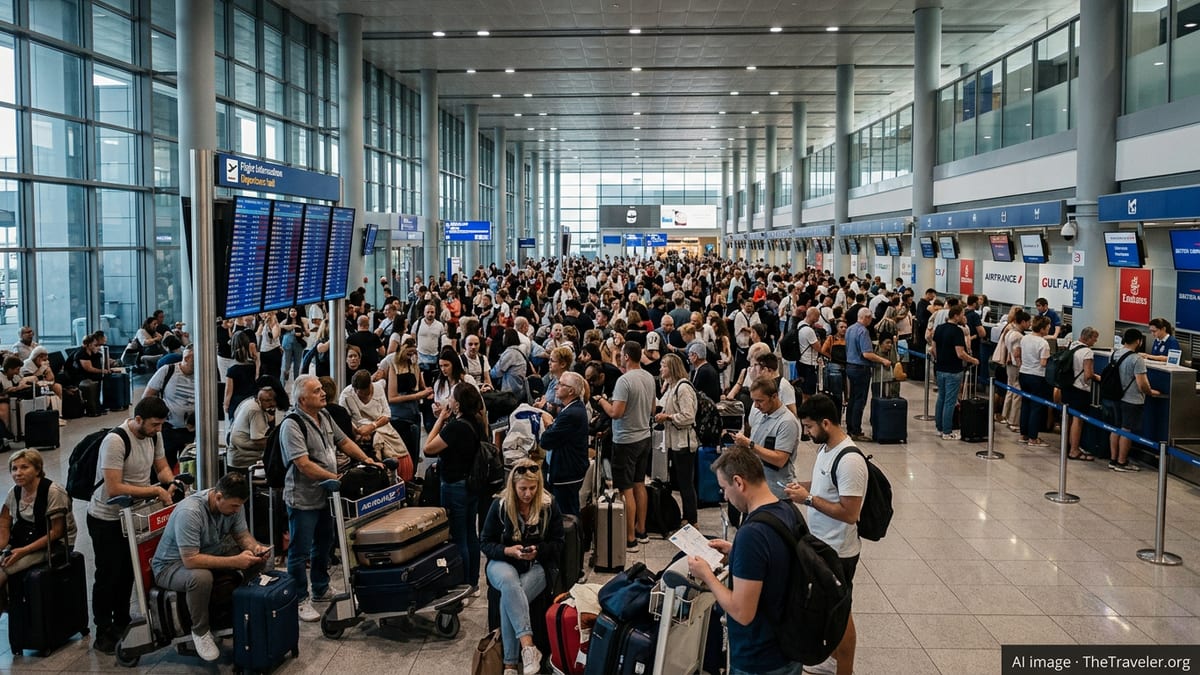
Sharp year on year drop in Athens delays
According to publicly available information from the Hellenic Civil Aviation Authority, total delays at Athens International Airport in June were down by just under one third compared with June last year. The data points to a reduction of 31.77 percent in cumulative delay minutes, highlighting a significant improvement in how traffic is being handled at the country’s main gateway.
The same figures indicate that the average delay per flight attributed to air traffic causes at Athens fell to around four and a half minutes in June, from six and a half minutes in the same month of the previous year. That decline suggests that, despite ongoing pressures on Greek airspace in the summer peak, operational measures have had a measurable impact on on time performance.
Reports on the new statistics note that the improvement comes after a period of heightened scrutiny of Greece’s aviation infrastructure, including earlier technical inspections and debate over staffing and capacity. The latest numbers offer a contrasting picture to isolated disruption events, underlining that, across the full month of June, punctuality trends moved in a positive direction.
For passengers, the reduction in average delay minutes can translate into more predictable connections and a smoother travel experience at an airport that serves as a key hub both for domestic island routes and for international services into and out of Greece.
Improvement comes despite June disruption episodes
The better monthly performance has been recorded in a period that also featured several high profile disruption incidents. In mid June, scheduled inspections of navigation and landing systems at Athens International Airport temporarily reduced traffic flow for specific time windows, leading to delays on a number of arrivals and departures, according to published coverage in Greek and international media.
Later in the month, a radar failure affecting one of the approach systems used for Athens operations resulted in extended delays and knock on effects across the airport’s flight schedule. Public reports described queues and longer waiting times for both departing and arriving passengers during that episode, which occurred against the backdrop of already strong seasonal demand.
Despite these events, the civil aviation authority’s aggregated June figures still show a clear year on year decline in delays. The contrast illustrates how a small number of operational incidents can generate headlines, while the underlying statistical picture over a full month can reflect broader efficiency gains and capacity management efforts.
Industry observers note that, as Greece continues to attract high volumes of leisure traffic, the system’s ability to absorb shocks from technical checks or equipment failures without erasing overall punctuality gains is becoming an important indicator of resilience.
Context of rising traffic across Greece and Europe
The improvement in Athens comes as air traffic in Greece and across Europe continues to grow. Traffic data for previous summers show steady increases in flight numbers at Athens International Airport, with both domestic and international movements trending upward over recent years. That growth has raised questions about whether air navigation services and airport infrastructure can keep pace during peak months.
At European level, recent briefings from regional air traffic coordination bodies indicate that, while overall delays in early June have eased compared with last year, Greece remains among the more heavily loaded parts of the network in terms of en route delay contributions. This reflects the country’s position on busy north south traffic flows and the seasonal concentration of flights serving islands and coastal destinations.
Against that backdrop, the reduction in local delay minutes at Athens suggests that measures targeted at airport and terminal operations may be offsetting some of the structural pressures generated by network wide demand and sector capacity constraints. The data hint that improvements in procedures, staffing allocation or slot management may be helping to smooth traffic flows, even when higher altitude en route segments remain congested.
For airlines and passengers, the difference between en route bottlenecks and airport side performance is significant. While carriers operating through Greek airspace still need to plan for potential hold times or reroutings at peak hours, the reduced ground and terminal related delays at Athens can help limit missed connections and crew scheduling complications.
Passenger impact as peak summer season unfolds
For travelers heading to or through Greece, the latest figures offer a cautiously positive signal at the start of the main tourism season. Fewer and shorter delays at Athens International Airport mean that itineraries involving domestic connections to the islands or regional onward flights may be more likely to run close to schedule than in the recent past.
Travel industry commentators point out, however, that headline numbers on average delay minutes do not eliminate the risk of localized disruption. Technical checks, weather related constraints or equipment failures can still create significant backlogs on individual days, as seen during the June radar incident. Passengers are therefore advised by airlines and consumer groups to continue allowing sufficient connection times and to monitor flight status closely.
The civil aviation authority’s June report also feeds into a wider conversation about how Greece manages its rapidly expanding tourism sector. As the country pursues new routes and higher seat capacity, maintaining and further improving punctuality at its primary hub is seen as an important factor in preserving its reputation as a reliable gateway for visitors.
Looking ahead to the rest of the summer, the balance between strong demand and operational robustness will remain in focus. The June data showing sharply reduced delays at Athens will be closely watched by industry analysts as subsequent monthly updates reveal whether the improvement can be sustained through the busiest weeks of July and August.