

More news on this day
Royal Caribbean’s Legend of the Seas will debut in 2026 as the third ship in the line’s Icon class, prompting close comparisons with trailblazing sisters Icon of the Seas and Star of the Seas. While the trio share a core design focused on large-scale, family-oriented cruising, recent disclosures highlight meaningful differences in size, itineraries, and onboard experiences that distinguish Legend from the two ships already at sea.
Get the latest news straight to your inbox!
Size, Capacity and Technical Profile
Publicly available data indicate that all three vessels sit at the very top of the cruise market in terms of scale, but Legend of the Seas edges ahead on headline figures. Cruise industry coverage reports that Legend is fractionally longer than both Icon of the Seas and Star of the Seas, taking over the title of world’s largest cruise ship by a matter of inches. Tonnage figures circulating in recent months place Legend above 250,000 gross tons, slightly exceeding the 249,000–plus gross ton range associated with Icon and Star.
Passenger capacity also shows a modest upward trend. Icon of the Seas, which entered service in early 2024, is typically listed with a maximum guest capacity in the neighborhood of 7,600 when every berth is occupied. Star of the Seas, delivered in mid‑2025, broadly matches that capacity profile. Legend’s reported figures suggest a small increase in maximum occupancy, aided by refinements in cabin mix and internal layout rather than major changes to the hull form.
From a technical standpoint, the three ships follow the same broad playbook: advanced waste and energy management systems, liquefied natural gas as a primary fuel, and extensive shore power connectivity where ports can support it. Coverage of the class emphasizes incremental gains with each hull, and Legend of the Seas is being portrayed as the most refined version, with modest improvements to efficiency and hotel operations rather than a disruptive redesign.
Despite those differences, observers note that Icon, Star and Legend remain near twins to the casual eye. The variations in dimensions and capacity are measured in feet and hundreds of passengers, not in wholesale changes to the basic platform.
Deployment: Caribbean Icons vs Mediterranean Debut
One of the clearest distinctions between Legend of the Seas and its predecessors lies in where each ship will sail. Icon of the Seas launched into the prime Caribbean market, homeporting in South Florida and operating weeklong itineraries that focus on marquee ports and Royal Caribbean’s private island product. Star of the Seas continued this strategy, based at Port Canaveral and positioning itself squarely within the family vacation market tied to Central Florida.
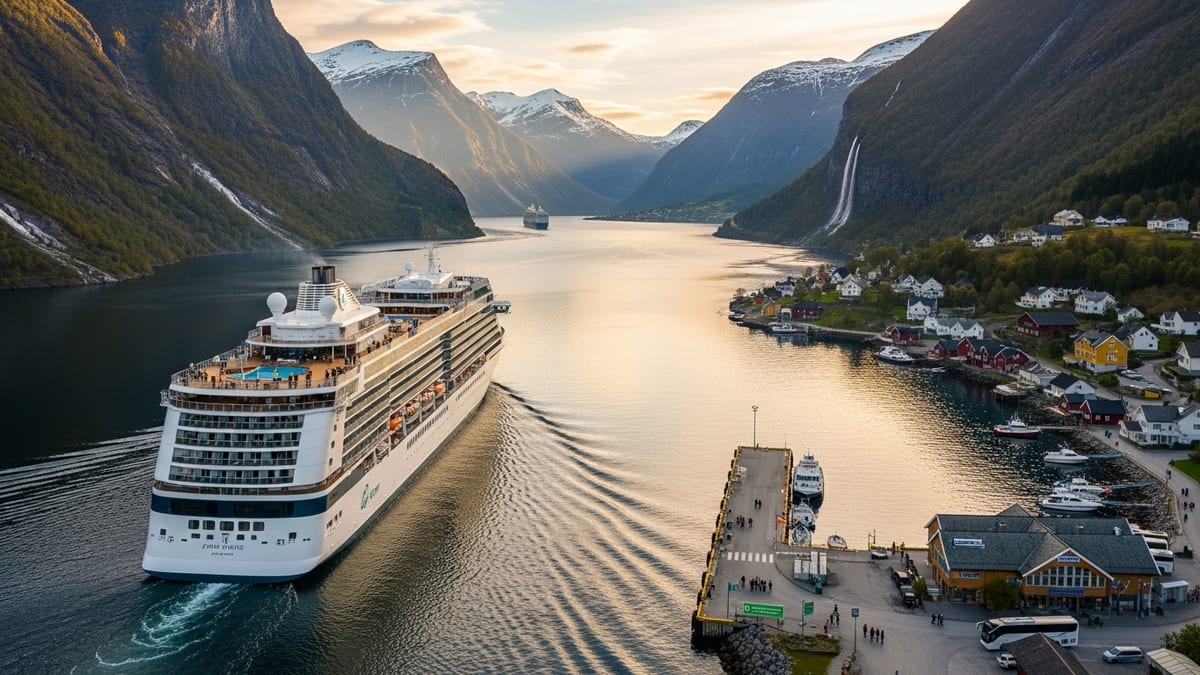
Legend of the Seas is being introduced with a different geographic story. Recent schedule disclosures and industry summaries point to a debut season in the Western Mediterranean from July 2026, with departures from major European ports rather than a Caribbean home base. This marks the first time an Icon‑class ship will open its career in Europe, giving the company a flagship‑level presence in one of the world’s most competitive cruise regions.
The shift in deployment affects the onboard experience indirectly. Mediterranean itineraries typically emphasize port‑intensive schedules with cultural and historical sightseeing, contrasting with the more resort‑style, sea‑day‑heavy patterns common on some Caribbean runs. Legend of the Seas is therefore being presented as combining the amenities of a mega‑resort ship with itineraries that lean heavily into classic European destinations.
Analysts note that this strategy also staggers the fleet’s geographic coverage. With Icon and Star anchoring year‑round Caribbean operations, Legend can extend the class’s appeal to European markets without diluting capacity on North American routes.
Neighborhoods, Waterparks and Onboard Features
All three Icon‑class ships are built around a neighborhood concept, dividing the vessel into themed areas that collect dining, entertainment and accommodation options. Icon of the Seas introduced this layout with zones such as the AquaDome, Central Park‑style greenery, family‑focused neighborhoods and a dedicated thrill area. Star of the Seas replicated the framework, with coverage highlighting familiar features including the Category 6 waterpark, the Royal Bay pool and a rooftop bar environment aimed at adults.
Legend of the Seas follows the same multi‑neighborhood blueprint but layers in refinements. Recent previews describe eight themed neighborhoods, with Category 6 again billed as the largest waterpark at sea, packing multiple record‑seeking slides and a prominent skywalk attraction. Reports suggest tweaks to crowd flow, pool deck configuration and family spaces, reflecting lessons learned from the first two ships’ operation.
Dining and entertainment continue the pattern of evolution rather than revolution. Icon and Star already field more than 40 venues between restaurants, lounges and performance spaces, and Legend is expected to meet or gently exceed that tally. Trade publications point to new or reimagined specialty concepts on Legend, intended to broaden the range of included and extra‑fee options without significantly altering the overall balance.
Entertainment offerings across the class are built on large‑scale production shows, technology‑assisted spectacles in the AquaDome, and family‑friendly programming. Star of the Seas garnered attention for headline productions tied to popular culture and for its emphasis on immersive staging. Legend is anticipated to continue that direction, though the exact show lineup has been outlined only in broad strokes in advance of the debut.
Design Evolution and Passenger Experience
Beyond headline statistics, the key question for travelers is how Legend of the Seas will feel different on board compared with Icon and Star. Cruise analysts and early design briefings suggest that the third ship reflects accumulated feedback from the first two, with subtle but important adjustments in circulation, wayfinding and public‑space sizing.
Reports indicate that particular attention has been given to pool‑deck crowding, family traffic through high‑demand areas and the integration of suite‑level spaces. While Icon and Star already introduced substantial suite neighborhoods and exclusive venues, Legend appears set to further delineate premium zones while maintaining access to the ship’s marquee experiences for standard cabin guests.
Cabin categories across Icon, Star and Legend remain broadly consistent, with an emphasis on family‑friendly layouts such as infinite balcony configurations and multi‑room suites. Legend’s documentation hints at minor shifts in mix, with slightly more capacity dedicated to higher‑yield accommodations and to cabins designed for three or more occupants, reflecting strong demand patterns on the earlier ships.
Accessibility and sustainability themes also run through the class. Icon and Star debuted expanded accessible stateroom counts and upgraded environmental systems compared with earlier Royal Caribbean designs. Legend, as the newest in the trio, is expected to incorporate incremental improvements in both areas, though still within the same overall framework.
What Legend of the Seas Means for the Icon Class
Industry observers view Legend of the Seas as a consolidation point for Royal Caribbean’s Icon class strategy. Icon of the Seas established the template, testing the market for a ship that functions as a floating resort with broad appeal to multigenerational families. Star of the Seas confirmed that demand by bringing a near‑sister ship to a different Florida homeport and emphasizing the family vacation segment tied to Orlando and surrounding drive markets.
Legend of the Seas extends that approach onto a global stage. By launching in Europe and incorporating modest design expansions, the ship is intended to showcase the Icon concept beyond the Caribbean and to compete directly with other large vessels that have historically dominated Mediterranean summers. The slightly larger dimensions and refreshed onboard mix serve as marketing levers as much as operational changes.
For travelers comparing the three, publicly available information suggests that Icon, Star and Legend will feel fundamentally similar in terms of scale, amenities and target audience. The main distinctions lie in where they sail, how their public spaces have been refined over successive builds and how Legend of the Seas leverages its status as the newest and marginally largest member of the class to position itself in a different region.
With Legend’s debut season approaching, attention within the cruise sector is turning to how the ship will perform in its European role and whether its incremental enhancements will shape plans for future Icon‑class vessels that follow.