


More news on this day
Delta Air Lines has recorded the highest number of flight cancellations worldwide after a fuel-system problem at one of its major hubs triggered a ground stop, snarling operations at the height of the busy summer travel period.
Get the latest news straight to your inbox!
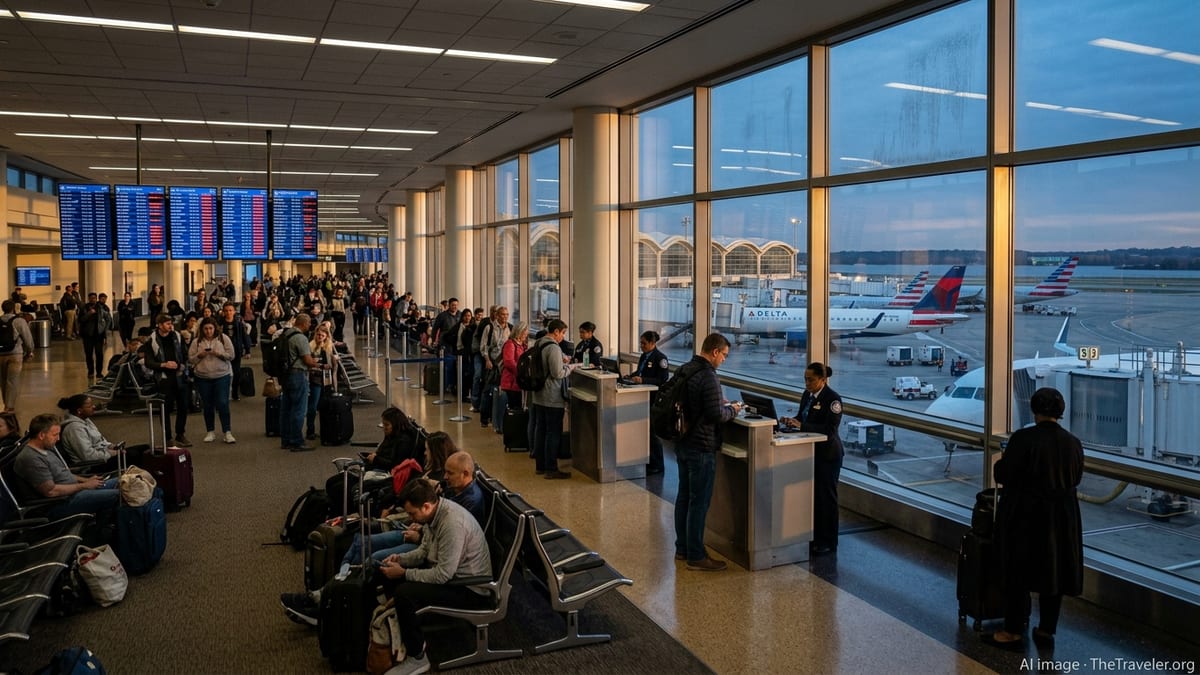
Fuel System Trouble Triggers Ground Stop
Publicly available aviation data and local media coverage indicate that a fueling system malfunction at a major U.S. airport led to a temporary halt in departures and arrivals, directly affecting Delta’s operations. Ground stops are used to pause traffic when conditions on the airfield or in surrounding airspace make normal movements unsafe or impractical.
Reports from multiple outlets describe aircraft already at gates being unable to refuel and others forced to wait on taxiways for clearance while technicians worked to restore normal fuel flow. The knock-on effect quickly spread through Delta’s schedule, with aircraft and crews out of position just as evening and early morning bank flights were scheduled to depart.
The disruption coincided with an already busy holiday stretch, magnifying the impact on travelers. Social media posts and passenger accounts referenced hours-long waits onboard and in terminals as ground handlers and airport operations adjusted to the fuel outage and subsequent restart of the system.
While airport officials and federal air traffic managers lifted the formal ground stop once fueling capacity was partially restored, the operational shock to airlines based at the affected hub, particularly Delta, continued well into the next day.
Delta Leads Global Cancellations Amid Fuel Disruption
Independent flight-tracking dashboards show Delta at the top of the global cancellation tables for the day of the incident, with several hundred flights scrapped across its network. Industry rivals of comparable size reported comparatively few cancellations, highlighting how concentrated the impact was on a carrier whose schedule is heavily routed through the affected hub.
Analytics from widely used tracking platforms indicate that Delta’s cancellation rate significantly exceeded those of other large U.S. airlines, even though many of them operate to or from the same region. Because Delta’s hub structure channels a large proportion of its domestic and international traffic through a small number of key airports, any local operational failure can quickly cascade into a systemwide disruption.
The combination of outright cancellations and extensive delays left aircraft out of sequence for subsequent flights, limiting the airline’s ability to recover quickly once the ground stop ended. Some routes experienced repeated schedule changes as planners attempted to reposition planes and crews while prioritizing long-haul and high-demand services.
Historical performance data show that days when Delta leads global cancellation counts often coincide with localized weather or infrastructure problems at one of its hubs. In this case, the unique nature of a fuel-system issue meant that the disruption was less predictable than a forecast storm, giving network planners less time to thin schedules in advance.
Hub-Centric Network Magnifies Operational Shock
Delta’s business model relies on funneling large numbers of passengers through a handful of powerful hubs, where banks of arrivals connect tightly to waves of departures. This hub-and-spoke structure is efficient in normal conditions but highly sensitive to sudden bottlenecks, such as a temporary loss of fueling capacity.
When a ground stop is imposed at a hub, inbound flights may be held at their origin airports, diverted en route, or placed into holding patterns. Outbound flights cannot depart without fuel, appropriate runway access, and gate availability. As aircraft stack up on the ground, gates become scarce, crew duty clocks continue to tick, and even a short interruption can span into an all-day disruption as crews hit maximum legal working hours.
Experts who track airline performance note that fuel-related ground disruptions are especially challenging because they affect many stages of a turn. Aircraft may arrive with enough fuel to land but not enough to continue to another destination without refueling. That forces airlines to prioritize which departures receive available fuel first, typically focusing on longer segments and international links.
Once the immediate safety and technical issues are addressed, the airline faces a secondary challenge of rebalancing its network. Aircraft that were meant to be in other cities for later departures remain stuck at the hub, leading to cancellations on routes far from the original problem airport.
Passengers Face Missed Connections and Overnight Stays
Travelers caught in Delta’s latest disruption described missed connections, unexpected overnight stays, and extended queue times at customer service counters. With many flights full for the holiday period, rebooking options were limited, and some passengers reported being shifted onto competing airlines or rerouted through alternative hubs to reach their destinations.
Common knock-on problems included checked bags that did not travel on the same flight as their owners, as well as families being split across different replacement itineraries. In some cases, passengers reported being rebooked on flights departing a full day later, particularly on popular leisure routes that were already heavily sold.
Public guidance from the airline emphasized the use of digital channels for rebooking, including mobile apps and websites, in an effort to reduce pressure on airport agents. However, many affected travelers still turned to in-person service desks, especially when complex international itineraries or special assistance needs required manual review.
Consumer advocates note that passengers facing wide-scale cancellations caused by operational disruptions should document expenses such as hotels and meals in case reimbursement options become available. Policies vary by carrier and jurisdiction, and in the United States there is no blanket requirement for airlines to cover all out-of-pocket costs after irregular operations, even when disruptions are not weather-related.
Recovery Efforts and What Travelers Should Watch Next
Operational data tracking the day after the ground stop suggest that Delta began to stabilize its schedule, with a lower but still elevated level of cancellations and delays compared with normal days. As aircraft and crews returned to their intended rotations, the number of severely delayed flights gradually declined.
Travel analysts point out that recovery from a fuel-related ground event can take more than one full day, especially when the disruption overlaps with a peak travel weekend. Flights late in the day often remain vulnerable as they rely on aircraft scheduled to operate multiple segments beforehand, any one of which can inherit earlier delays.
Passengers booked to travel with Delta in the days following the incident are advised, by available public guidance, to monitor their flight status frequently and to allow extra time for connections. Choosing earlier departures, where possible, may improve the chances of successful same-day reaccommodation if a flight is delayed or canceled.
While detailed internal diagnostics about the fueling issue remain limited to technical teams and airport stakeholders, the incident underscores the importance of resilient ground infrastructure at major hubs. For travelers, it is the latest reminder that even in an era of sophisticated scheduling tools and robust safety protocols, a single point of failure on the ground can ripple across an entire global network.