

More news on this day
Hundreds of passengers traveling through Paris Charles de Gaulle, also known as Roissy Airport, have faced mounting disruption after 38 flight suspensions and 42 delays rippled across key routes linking Ireland, Belgium, the United States, Tunisia, Japan and Côte d’Ivoire over the weekend.
Get the latest news straight to your inbox!
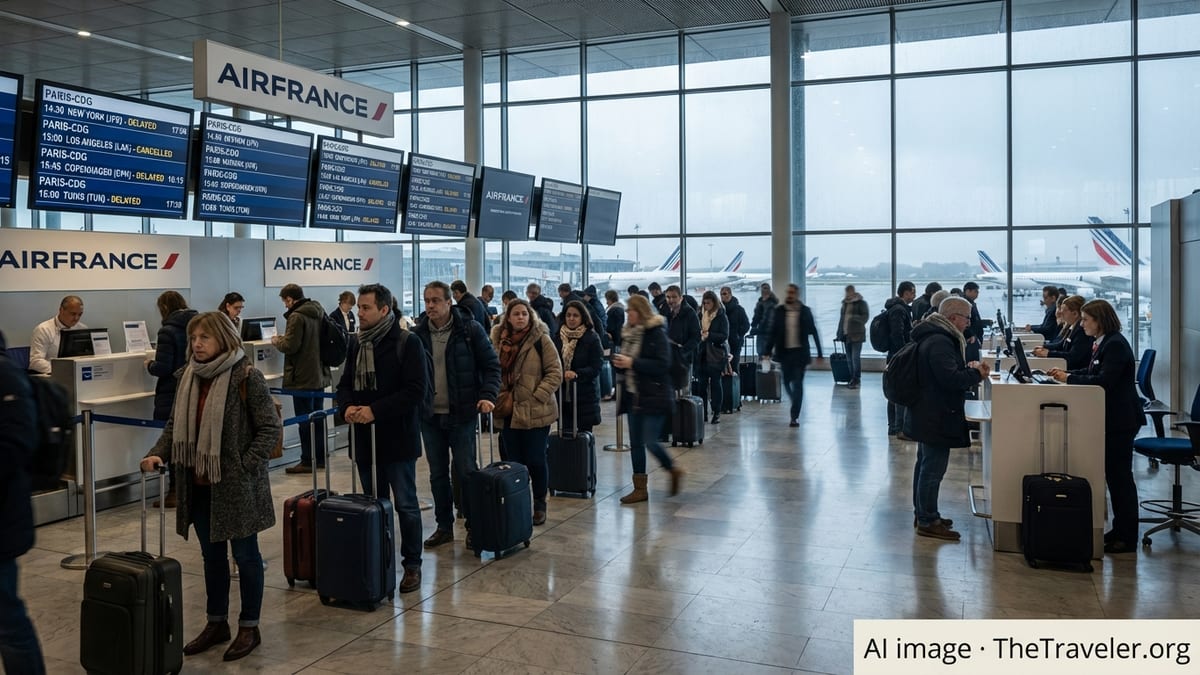
Wave of Disruptions Hits Major Carriers at France’s Busiest Hub
Published coverage indicates that on Sunday, July 5, 2026, Paris Charles de Gaulle recorded one of its most difficult operational days of the summer, as a combination of cancellations and knock-on delays affected at least 80 flights. A detailed breakdown from industry-focused reporting pointed to 38 outright suspensions and 42 delayed services on routes within, into or out of the airport.
Among those affected were flights operated by Air France and its regional subsidiary HOP!, along with Aer Lingus, United Airlines, Brussels Airlines, Emirates and several additional European and long-haul carriers. The affected network stretched from short-haul hops to Dublin and Brussels to long-haul links touching U.S. gateways, North and West Africa, the Middle East and East Asia.
The disruption has been particularly visible because of the scale of Paris Charles de Gaulle, which is France’s primary international gateway and one of Europe’s busiest hubs. Publicly available airport data and airline trackers show that delays on heavily used connecting banks can quickly cascade, leaving aircraft and crews out of position and compounding the impact for travelers well beyond France.
Reports describe scenes of crowded departure halls, long rebooking queues and passengers stuck overnight while waiting for alternative connections. Many travelers with multiple legs on different carriers have seen an initial delay at Paris knock out onward flights to destinations as varied as Dublin, Tunis, Abidjan and Tokyo.
Key Routes Linking Ireland, Belgium, North Africa and the US Affected
Much of the attention has focused on services connecting Paris with Ireland and Belgium, which serve as important feeders into larger transatlantic and intercontinental networks. Flight-tracking pages for Aer Lingus services between Paris Charles de Gaulle and Dublin around July 4 to 6 show schedule changes and delays, underlining the fragility of tight connection windows when an initial sector is disrupted.
Transatlantic traffic has also felt the strain. Data from tracker platforms for United Airlines and Air France long-haul services between Paris and major U.S. hubs, including Newark and other East and West Coast destinations, show altered departure times, prolonged ground holds and, in some cases, cancellations that required passengers to be moved to later flights or different routings.
Published reports further highlight north and west African destinations such as Tunis and Abidjan among those affected by the July 5 disruption. Because many of these flights operate as overnight or late-evening services, a cancellation or extended delay can easily turn into an unplanned overnight stay for connecting travelers who have already arrived from other European or transatlantic sectors.
Tokyo and other Asian destinations also appear in the disruption pattern, reflecting the role of Paris Charles de Gaulle as a global transfer point. Passengers on these longer routes face particular complications when rebookings push arrivals by many hours, as missed onward domestic connections or hotel bookings add to the cost and inconvenience of the disruption.
What Is Driving the Cancellations and Delays
The precise mix of causes behind the July 5 and July 6 disruptions varies flight by flight, but recent months in European aviation have seen a recurring combination of operational strains. Industry analyses and advisory documents have pointed to air traffic control restrictions, staffing shortages, tight aircraft utilization and localized weather conditions as frequent triggers for cascading problems at major hubs such as Paris.
Separate advisories focusing on Air France operations in 2026 describe instances where weather across Western Europe, reduced airport capacity and air traffic control constraints have forced preemptive cancellations. In other cases, highly utilized fleets can be thrown off schedule by a single technical issue, with equipment and crew rotations then affecting multiple routes in quick succession.
In the broader French and European context, earlier this year’s air traffic control strikes and sector capacity caps created a backlog of rescheduled and retimed operations across the network. While the July 5 event at Charles de Gaulle has been described in current reports primarily as an operational disruption rather than a new strike episode, it is occurring against a background of already stretched summer schedules.
Crowded terminals and long security and immigration lines compound the issue for passengers attempting tight connections. Travel forums and passenger-rights organizations have repeatedly warned that even a short delay on an inbound flight to Paris can cause travelers to miss onward departures, particularly where they must change terminals or re-clear security.
Passenger Rights and Options Under EU Rules
For travelers caught up in the latest Paris disruption, European Union air passenger protections provide an important framework. Under the EU Air Passenger Rights Regulation, commonly known as EU261, passengers on flights departing from an EU airport or operated by an EU carrier have entitlements that may include rerouting, refunds and set levels of financial compensation in certain circumstances.
Publicly available summaries of the regulation explain that when long-haul flights are cancelled or delayed by several hours for reasons that are within the airline’s control, travelers may be eligible for monetary compensation, which can reach several hundred euros per person depending on distance and length of delay. Where disruptions are caused by factors considered outside the airline’s control, such as severe weather or certain air traffic control restrictions, carriers are still expected to provide care and assistance, including meals, refreshments and, when necessary, hotel accommodation.
Consumer-rights guidance stresses the importance for affected travelers of retaining boarding passes, booking confirmations and any written communication about cancellations or delays, as these documents can support later claims. Passengers are also encouraged to check airline apps and official channels regularly and to confirm whether they prefer a refund of the unused ticket portion or a rerouted itinerary to their final destination.
Specialist claims companies and national enforcement bodies offer additional support for those who encounter difficulties asserting their rights. However, these services may involve fees or lengthy processing times, so travelers are advised to first pursue compensation or reimbursement directly with the airline before escalating their case.
How Travelers Can Prepare for Ongoing Summer Volatility
The disruption at Paris Charles de Gaulle on July 5 and 6 comes at the height of Europe’s summer travel season, when tight schedules, full flights and high passenger volumes leave little margin for error. Industry experts note that at congested hubs, relatively minor operational issues can quickly escalate into widespread knock-on delays, particularly when multiple carriers share the same peak periods for departures and arrivals.
For travelers with upcoming itineraries through Paris or other major European hubs, practical steps can help reduce exposure to disruption. Travel advisories frequently recommend booking longer connection times, especially when changing terminals or moving from non-Schengen to Schengen zones, where additional border checks apply. Choosing earlier flights in the day can also provide more rebooking options if something goes wrong.
Passengers are further encouraged to monitor their flight status via official airline channels in the days and hours before departure and to register for real-time alerts. In the event of cancellations or significant delays, many carriers now allow limited self-service rebooking through mobile apps, which can be faster than waiting in airport queues during major disruption events.
With reports indicating that Paris Charles de Gaulle is likely to remain busy throughout July, travelers connecting between Ireland, Belgium, North America, Africa and Asia may wish to factor in the recent pattern of disruptions when planning trips. While airlines and airports continue working to stabilize schedules, the experience of the latest wave of cancellations and delays shows that preparation and flexibility remain essential for anyone transiting one of Europe’s key aviation hubs this summer.