


More news on this day
A once in a lifetime total solar eclipse crossing western Iceland in August 2026 is emerging as an unlikely driver of new flights, cruise itineraries and package tours, with Delta and other travel brands preparing to move thousands of visitors who hope to turn minutes of darkness into a Northern Atlantic holiday.
Get the latest news straight to your inbox!
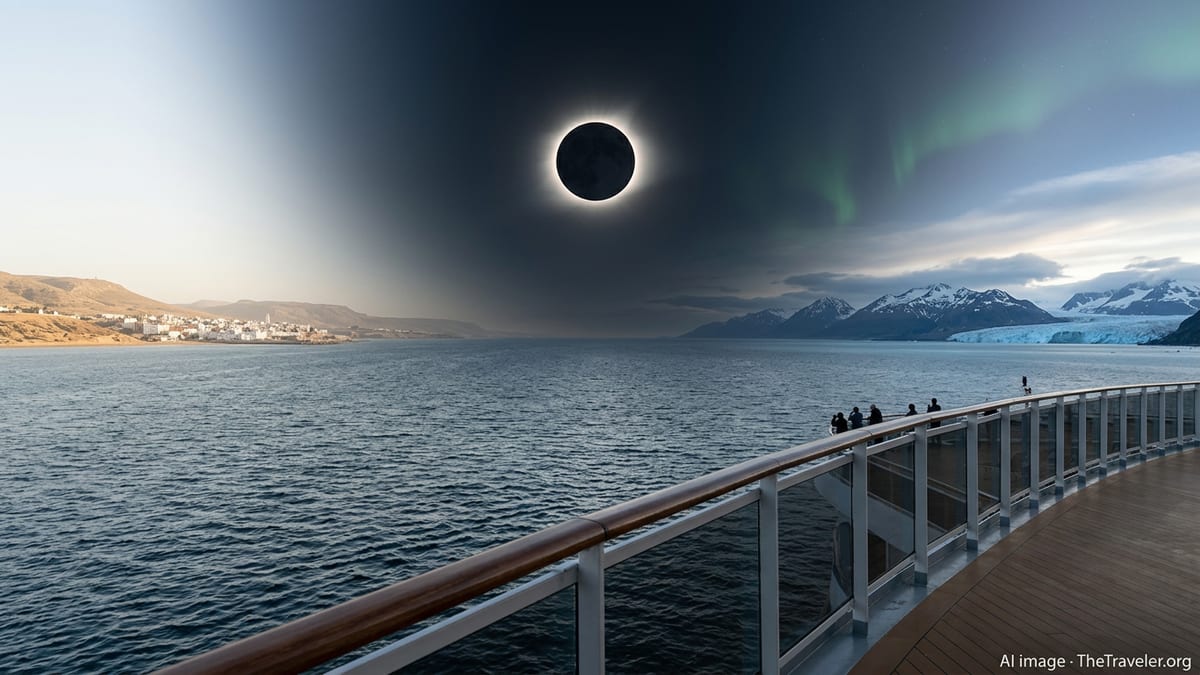
A rare eclipse puts Iceland in the spotlight
The total solar eclipse on 12 August 2026 will sweep across parts of Russia, Greenland, Iceland and Spain, placing Iceland directly in the narrow path where the Moon fully covers the Sun for just over two minutes. Astronomical data shows that the center of the path crosses offshore west of Iceland, with totality visible across the Westfjords, West Iceland, the capital region and the Reykjanes Peninsula, including Keflavik International Airport.
Travel information published by Icelandic tourism bodies describes the event as exceptional for the country, noting that the last comparable eclipse visible from Iceland took place in the 1950s and that there will not be another total eclipse over any part of the island nation until the 22nd century. That timeline is turning the 2026 event into a catalyst for long haul travel, particularly from North America and Europe.
Specialist eclipse publications report that maximum totality for the 2026 event, around two minutes and 18 seconds, occurs just off Iceland’s west coast, making the island a strategic base for travelers who want both solid ground viewing and the chance to join flights that trace the shadow over the North Atlantic. The combination of high latitude scenery and rare celestial timing is prompting comparisons with notable eclipse tourism waves in recent years in Chile, the United States and Australia.
Delta leans in through cruise and tour partnerships
While full schedules for August 2026 are still being refined, information on Delta branded cruise offerings shows that the carrier is already marketing Iceland as an eclipse stage. Delta’s cruise booking platform is promoting a “7 Night Iceland Total Solar Eclipse” sailing on a large ocean vessel, scheduled for August 2026 and designed to position guests in the path of totality while combining calls at Icelandic ports with North Atlantic cruising.
Promotional materials highlight that bookings made within specific summer 2026 windows qualify for airfare incentives when flights are purchased through Delta’s channels, effectively linking the cruise itinerary with the airline’s global network. Industry observers say such offers function as a signal that large US carriers see eclipse demand as strong enough to justify more capacity to Iceland, even if announcements about extra point to point flights are still pending.
Delta’s move into eclipse themed cruises mirrors a broader trend in which airlines use partnerships with cruise and tour operators to test demand around one off celestial events without immediately adding a full slate of their own charters. Travel analysts note that, if initial bookings remain robust through late 2025, it would be consistent with past patterns for carriers to upgauge aircraft on key routes or insert additional rotations around the peak travel window that runs from roughly 7 to 14 August 2026.
Charter flights and eclipse chasing from the air
Alongside large network airlines, dedicated eclipse travel operators are working with Icelandic carriers and charter companies to offer flights that aim to follow the Moon’s shadow along the path of totality. One project marketed under the name Umbracept 2026 describes a charter flight departing Reykjavík Domestic Airport on eclipse day, climbing above cloud layers and executing a carefully timed turn to align with the darkest part of the shadow over the North Atlantic.
According to public briefings from the organizers, the flight plan has been designed so that passengers can experience an extended period of totality compared with most ground locations, using the aircraft’s speed and heading to “chase” the eclipse for as long as practicable. The concept draws on previous eclipse flights in Europe, where commercial jets have performed wide arcs or loops within controlled airspace to give travelers a clear, unobstructed view above potential cloud cover.
The Icelandic Transport Authority has already published advisories reminding both commercial operators and hobbyists that existing regulations apply to all aviation activity around the eclipse, including the use of drones. The guidance encourages passengers and operators alike to familiarize themselves with rules ahead of time, underlining that airspace over popular viewing regions is expected to be busier than usual on 12 August.
Tourism surge tests Iceland’s infrastructure
Travel boards and local forums report that accommodation within or near the path of totality has been filling quickly, with many hotels and guesthouses in western Iceland and around Reykjavík indicating that eclipse week has been heavily booked for months. August is already high season for Iceland’s tourism industry, and the added eclipse interest is tightening capacity in areas that normally serve as gateways to fjords, geothermal sites and coastal driving routes.
Guidance prepared for self guided travelers by Iceland’s tourism authorities urges visitors to plan early, be flexible about locations within the totality zone and consider less crowded communities that still lie beneath the Moon’s shadow. The same material stresses the importance of respecting fragile landscapes, following marked roads and trails, and preparing for rapidly changing weather even in mid summer.
Local commentators also point to practical pressures on road networks and emergency services, particularly if large numbers of tourists attempt to drive toward last minute clear sky forecasts on rural routes. Past eclipses in other countries have produced traffic jams and lengthy journey times in remote areas, and Icelandic planners are watching those precedents as they consider parking, crowd management and safety messages for 2026.
Beyond 2026: building a new niche for sky tourism
The 2026 total solar eclipse will not be Iceland’s last astronomical draw. Astronomical listings show that the country will also see a partial solar eclipse in August 2027, along with several notable lunar eclipses over the coming decade. For operators and airlines, the concentration of events raises the prospect of packaging Iceland as a recurring destination for sky focused travel that goes beyond the aurora borealis season.
Companies that specialize in weather modeling and eclipse planning, including tools that rank viewing spots by historical cloud cover and horizon conditions, are positioning Iceland as a prime test case for how data driven forecasting can help travelers move toward clear skies on eclipse day. That, in turn, could encourage repeat visits by the same community of eclipse chasers, who often build itineraries around successive events.
For Delta and other international airlines, the rare convergence of a total solar eclipse with Iceland’s established tourism brand may act as a trial run for future celestial travel products, mixing scheduled service, charter partnerships and cruise tie ins. If current interest holds, the shadow that briefly darkens western Iceland in August 2026 could leave a longer lasting mark on how carriers market and manage high latitude adventure travel.