


More news on this day
Hundreds of travellers were stranded for hours on the Kaduna–Abuja highway on Monday, November 9, after multiple crashes involving heavy trucks triggered a gridlock near Gidan Busa and Katari, compounding months of disruption linked to ongoing reconstruction of the key transport corridor.
Get the latest news straight to your inbox!
Multiple Crashes Lock Down a Strategic Corridor
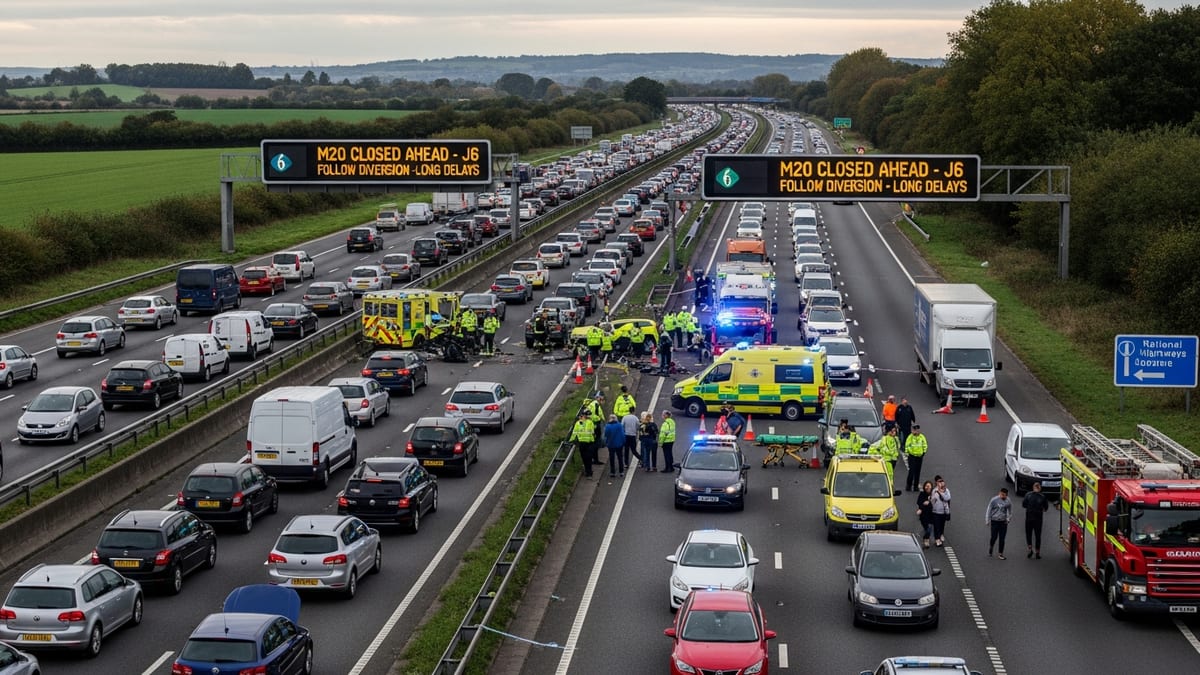
Reports from Nigerian outlets indicate that traffic in both directions along the Kaduna–Abuja highway slowed to a near standstill on Monday around Gidan Busa, just before Katari, following a series of accidents involving articulated trucks and other heavy-duty vehicles. Coverage from national and regional media describes long queues of vehicles stretching beyond sight, with many motorists and passengers stuck in place for several hours under the afternoon sun.
According to published accounts, the gridlock followed an incident on Sunday, November 8, when three container-laden trucks reportedly toppled on the highway near the Katari–Jere axis, obstructing lanes and forcing traffic onto already narrow diversions. The disruption continued into Monday as additional long vehicles were involved in crashes around Gidan Busa, intensifying congestion on a section already constrained by construction activity and high volumes of freight traffic.
Publicly available information shows that some travellers eventually abandoned the queue and turned back toward Kaduna, while others attempted to reach Abuja and northern destinations using longer alternative routes. For those unable or unwilling to divert, the crashes effectively turned the highway into a temporary parking lot, with buses, cars, fuel tankers and livestock trucks immobilised along the corridor.
Media images and descriptions from the scene highlight a dense mix of commercial trucks, interstate buses and private vehicles pinned along both the main carriageway and the rough red-earth diversions that have come to characterise much of the ongoing reconstruction zone.
Passengers Face Hours of Heat, Missed Connections and Added Costs
Reports from Nigerian newspapers and online platforms describe travellers waiting for several hours in stationary or crawling traffic, many of them en route to business appointments, medical visits or onward connections in Abuja and beyond. Accounts gathered by local media mention missed meetings, delayed deliveries and disrupted travel plans, with some passengers expressing worry about being caught on the open highway as evening approached.
Coverage indicates that passengers on long-distance buses, including traders and small business owners, were particularly affected. With vehicles unable to move, travellers remained seated in cramped conditions or stepped out to seek shade beside the road, while drivers kept engines idling intermittently to power air conditioning and prevent batteries from draining. For commuters transporting perishable goods or livestock, every additional hour in the queue translated into potential financial losses.
Nigerian press reports from the same corridor over recent months have repeatedly documented similar scenes, with travellers stranded for hours during peak periods or following crashes involving fuel tankers and container trucks. The latest incident near Katari and Gidan Busa has reinforced perceptions among regular users that the corridor has become increasingly unpredictable in terms of journey times, especially during weekends, holidays and periods of intense freight movement.
Some published commentary notes that, beyond the immediate discomfort and delays, repeated standstills also add to costs for transport operators, who spend more on fuel and vehicle maintenance while struggling to keep to advertised schedules. Those costs can ultimately feed through into higher fares on one of northern Nigeria’s busiest intercity routes.
Risky Detours and Safety Concerns Along Bush Tracks
As the gridlock lengthened on Monday, some motorists reportedly left the main highway to follow informal bush tracks and narrow earth roads in an effort to bypass the congestion. Video and photo material circulating on Nigerian news platforms and social media, and referenced by local coverage, show convoys of cars and minibuses edging through fields and scrubland, raising fresh questions about safety for travellers already frustrated by hours of delay.
Reports suggest that many drivers were unfamiliar with these improvised detours, relying on the vehicles ahead to find a way back to the main road. In places, the alternative paths appeared barely wide enough for two vehicles to pass, with uneven surfaces that posed additional risks to low-clearance cars and heavily loaded buses.
Commentary in domestic media has warned that such diversions can expose travellers to further hazards, including mechanical breakdowns far from formal assistance and heightened security concerns away from the normally patrolled highway. Observers also point out that sudden surges of traffic onto narrow rural tracks can disrupt nearby communities and damage local access roads not designed for sustained heavy use.
The images of long lines of vehicles snaking through the bush underscore the wider impact of recurring gridlock on the Kaduna–Abuja route, where drivers increasingly face a choice between sitting in extended queues or attempting unfamiliar and sometimes risky alternatives.
Reconstruction Works and Heavy Trucks Under Scrutiny
The Kaduna–Abuja highway is one of Nigeria’s most important road links, connecting the Federal Capital Territory with Kaduna and providing a gateway to much of the country’s northwest. Publicly available information from federal agencies lists the broader Abuja–Kaduna–Zaria–Kano corridor among major ongoing road projects, with reconstruction aimed at strengthening pavement, widening sections and improving long-term safety.
However, recent media coverage has highlighted that the combination of active construction zones, lane diversions and a high volume of articulated trucks has repeatedly resulted in bottlenecks around locations such as Katari, Jere and Gidan Busa. In several documented cases, crashes or breakdowns involving heavy vehicles on narrow temporary alignments have quickly escalated into hours-long gridlock, as there is limited room for other traffic to pass.
Reports from earlier incidents on the same corridor this year describe similar patterns: long queues building behind a single obstruction, frustrated drivers attempting to overtake on shoulders or against traffic, and efforts by road workers and security personnel to gradually reopen at least one lane. Analysts quoted in Nigerian transport coverage have linked these problems to broader questions about freight movement in the country, where fuel tankers and container trucks continue to rely heavily on highways in the absence of fully developed rail alternatives.
Recent data cited in local news reports from the Federal Road Safety Corps for 2026 show thousands of fatalities nationwide from road crashes in the first nine months of the year, with major federal highways such as the Kaduna–Abuja corridor among the routes of concern. While the latest gridlock near Katari was primarily a traffic and logistics crisis, it has been folded into a wider public debate about how to curb severe crashes and minimise secondary disruption when they occur.
Travellers Call for Quicker Responses and More Reliable Alternatives
Across various Nigerian media reports, stranded motorists and passengers have urged faster clearance of accident sites and more proactive traffic management around known bottlenecks on the Kaduna–Abuja highway. Suggestions raised in public commentary include dedicating more heavy-duty recovery vehicles to the corridor, stepping up enforcement of speed and loading limits for trucks, and improving communication so that travellers receive early warnings about major disruptions.
Some travellers and commentators have also renewed calls for expanded and more reliable rail services between Abuja and Kaduna to ease pressure on the road. Previous interruptions to train operations on the corridor have limited this option at times, but transport analysts cited in domestic reporting argue that shifting more long-distance freight from road to rail would help reduce congestion and crash risk on key highways, including the stretch affected by Monday’s gridlock.
Publicly available information on the Abuja–Kaduna–Zaria–Kano highway project indicates that federal authorities have set ambitious timelines for completion, with the aim of improving travel times and safety once the new carriageways are fully in use. Until that work is finished and complementary freight and public transport alternatives are strengthened, travellers on the route are likely to continue watching the traffic ahead with some apprehension, particularly when heavy trucks converge on the same narrow diversions.
For now, the latest standstill near Gidan Busa and Katari has reinforced what regular users of the corridor already know: that a single crash in the wrong place can turn a routine intercity trip into an exhausting, uncertain wait, with consequences felt from individual passengers to the wider flow of people and goods between Abuja and the northwest.