


More news on this day
Hartsfield-Jackson Atlanta International Airport is operating again after a weather-related ground stop, but travelers are still facing major disruptions as departure delays climb to nearly two hours and continue to grow.
Get the latest news straight to your inbox!
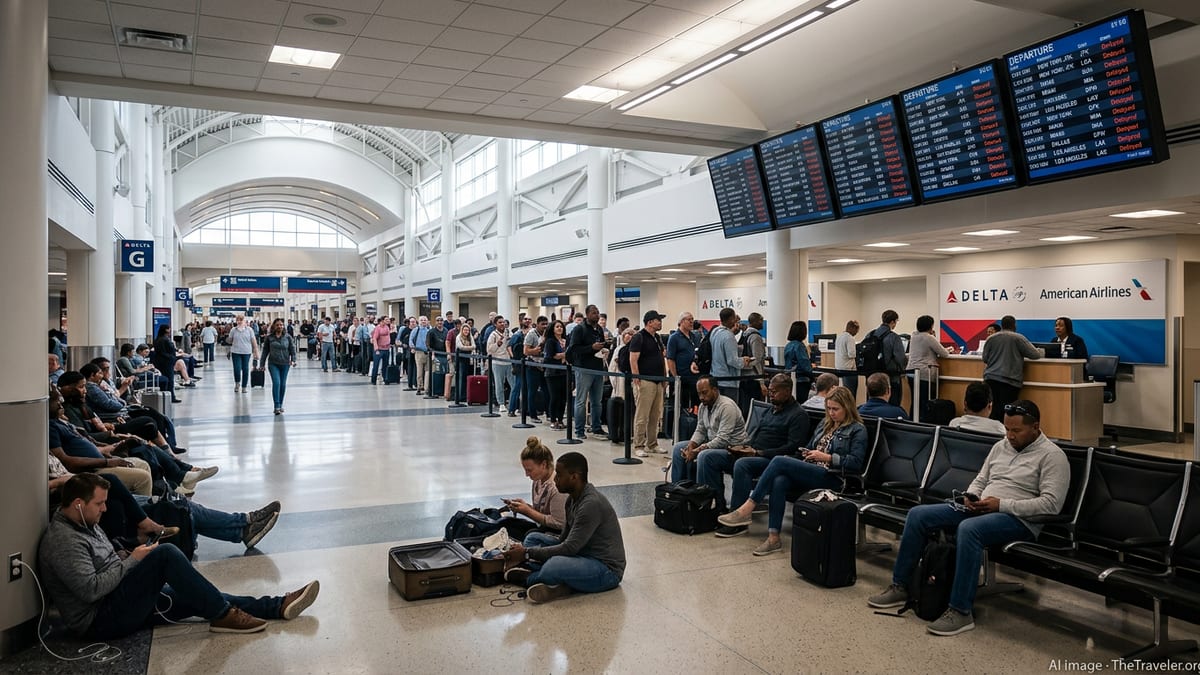
Storms Trigger Ground Stop, Then Prolonged Delays
Thunderstorms sweeping across metro Atlanta prompted air traffic managers to halt flights bound for Hartsfield-Jackson Atlanta International Airport, temporarily stopping departures while the worst of the weather passed. According to published coverage, the Federal Aviation Administration initially ordered the pause as radar showed slow-moving storm cells capable of producing heavy rain and lightning over key approach and departure corridors serving the world’s busiest passenger hub.
The ground stop has since expired, but the disruption it caused is still rippling through the system. Publicly available FAA information, summarized in local reports, indicates that departures from Atlanta are now experiencing significant hold times as crews, aircraft and flight paths are gradually reset. One recent update cited an average departure delay of about 105 minutes, with indications that those wait times were increasing as the afternoon progressed.
Live tracking data from flight-status services reinforces the extent of the backlog. Earlier weather episodes at Hartsfield-Jackson this summer pushed delays into a similar range, with hundreds of departures and arrivals running late on days when thunderstorms formed directly over the airport and surrounding airspace. Those patterns are repeating as airlines work through the latest wave of schedule changes.
How a Lifted Ground Stop Still Disrupts Travel
Once a ground stop is lifted, passengers often assume operations will return to normal quickly. In practice, the end of the formal restriction usually marks the beginning of a complex recovery phase. Flight operations tools used by the FAA show how a ground stop can transition into a ground delay program, during which aircraft are given controlled departure times to prevent congestion in the skies above Atlanta and along its busiest routes.
Advisories from the Air Traffic Control System Command Center describe how average and maximum delay figures can surge once operations resume. In a recent Atlanta advisory related to thunderstorms, the agency reported new total delays in the hundreds of flights, with the longest waits approaching one and a half hours and average delays around 50 minutes even after the direct weather threat eased. These numbers illustrate how quickly schedules can unravel when storms affect a high-volume hub.
Travelers on the ground feel these effects in multiple ways. Aircraft and crews may be out of position after diversion flights or extended turn times, leading to rolling delays across an airline’s network. Connecting passengers can miss onward flights, even if their original departure eventually leaves, forcing rebookings later in the evening or into the next day. At a megahub like Atlanta, where many itineraries rely on tight connections, those knock-on impacts are amplified.
Summer Weather Keeps Pressure on Atlanta Operations
This latest disruption arrives in the middle of an active summer weather pattern for north Georgia. Local media have documented multiple days in recent months when severe thunderstorm warnings and flash flood alerts overlapped with air traffic restrictions at Hartsfield-Jackson. In late July, storms strong enough to prompt a flash flood warning for parts of metro Atlanta also led to a ground stop and subsequent ground delays before conditions improved and departure waits dropped to around 30 minutes.
Earlier in August, another round of slow-moving thunderstorms over Cobb and Fulton counties again produced heavy rainfall totals and prompted a fresh ground stop at the airport. According to published coverage, that stop expired, but departure delays rose to an average of about 105 minutes as controllers metered traffic back into and out of the congested airspace. Those figures mirror the pattern seen today, with the formal restriction ending before passengers experienced any noticeable easing of delays.
Separate FAA advisories for Atlanta in late August described continued arrival delays and airborne holding of up to 30 minutes because of thunderstorms near the airport’s main arrival routes. When combined with ground limitations, those measures underscore how quickly adverse weather can strain the system at a hub that typically handles hundreds of daily departures for a single major airline alone, along with additional service from domestic and international carriers.
What Passengers Can Expect for the Rest of the Day
With the ground stop lifted but departure delays nearing two hours on average, passengers scheduled to fly through Atlanta today face a higher-than-normal chance of late departures, missed connections and potential cancellations. Flight-tracking platforms referenced in local coverage show that, during similar disruptions earlier this summer, several hundred flights either departed behind schedule or arrived late as airlines worked to re-balance aircraft rotations and crew assignments.
Travelers are likely to see rolling schedule adjustments as the evening progresses. Even after storms have passed the immediate Atlanta area, air traffic managers may keep arrival and departure rates below normal for a period of time to safely handle the backlog. That can mean continued gate holds and extended taxi times for departing flights, along with airborne holding for inbound aircraft if congestion builds around key arrival fixes.
Passengers are encouraged, based on prior advisories, to monitor airline apps and airport displays closely for gate changes and updated departure times. For those with tight connections through Atlanta, contingency plans such as requesting earlier flights, confirming backup routings or arranging overnight accommodations may be worth considering if delays continue to grow into the evening hours.
Broader Context: Managing Disruptions at the World’s Busiest Hub
The current situation at Hartsfield-Jackson highlights the ongoing challenge of managing weather in one of the busiest and most tightly scheduled airport complexes in the world. FAA real-time status pages for Atlanta frequently note that even on routine days there can be modest gate-hold or taxi delays, typically in the range of 15 minutes or less. When severe weather intrudes, the margin for absorbing disruptions quickly disappears.
Recent analyses from aviation-focused outlets and local news organizations emphasize that Atlanta’s role as a primary connecting hub means disruptions rarely stay local. A temporary ground stop, followed by extended delays approaching two hours, can ripple outward to smaller regional airports and major destinations alike as aircraft and crews are delayed arriving from or departing to the city. That pattern was evident in previous episodes this year, when storms over Atlanta coincided with elevated delay and cancellation counts nationwide.
Regulatory frameworks are designed to offer protections when delays escalate. Consumer guidance that has circulated alongside coverage of recent weather events in Atlanta notes federal rules governing tarmac delays and refunds when flights are significantly delayed or canceled. While those policies do not prevent weather disruptions, they shape how airlines are expected to manage long on-board waits and customer compensation when schedules are heavily affected.
As today’s delays at Atlanta approach the two-hour mark, the episode adds to a growing record of summer storms testing the resilience of one of the world’s most important aviation hubs. How quickly operations recover over the next several hours will determine whether the disruption remains a challenging travel day or evolves into another prolonged systemwide logjam for U.S. air travel.
CBS News Atlanta: Flash flood warning, ground stop and delays at Atlanta airport
CBS News Atlanta: Ground stop lifted, long delays reported at Hartsfield-Jackson
FAA real-time status: Hartsfield-Jackson Atlanta International Airport (ATL)