


More news on this day
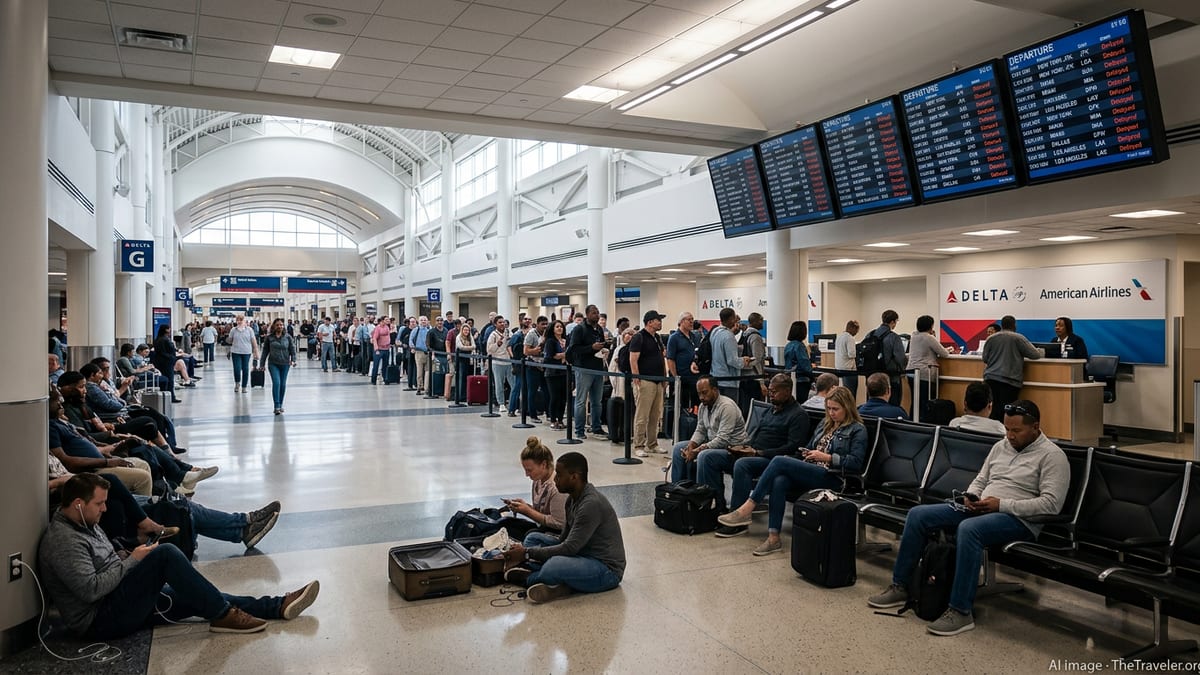
Operations at Hartsfield-Jackson Atlanta International Airport are slowly recovering after a weather-related ground stop on Friday afternoon was lifted, but published flight-tracking data shows travelers are still facing significant delays as storms and peak Fourth of July weekend traffic strain the world’s busiest hub.
Get the latest news straight to your inbox!
Storms trigger temporary halt to Atlanta flights
Publicly available information from the Federal Aviation Administration indicates that arrivals into Hartsfield-Jackson were briefly halted on Friday, July 3, due to thunderstorms moving across metro Atlanta. The ground stop, issued in the midafternoon, paused some flights bound for Atlanta while convective weather passed near the airfield.
Regional media reports describe fast-moving storms bringing heavy rain, lightning and gusty winds into north Georgia, prompting severe thunderstorm warnings and briefly reducing the airport’s ability to safely accept and launch flights. Local coverage notes that the restriction was initially set to expire around 4 p.m. Eastern, then extended for a short period as additional cells developed in the area.
While the precise duration of the halt varied by departure airport and airline, tracking sites show a sharp drop in arrivals into Atlanta during the ground stop window, followed by a concentrated surge of inbound flights once restrictions began to ease. That pattern typically results in gate congestion and knock-on delays even after the underlying weather improves.
By late afternoon, FAA status boards no longer listed a formal ground stop for Atlanta, but continued to flag weather-related traffic management programs and general congestion affecting operations in the Southeast.
Delays ripple across departures and arrivals
Flight-status dashboards late Friday showed Atlanta operating with what some trackers classify as “excessive” delay conditions, even after the ground stop had cleared. Data compiled by independent monitoring sites indicated that a notable share of flights were departing behind schedule, with average waits stretching well beyond routine 15-minute slowdowns.
Arrival performance also remained under pressure. Published figures from flight-tracking services pointed to a sizable percentage of inbound flights landing late, as aircraft waited for release slots from origin airports and then navigated saturated arrival corridors into Atlanta’s busy airspace. The resulting compression of traffic increased the strain on runways, taxiways and gate availability.
For individual travelers, those systemwide statistics translated into longer-than-expected times on board aircraft and in terminal concourses. Some passengers experienced extended holds at departure gates while crews awaited updated wheels-up times, while others faced longer taxi-in periods on arrival as they waited for an open gate.
Industry analysts note that once a major hub’s tightly choreographed schedule is disrupted, recovery can take several hours, particularly late in the day when fewer spare aircraft and crew are available and turnaround buffers are limited.
Holiday crowds amplify the impact
The disruption comes as Atlanta prepares for one of its busiest travel periods of the year. Recent coverage by local outlets reports that more than four million passengers are expected to pass through Hartsfield-Jackson around the Independence Day holiday, with Friday and Sunday projected to be among the heaviest days.
Airport advisories have been urging travelers to arrive at least two and a half hours before domestic departures and even earlier for international flights, citing a combination of high passenger volumes and the potential for summer thunderstorms to trigger intermittent delays. Security wait-time tools promoted by the airport showed relatively moderate checkpoint lines early Friday, but historical patterns suggest that conditions can change quickly when flights bunch up after a weather slowdown.
For airlines operating large connecting banks through Atlanta, the timing of the ground stop is especially challenging. Many carriers depend on tight connections to move passengers between smaller regional markets and long-haul routes; even a short pause in arrivals can cause missed connections, rebookings and aircraft being out of position for later departures.
Observers point out that the holiday timing leaves limited flexibility to absorb those disruptions, since most seats are already sold and spare capacity is constrained across the domestic network.
What passengers can expect through the evening
Based on recent patterns at Hartsfield-Jackson and current delay statistics, travel experts anticipate that operations will gradually stabilize through Friday evening, but that localized disruptions could persist into the night as airlines work through backlogs. Later departures are generally more vulnerable to rolling delays when crews or aircraft arrive late from earlier segments.
Travelers with flights scheduled from Atlanta are being encouraged, through airline and airport advisories, to monitor their carrier’s app or notifications frequently, as estimated departure times may shift multiple times during the recovery period. Same-day rebooking options may be limited on popular routes, especially for travelers hoping to reach their destination before the July 4 holiday.
Passengers connecting through Atlanta are advised to pay particular attention to minimum connection times. Even modest inbound delays can make tight connections difficult to achieve in the sprawling terminal complex, especially if a gate change adds extra walking time between concourses.
Those already at the airport may see gate areas and food outlets more crowded than usual during the peak of the recovery, as clusters of delayed flights board simultaneously. However, local reports from earlier in the day suggested that security and check-in lines were manageable before storms intensified, which may help prevent further bottlenecks at the front end of the travel process.
Summer storm season keeps pressure on the network
The episode underscores how vulnerable major hubs such as Hartsfield-Jackson remain to summertime thunderstorm activity. Aviation references describe a ground stop as a traffic management measure that prevents flights destined for a particular airport from departing their origin until conditions improve, reducing airborne holding and congestion in already stressed airspace.
In a region prone to frequent afternoon storms during the warm season, such measures are a recurring feature of operations. Even when they are relatively brief, the sheer scale of activity at Atlanta means that any disruption can have national implications, affecting flights far beyond the Southeast as aircraft and crews cascade through tightly linked schedules.
Recent federal reports have highlighted how construction projects, runway maintenance and air traffic staffing levels can also influence the pace of recovery after weather events at major hubs. At large airports, these factors combine with rising passenger demand to create a complex operating environment in which small changes in capacity or demand can translate into noticeable delays for travelers.
With more storms in the forecast for parts of the holiday weekend, passengers planning to fly through Atlanta are likely to face an environment where flexibility, extra time and up-to-the-minute information remain essential tools for navigating the nation’s busiest airport.