


More news on this day
Guangzhou Metro Corp, operator of one of China’s largest urban rail networks, is emerging in 2026 as both a high-tech transport pioneer and a key enabler of tourism and service consumption across the Greater Bay Area.
Get the latest news straight to your inbox!
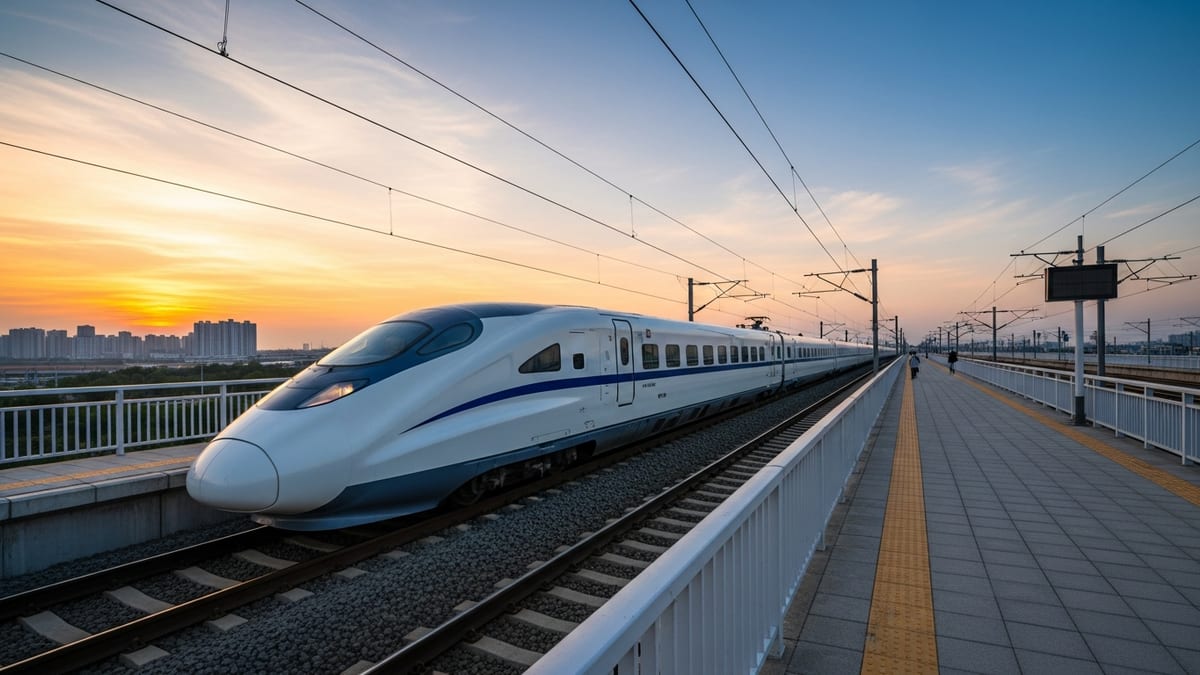
A rapidly growing network reshaping urban mobility
Publicly available information shows that Guangzhou’s metro system has grown into one of the world’s largest, with 19 lines and nearly 800 kilometers of track connecting the historic city core with new business districts, suburbs and regional rail hubs. The network opened in 1997 and has expanded in successive phases, supporting Guangzhou’s transformation into a southern China megacity.
Recent network additions, including new cross-city and express lines, are designed to shorten journey times between the airport, major railway stations and key business areas. Travel-focused platforms highlight that routes such as the Guangfo intercity line and airport links now allow visitors to move between Foshan, the Canton Fair complex, central Guangzhou and Baiyun International Airport with a single transfer or less.
Reports on Chinese infrastructure planning indicate that Guangzhou is prioritizing completion of remaining network gaps, with several metro and intercity rail schemes still under construction. While national-level urban rail investment is expected to cool compared with the boom years, Guangzhou’s metro remains central to official strategies for keeping the city competitive as a gateway to the Greater Bay Area and the wider Asia-Pacific region.
For travelers, this scale means that most major hotels, cultural sites and exhibition venues are now within walking distance of a station, shifting visitor patterns away from taxis and private cars and reinforcing the metro as the default way to navigate the city.
Smart operations and ticketing tailored to visitors
According to ticketing documents and operator information, Guangzhou Metro Corp has steadily upgraded payment options to make the system more accessible to domestic and international riders. The network supports single-journey tokens, rechargeable transport cards and a variety of mobile payment options, including widely used QR-based systems that are now standard across Chinese cities.
Recent updates highlight that the system also accommodates national interoperable transport cards and has expanded compatibility with foreign bank cards for tap-in and tap-out payments. This gradual opening of payment channels is significant for overseas visitors who may be unfamiliar with local apps but are increasingly able to access the network using existing bank-issued cards or simple paper tickets.
Operationally, Guangzhou Metro Corp has invested in what local coverage describes as smart station management and AI-assisted dispatching, which help balance dense peak-hour passenger flows with the need for reliable, high-frequency service. These tools are particularly important on trunk corridors serving Guangzhou South Railway Station, the Canton Fair complex and airport-oriented routes, where ridership can surge during trade shows and holiday travel periods.
For tourists, these upgrades translate into shorter platform waiting times, clearer bilingual signage and more consistent crowd management. Busy interchanges, once seen as intimidating for first-time visitors, are increasingly described in travel reports as orderly and efficient, even during major events.
Metro-linked tourism and the rise of new riverfront landmarks
Guangzhou’s tourism strategy in 2026 is closely intertwined with the reach of its metro network. Recent municipal campaigns around Canton Tower and the Pearl River waterfront, including a Greater Bay Area food and culture carnival, have relied on metro access to attract residents and visitors to evening events and seasonal festivals.
Canton Tower and the Zhujiang New Town business district sit atop a dense cluster of metro lines and the automated people mover system operated by Guangzhou Metro Corp, allowing visitors to combine observation decks, river cruises, shopping and dining without needing a car. Event organizers have emphasized late-running performances and night-time light shows, confident that metro connections can disperse crowds quickly after the final program.
Other riverfront nodes, including Haizhu and Tianhe districts, have also benefited from this transit-oriented approach. New retail centers, exhibition halls and cultural venues have been planned around existing or future metro stations, turning what were once single-destination visits into full-day itineraries linked by short train rides. For international travelers, this makes it easier to combine business meetings with sightseeing and dining in a single evening.
Travel industry observers note that this model mirrors broader trends across China’s coastal megacities, where metro accessibility is now seen as a prerequisite for major tourism and entertainment investments. Guangzhou Metro Corp’s role as the primary urban connector therefore extends well beyond commuting, shaping where visitors stay, shop and spend their leisure time.
International exchanges and regional influence
Guangzhou Metro Corp’s influence is no longer confined to its home city. According to recent coverage from municipal information channels, delegations from other Asian capitals, including senior officials from Hanoi, have visited the Guangzhou Metro Museum and operational facilities in mid-2026 to study the system’s development path.
These visits have focused on practical issues such as financing complex underground works, adapting international technical standards to local conditions and managing very high passenger volumes on busy transfer corridors. Guangzhou’s experience of combining foreign technology with locally developed solutions has attracted attention from cities that are still in the early stages of building their first metro lines.
The exchanges also highlight a growing export of planning concepts rather than only hardware. Visiting groups have examined how Guangzhou uses transit-oriented development around key interchanges, where office towers, shopping centers and residential projects are clustered above and around stations. This model, widely implemented along several newer lines, is seen as a way to support metro finances while creating walkable districts that appeal to both residents and visitors.
For the wider Greater Bay Area, Guangzhou’s maturing metro system complements high-speed intercity links and regional rail, creating an integrated web of mobility that strengthens the city’s position as both gateway and transfer hub for international travelers heading into southern China.
Balancing expansion, quality and financial sustainability
Behind the visible growth of the network, Guangzhou Metro Corp operates in a national environment where urban rail projects are under closer financial scrutiny. Sector analyses in early 2026 describe a cooling of new metro approvals across China as local governments confront operating losses and high legacy debt from years of rapid expansion.
Within this context, Guangzhou’s emphasis has shifted toward improving service quality, optimizing existing routes and coordinating closely with land-use planning to reinforce ridership. Publicly available policy discussions suggest that new projects will need to demonstrate clear passenger demand and integration with economic development zones, rather than pursuing network expansion for its own sake.
For travelers, this recalibration may mean fewer headline-grabbing new line openings each year but more attention to reliability, station amenities and wayfinding. Upgrades to air conditioning, platform safety systems, in-car information screens and accessibility features are becoming as important as new route mileage.
As Guangzhou Metro Corp navigates these pressures, its network continues to function as a backbone for both daily commuting and the city’s growing tourism and services economy. The challenge for the coming years will be to preserve affordability and coverage while deepening the system’s role as a seamless, visitor-friendly gateway to one of southern China’s most dynamic urban landscapes.