


More news on this day
Passengers travelling through Faro Airport on 8 July are facing lengthy queues and flight delays, as a surge in summer traffic combines with tighter border checks and recent changes to biometric screening procedures.
Get the latest news straight to your inbox!
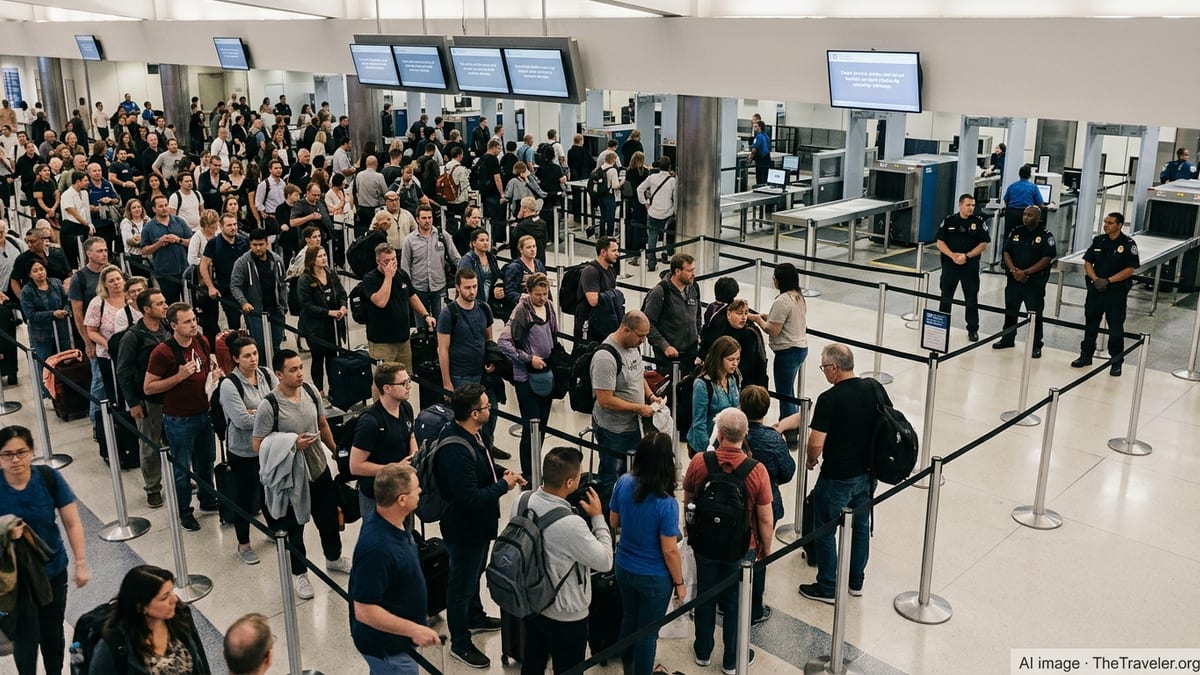
Summer crowds collide with constrained airport processes
Faro Airport, the principal gateway to Portugal’s Algarve region, is under mounting pressure as peak holiday traffic ramps up in early July. Publicly available information shows that more than 120 departures are scheduled for 8 July alone, a heavy load for a regional facility with limited terminal space and a high concentration of short-haul leisure flights.
Reports from Portuguese media over the past several days describe long lines at passenger screening and border control, with queues stretching across the departures hall during busy morning and late-afternoon waves. Travellers have detailed waits of close to two hours at passport control after arriving from the United Kingdom, as well as extended processing times for departing passengers heading to other parts of Europe.
The congestion comes at a time when Faro is handling strong demand from key tourism markets including the United Kingdom, Ireland, Germany and the Netherlands. The combination of tight turnaround schedules, dense afternoon departure banks and limited flexibility in staffing is amplifying the impact of even modest slowdowns at checkpoints.
Operational data compiled from recent months also indicate that several high-volume carriers at Faro have been running with a non-trivial proportion of delayed departures. While the majority of flights still leave on time, even a minority of late operations can cascade through the day when airport systems are already running close to capacity.
Border control and EU entry-exit rules add friction
A significant driver of today’s disruption appears to be the implementation and adjustment of new European Union border procedures at Portuguese airports. Published coverage in Portugal has linked the long queues at Faro to the EU’s Entry/Exit System, which is being phased in for non-EU travellers and requires additional biometric and identity checks at the border.
Earlier in the year, authorities temporarily suspended biometric collection at departure points in Lisbon, Porto and Faro to avoid passengers missing flights during initial rollouts. Although those specific measures were framed as temporary, more recent reports from Faro describe renewed congestion at border posts as summer traffic increases and the system is used more widely.
Travel rights organisations and airline advisories across Europe have warned that the new procedures are already creating long lines at several airports, particularly at peak times for arrivals from the United Kingdom and other non-Schengen countries. The situation at Faro appears to mirror that trend, with arriving passengers reporting that passport control is a primary bottleneck, even when automated gates are technically available.
For outbound travellers, the added checks can extend the time needed to move from check in through security and border control to the gate. When combined with limited queuing space and high passenger volumes, this can quickly translate into delayed boarding and knock-on delays for aircraft departures.
Knock-on effects for airlines and connecting journeys
Today’s queues have practical consequences beyond the airport terminal. Leisure carriers serving Faro often operate tight schedules, with aircraft cycling through multiple holiday destinations in a single day. When boarding is delayed in the Algarve because passengers are still held up at security or passport control, flight departures slip, and late arrivals at the next airport in the chain can affect subsequent rotations.
Operational statistics for major carriers at Faro in the three months to early July show that while on-time performance generally remains around or above 80 percent, a notable share of flights experiences moderate or significant delay. On a day with dense scheduling, this share is enough to create visible congestion on the apron and in the airspace surrounding the airport.
Passengers relying on same-day connections via hubs such as Lisbon, London, Amsterdam or Frankfurt may feel the impact most acutely. Travel forums and recent passenger accounts describe holidaymakers missing onward flights or needing to rebook after delays leaving Faro, particularly when initial layovers were under two hours.
Because border and security queues sit outside airline control, travellers may also find that standard European compensation rules for delays do not always apply. Consumer information portals stress the distinction between disruption caused by air carriers and that driven by mandatory border processing, which can affect the options available for monetary redress.
What travellers should expect in the coming days
Given the combination of structural factors at Faro and broader pressures across Europe’s aviation network, the disruption observed on 8 July is unlikely to be a one-day event. Network reports from European air traffic management bodies show that summer 2025 already brought an uptick in ground and departure delays at Faro compared with the previous year, and the early weeks of the 2026 peak season suggest that the pattern may be repeating.
Travel industry analysis points to a mix of recurring challenges that could continue to affect operations: tight stand and gate capacity, staffing constraints at control points, higher temperatures that can slow handling work on the apron and growing complexity in border formalities. These elements tend to be most acute on weekends and during school holiday changeover days, when flight schedules are densest.
Public advice from airlines serving Portugal and from passenger-rights organisations is increasingly urging travellers to build in generous buffers when moving through airports this summer. For Faro, that typically means arriving significantly earlier than usual for departures, especially for non-Schengen flights, and allowing extra time between connecting flights at onward hubs.
Today’s queues and delays at Faro therefore sit within a wider European picture of strained summer aviation infrastructure. For visitors heading to the Algarve, the key implication is clear: while flights are largely operating, the journey through the airport is taking longer than many travellers expect, and careful planning around check in and connections is becoming essential.