


Guavate’s famed Ruta del Lechón is one of Puerto Rico’s most satisfying day trips: a winding mountain road in Cayey lined with open-air lechoneras, cold beer, live music and the smell of slow-roasting pork. It is also busy, filling quickly on weekends with San Juan locals, tour buses and families who treat it as an all-day chinchorreo party. Planning your visit as a flexible framework instead of a rigid schedule will help you enjoy the food and the mountain scenery without spending half the day in traffic or eating so much you cannot move.
Get the latest updates straight to your inbox!
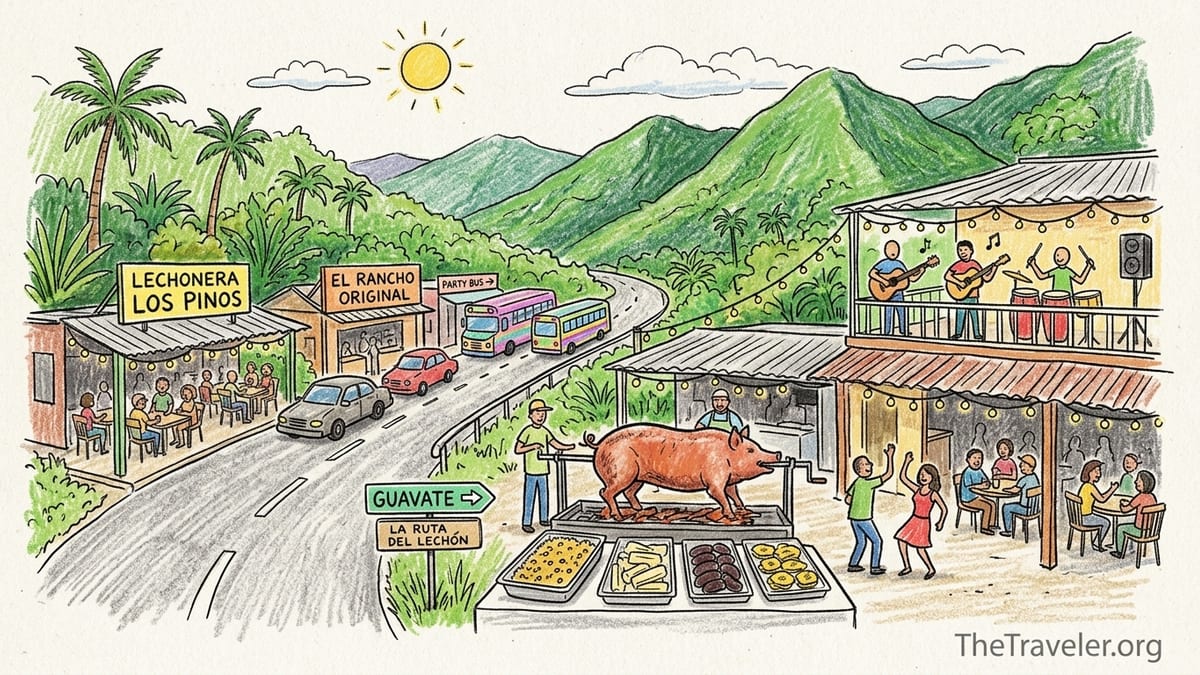
Guavate in Context: Food Highway at the Edge of the Mountains
Guavate sits along Puerto Rico Highway 184 in the municipality of Cayey, about 40 to 60 minutes’ drive south of San Juan depending on traffic. The most famous stretch, known as La Ruta del Lechón or the Pork Highway, runs for roughly 3 to 4 miles where lechoneras cluster on both sides of the road, music spills out from balconies, and weekend drivers inch past parked cars. The area is especially popular on Saturdays and Sundays, when live bands, DJs and families transform the route into what Discover Puerto Rico calls an all-day chinchorreo experience focused on roast pork and classic side dishes.
Cayey also marks the eastern gateway into Puerto Rico’s central mountains. The municipality is widely described by the tourism board as the start of the 165-mile Ruta Panorámica, a network of scenic mountain roads crossing the island’s spine between Yabucoa and Mayagüez. That means a Guavate visit can be more than lunch; with thoughtful timing, it can anchor a day or overnight trip that combines lechón with forest reserves, mountain viewpoints or rivers such as Charco Azul in nearby Carite Forest.
Understanding that geography matters for planning. If you leave from San Juan or Condado, you will likely take Highway PR-52 south to Cayey, then cut across to Road 184. If you are already staying in the central mountains, you may approach from interior roads that intersect with the Ruta Panorámica or PR-15 between Guayama and Cayey. In both cases, narrow curves and weekend congestion mean you should allow extra time so that driving remains part of the enjoyment, not a white-knuckle chore.
Equally important is what kind of Guavate experience you want. Some travelers care almost exclusively about tasting excellent lechón from one or two iconic spots like Lechonera Los Pinos or El Rancho Original. Others want a social scene of bar hopping, rum cocktails, and live plena and salsa. Families might prefer earlier hours with lighter crowds. Road trippers may see Guavate as a convenient, delicious stop between forest hikes and viewpoints along the Ruta Panorámica. The frameworks below help you match your timing and route to those goals.
When to Go: Crowds, Traffic and the Logic of Eating Times
Time of day and day of week shape your Guavate experience more than almost any other factor. Local guides and recent visitors consistently describe weekends, especially Sundays, as the most animated but also the most congested. Many lechoneras open by midmorning, but the full party atmosphere with bands, DJs, and shoulder-to-shoulder crowds tends to ramp up from late morning into mid-afternoon. By around 1:00 to 3:00 p.m., the central stretch of PR-184 can slow to a crawl, and parking near big-name lechoneras becomes difficult.
If you want maximum energy, aim to arrive between about 11:00 a.m. and noon on a Saturday or Sunday, when the pork is fresh, most trays of sides are full, and the music is starting to build but traffic has not yet peaked. Discover Puerto Rico’s own guidance suggests getting there before midday on weekends to enjoy the full experience without spending too long in the car. On weekdays, Guavate is quieter, with a more local, low-key feel. Several lechoneras still open, especially the better-known ones, but live music may be limited or absent and some smaller kiosks might close.
Food timing matters for comfort. Lechón with arroz con gandules, yuca al mojo, morcilla and tostones is heavy. If you plan to add hiking in Carite Forest, swimming in Charco Azul, or driving sections of the Ruta Panorámica, it is usually smarter to do your most active nature time before your main lechón meal. For instance, a morning dip at Charco Azul followed by a 1:00 p.m. lunch at a single lechonera lets you eat without worrying about climbing steep, wet trails afterward.
You should also factor in driving after eating and drinking. Some chinchorreo buses and private drivers run from San Juan and metro areas specifically so groups can enjoy beers or rum drinks without worrying about the drive back. If you are self-driving, plan your alcohol intake conservatively and schedule your departure early enough to travel in daylight, particularly if you are unfamiliar with mountain roads. Leaving Guavate by mid to late afternoon can help you avoid the heaviest return traffic toward San Juan on Sundays.
Half-Day Framework: Focused Ruta del Lechón Experience
A half-day Guavate trip works best when it is built around a single extended lechón meal rather than trying to hop between four or five places until nobody can eat another bite. Treat it more like a long Sunday lunch in a European countryside village than a bar crawl. For example, you might leave San Juan around 9:30 a.m., arrive near Cayey after 10:15 a.m., and be pulling into a Guavate parking lot shortly before 11:00 a.m. This timing keeps you ahead of the biggest lunch rush while still allowing the atmosphere to warm up.
Choose one flagship lechonera as your anchor. Names that frequently come up in recent traveler reports include Lechonera Los Pinos near the upper end of the strip and El Rancho Original slightly lower down. Both are known for consistently good lechón, large open-air seating, and lively weekend vibes with music. Instead of rushing to sample everything, order a modest but varied spread to share: a pound or two of lechón, arroz con gandules, amarillos, maybe pastel or morcilla if someone in your group is curious. With today’s prices, a hearty shared platter for two to three people at a major lechonera often lands in the range of 25 to 40 US dollars, depending on how many sides and drinks you add, but you should check menus in person since exact prices change.
After eating, spend some time soaking up the scene instead of immediately getting back in the car. You might walk ten minutes along PR-184 to peek at neighboring lechoneras, buy a bag of fritters or dulces from a roadside stand, or listen to a couple of songs from a live band under another pavilion. The idea in a half-day framework is to experience the rhythm of the pork highway without overcommitting your appetite or your schedule.
For a morning-oriented half-day that avoids peak traffic entirely, you could invert the pattern: arrive as early as 9:30 or 10:00 a.m., when the road is quiet, have a late breakfast or early lunch at one lechonera, then leave by around 1:00 p.m. before the gridlock builds. This suits families with children who nap in the afternoon, or travelers who want to be back in San Juan in time for an evening in Old San Juan or Condado without feeling overstuffed.
Full-Day Framework: Adding Chinchorreo Vibes and a Cayey Highlight
A full-day itinerary lets you enjoy both the food and more of Cayey’s surroundings. One natural structure is to pair a morning nature outing with an extended midday and early afternoon in Guavate. From San Juan, you could leave around 8:00 a.m., head toward the Carite Forest area first, then loop back down to Road 184 for lunch. Alternatively, if you want to prioritize getting a parking spot at a specific lechonera, you might eat slightly earlier, then drive a short scenic segment of the Ruta Panorámica in the afternoon.
For example, consider starting with a visit to Charco Azul, a popular natural pool reachable via a relatively short walk from a trailhead near the PR-181 and PR-7740 junction in the Carite region. Travelers often describe spending one to two hours there between walking in, swimming, and taking photos. By finishing at Charco Azul around 11:00 a.m., you can be sitting down at a Guavate lechonera around noon, hungry and ready for a proper lunch. The watery start helps balance the heaviness of the meal, and the cooler morning temperatures make hiking more pleasant.
With a full day, you can lean more into chinchorreo without turning it into a marathon. After your main meal at a flagship lechonera, plan one or two additional short stops purely for atmosphere. For instance, walk or drive a short distance to another spot that is known for live music or a specialty side dish, order a single round of drinks and maybe a small portion of alcapurrias or longaniza to share, and enjoy 30 to 45 minutes of people-watching. You might then cap the day with a slow drive along a nearby stretch of the Ruta Panorámica, using roads like PR-15 or PR-7737 above Cayey to catch late-afternoon light and mountain views before returning to your base.
Another full-day model keeps you more tightly anchored to Guavate but varies the mood. Arrive late morning for lunch at a quieter weekday lechonera if you prefer a local feel, then in the afternoon join a chinchorreo bus or party bus that includes Guavate as one of several stops. Companies advertised through Discover Puerto Rico feature routes that take groups around different regions, sometimes combining Guavate with coastal kiosks like Piñones or Luquillo on special itineraries. This approach works especially well for social travelers who do not want to self-drive after a long day of food and drinks.
Overnight Framework: Guavate with Carite or Ruta Panorámica Loops
Staying overnight in or near Cayey transforms Guavate from a single heavy lunch into part of a broader central-mountain escape. You gain time to visit Guavate at off-peak hours, explore forest reserves without rushing, and sample short legs of the Ruta Panorámica without dreading a late-night return drive to San Juan. Lodging options in the region include small guesthouses in Cayey’s countryside, cabins and villas advertised around Carite Forest, and rural rentals along mountain roads like PR-15 and PR-7737.
One overnight framework starts with an early check-in at a Carite or Cayey cabin on day one, followed by a late afternoon or early evening visit to Guavate for a lighter meal and music when day-trip crowds are thinning. On Saturdays in particular, some lechoneras keep music going into the evening, though menus may be more picked over than at midday. Afterward, you can drive a short distance back to your lodging rather than tackling the longer descent toward the metro area in the dark.
Day two can then focus on nature and scenic driving. After a simple breakfast at your lodging, explore deeper into Carite State Forest where cooler temperatures and misty views contrast with the party feel of Guavate. You might drive pieces of the Ruta Panorámica that intersect Cayey, such as the high points accessible via PR-15 toward Guayama and connector roads like PR-7737, stopping at viewpoints where locals pull over to photograph the central range. Lunch that day could be a lighter picnic from a bakery in Cayey town rather than another heavy lechón feast, or you might return to a different, smaller lechonera on PR-184 to compare styles.
Another overnight loop works in the opposite direction for dedicated road trippers. Start in San Juan, spend a few hours driving west or east along the Ruta Panorámica, then plan to reach Cayey by late afternoon. Check into a rural inn or mountain Airbnb, rest briefly, and head to Guavate for an early dinner chinchorreo session. The next morning, you can enjoy coffee and pastries in Cayey’s plaza and take the faster PR-52 toll road back to the metro area, having broken up the driving into manageable, scenic segments anchored by Guavate’s food.
Models by Traveler Type: Food Fans, Families, Friends and Road Trippers
First-time food travelers who care most about tasting excellent lechón and classic Puerto Rican sides should prioritize clarity and simplicity. A strong model for them is the half-day or full-day framework centered on one marquee lechonera and one backup. For instance, they might earmark Lechonera Los Pinos as their first choice but also identify El Rancho Original or Los Amigos as alternates in case parking is easier at one than another that day. Their goal is to arrive hungry by late morning on a weekend, order a generous sampler platter, perhaps pair it with a local beer or fresh-squeezed juice, and focus on savoring the flavors rather than the party scene.
Families with children or multigenerational groups often benefit from an earlier start and shorter total stay in the densest part of Guavate. A practical framework is to arrive on the early side, around 10:30 or 11:00 a.m., when music has started but crowds are not yet shoulder to shoulder. Parents might choose a lechonera with ample covered seating, clean visible restrooms, and space where kids can wiggle without being in the way of dancing adults. Many Puerto Rican families come with children during the day, so the scene is festive but generally welcoming. After lunch and perhaps a short walk to buy sweets or ice cream, families can depart by mid-afternoon for a nap-friendly drive back to their lodging.
Groups of friends seeking more of a chinchorreo atmosphere usually do better with a full-day or overnight plan that leaves room for spontaneity. They might book a chinchorreo bus departing from San Juan, which stops at preselected lechoneras and bars, providing a DJ-style atmosphere on board. In that case, the framework is more about pacing: eat a bit at the first stop, share plates at the second, dance and drink a bit more at the third, and accept that you will not remember every place’s name but will remember the energy. Self-driving friend groups should designate a sober driver and consider limiting total stops to three or four over the course of the day, balancing food with dancing and road time.
Central-mountain road trippers, whether in rental cars or on motorcycles, often treat Guavate as one highlight among several. Their framework might start with dawn views from a high point on PR-10 or another interior highway, continue along portions of the Ruta Panorámica around Cayey, then descend toward Guavate for a mid-afternoon meal when their energy for curvy driving naturally dips. They may prefer weekday visits when traffic is lighter and they can park, eat, and get back on the road without losing an hour in a bottleneck. For them, Guavate is less an all-day base and more a richly flavored checkpoint on a longer circuit across the island’s interior.
Practical Tips on Parking, Paying and Eating Smart
Whatever your framework, a few practical details will make Guavate smoother. Parking varies from informal shoulder pull-offs to paid lots managed by individual lechoneras. On busy weekends, attendants often wave drivers into spaces and charge a small fee, commonly just a few dollars in cash. Having small bills ready avoids delays and awkwardness. As you park, take a quick mental note of landmarks; the strip can look similar in both directions after a couple of hours of food and music.
Inside the lechoneras, ordering is usually cafeteria-style. You join a line, point to trays of lechón, rice, stews and fritters, and ask for portions by weight or piece. Staff move quickly, especially when a crowd of 30 or 40 is behind you, so it helps to scan the options while waiting and decide in advance roughly what you want. One workable approach for first-time visitors is to start with a modest half-pound or pound of pork for the table, two different starches, and one or two unfamiliar items in small portions. You can always go back for more. Overordering early not only leads to food waste but also makes it harder to enjoy any other stops you had in mind.
Payment is typically straightforward. Many of the larger, well-known lechoneras now accept credit and debit cards, but some smaller stands, dessert kiosks and parking attendants are still cash-only. Bringing a mix of cards and at least 40 to 60 dollars in cash per couple gives you flexibility without carrying excessive amounts. Tipping is appreciated, especially when musicians circulate with baskets or when staff bus tables around busy groups. Dress casually in clothes you do not mind picking up smoke and food aromas; open-air settings mean you may smell like lechón for the rest of the day, which most visitors consider part of the charm.
Finally, give yourself a buffer for the drive back. If you need to return to San Juan for an evening commitment, build in an extra 30 to 45 minutes beyond whatever your navigation app predicts for weekend afternoons. That leeway allows for unplanned photo stops, slow-moving trucks on PR-184, or a final dance to a favorite salsa classic before you reluctantly tear yourself away from the Pork Highway.
The Takeaway
Guavate rewards travelers who plan around rhythms instead of rigid timetables. Half-day visitors can focus on one excellent lechón feast, a bit of music and a scenic mountain drive without exhausting themselves or their stomachs. Full-day travelers can layer in chinchorreo stops and one signature Cayey or Carite experience, such as a forest swim or short stretch of the Ruta Panorámica. Those with time to spare can stay overnight in the central mountains, splitting heavy meals and curvy driving over two days for a more relaxed immersion.
Across all these frameworks, the same principles apply: visit nature before your biggest meal, arrive before peak crowds if you want easier parking, and leave enough margin on the back end to navigate weekend traffic safely. Match your model to your group, whether you are a first-time food pilgrim, a family with young kids, a party-minded group of friends, or slow-movement road trippers following Puerto Rico’s mountain spine. Done thoughtfully, Guavate becomes not just a place to eat pork, but a structure around which an entire central-island adventure comfortably fits.
FAQ
Q1. What is the best time of day to arrive in Guavate?
The ideal arrival window for most visitors is between 10:30 a.m. and noon, especially on weekends. This timing balances fresh lechón, live music starting up, and manageable parking before the heaviest traffic and crowds build in early to mid-afternoon.
Q2. Which day is better for Guavate, Saturday or Sunday?
Both days are lively, but Sunday tends to be the most crowded and festive, with more families and live music. Saturday often offers a similar atmosphere with slightly easier driving and parking. If you dislike intense crowds, consider Saturday or even a weekday for a calmer experience.
Q3. Can I visit Guavate on a weekday and still enjoy it?
Yes. Many lechoneras open during the week, and you can still enjoy excellent lechón with far fewer people and easier parking. The trade-off is that the full chinchorreo party atmosphere, including multiple bands and packed terraces, is more concentrated on Saturdays and Sundays.
Q4. How much should I budget for a Guavate meal?
For two people sharing a generous plate of lechón with several sides and non-alcoholic drinks at a major lechonera, a rough budget of 25 to 40 US dollars is reasonable, depending on portion sizes and choices. Add more if you plan to order cocktails, craft beers or desserts at multiple stops.
Q5. Is Guavate suitable for children and older travelers?
Guavate can be very family-friendly, especially earlier in the day. Many Puerto Rican families bring children and grandparents for weekend lunches. Aim for late morning to early afternoon when crowds are energetic but not overwhelming, and choose lechoneras with ample seating, shade and visible restrooms.
Q6. Do I need a car, or can I join a tour or chinchorreo bus?
You do not strictly need a car. Several companies operate chinchorreo or party buses from San Juan and other areas that include Guavate on their routes. These are good options if you want to drink freely or avoid mountain driving, though you will follow their timetable instead of your own.
Q7. How does Guavate fit with visiting Charco Azul or Carite Forest?
A common framework is to visit Charco Azul or another Carite Forest spot in the morning, when temperatures are cooler and trails less crowded, then drive down to Guavate for a midday lechón lunch. This sequence avoids hiking on a full stomach and lets you enjoy nature before the heavier meal.
Q8. Is Guavate a good stop on a central mountain or Ruta Panorámica road trip?
Yes. Because Cayey is often described as the eastern gateway to the 165-mile Ruta Panorámica, Guavate works well as a lunch or early dinner anchor on a scenic mountain loop. Road trippers can combine viewpoints on PR-15 or PR-7737 with a single long lechón stop before continuing their route.
Q9. How long should I plan to spend at Guavate itself?
For a focused half-day visit built around one lechonera, plan on two to three hours for parking, ordering, eating and a short stroll. Full-day or chinchorreo-focused visits that include multiple stops and live music can easily stretch to five or six hours on the Pork Highway.
Q10. Is it worth staying overnight near Cayey just for Guavate?
Staying overnight makes sense if you want to pair Guavate with Carite Forest, Charco Azul or longer stretches of the Ruta Panorámica without a long same-day return drive. It turns lechón from a single heavy meal into part of a relaxed mountain getaway with cooler air and quieter evenings.