


High in the green mountains of Cayey, the roadside lechoneras of Guavate turn Puerto Rico’s PR‑184 into a weekend pilgrimage spot of roast pork, live music, and families dancing between plastic tables. Official tourism materials describe Guavate’s Ruta del Lechón as a social gathering place where friends and families from across the island come together, not an adults‑only bar crawl. That makes it tempting for visitors to ask: is Guavate truly family‑friendly if you are traveling with babies, toddlers, or teens?
Get the latest updates straight to your inbox!
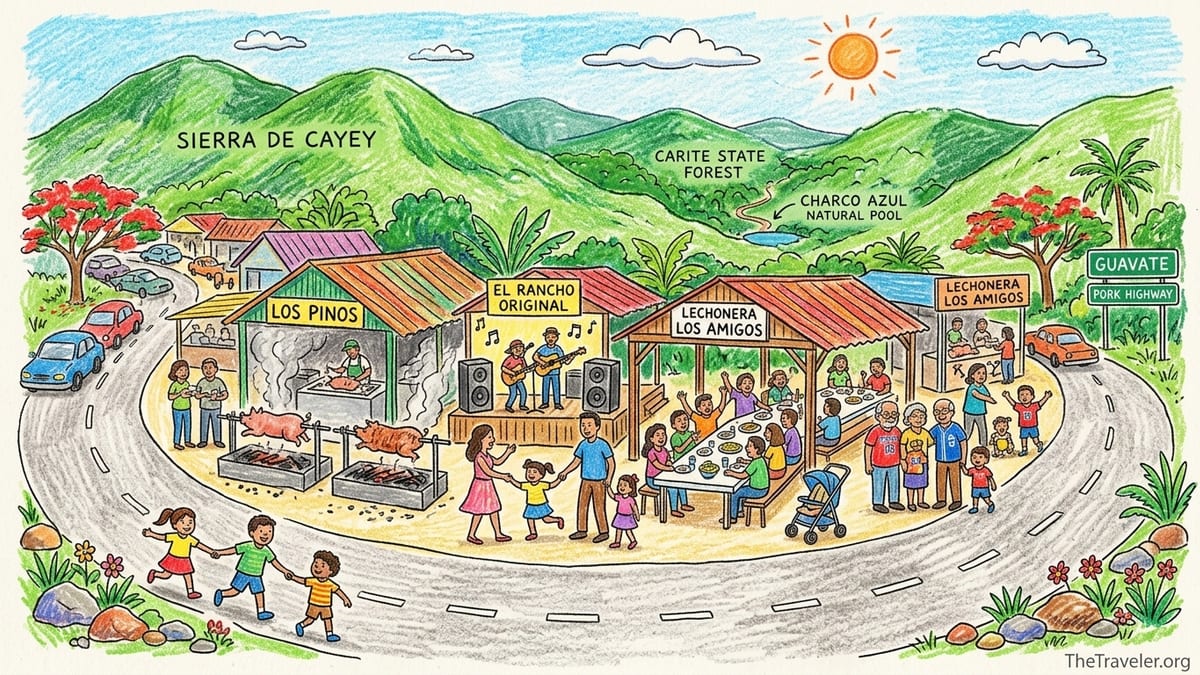
What Guavate Is Like On Weekends
Guavate is a rural barrio of Cayey in Puerto Rico’s central mountains, about a 45‑ to 60‑minute drive south from San Juan via PR‑52 before climbing onto PR‑184, often called the Pork Highway. Tourism campaigns highlight Guavate as a must‑visit for its roasted pork, cool mountain air, and views of the Sierra de Cayey, and they emphasize it as a place Puerto Ricans visit with family groups, not just tourists looking for nightlife. On Saturdays and especially Sundays, hundreds of people come up the mountain for lunch and an afternoon of music and food.
The core of the experience is a dense stretch of lechoneras along PR‑184 between the highway exit and the Carite State Forest. Places like Lechonera Los Pinos, El Rancho Original, El Mojito, Lechonera Los Amigos, and El Nuevo Rancho set up whole pigs on long metal spits over charcoal or wood. Loud salsa and merengue blast from speakers, some lechoneras bring in live bands, and families cluster at plastic tables under big open‑air pavilions. Children and grandparents mix with groups of friends, and you see strollers, kids in team jerseys, and extended families in matching T‑shirts celebrating birthdays or baptisms.
On a practical level, this means that Guavate is not a quiet countryside lunch. It feels more like a daytime street festival. Official tourism guides recommend arriving before noon on weekends to beat the worst of the gridlock, and visitors regularly report that by early afternoon, the last portion of PR‑184 can move at walking speed with cars parking wherever they can on the shoulder. For families, this festive, chaotic setting is part of the charm, but it also comes with crowd, noise, and safety trade‑offs that are worth understanding before you bring children.
Why Kids Often Love Guavate
For many children, Guavate is one of the most memorable meals of a Puerto Rico trip because it is so visual and sensory. At most lechoneras, you can see whole pigs roasting on spits, their skin turning mahogany over long rows of coals. Staff will often be willing to pause for a moment as they chop meat so kids can safely watch from a bit of distance. For school‑age children who are curious about where food comes from, this can spark real conversations about cooking, culture, and animals, especially if you prepare them ahead of time for the sight of whole animals.
The food itself is generally kid‑friendly once you move beyond the spectacle. If your child eats pork, you can order small portions of crispy skin and tender meat, but nearly every place also serves simple sides that work well for picky eaters. Common options include white rice, arroz con gandules, tostones, mofongo, amarillos, yuca al mojo, french fries, and basic salads. Some lechoneras prepare simpler grilled chicken or sausages. If your child is used to international fast‑casual food, a plate of white rice and plantains feels familiar enough, even if the music and setting are completely new.
Outdoor seating is another plus. Most lechoneras have big open pavilions or patios with long communal tables, mountain views, and room for kids to fidget without disturbing strangers the way they might in a small indoor dining room. At riverside spots like El Rancho Original, there are areas where kids can walk down closer to the Guavate River under parental supervision. While not formal playgrounds, these spaces give children a break from sitting still, and the cooler mountain air is a relief after time in coastal cities.
The party atmosphere can be fun for children, too, within limits. Live bands and loud recorded salsa invite dancing, and it is common to see parents dancing with their children in front of the stage or between tables during the afternoon. Older kids and teens who like music may enjoy seeing how central live music is to Puerto Rican weekend culture. Importantly, the vibe is daytime and social, not a late‑night club scene. Alcohol is present, and you will see Medalla beer and rum drinks on most tables, but families remain a visible part of the crowd.
Real Downsides For Families: Noise, Heat, Traffic, Space
The same elements that make Guavate exciting can be overwhelming, especially for young children or neurodivergent kids who are sensitive to noise and crowds. Music volumes can be high enough that normal‑tone conversation is difficult near speakers, and some bands play continuously for extended periods. Ear protection such as soft child ear defenders can make a big difference for toddlers or children with sound sensitivities, and families may prefer to ask for tables farther from the speakers even if that means a slightly longer walk carrying food.
Heat and grills are another concern. Even in the mountains, midday temperatures can feel hot and humid, and the open charcoal pits used to roast whole pigs generate intense localized heat. In busy lechoneras, the line to order often snakes close to the roasting area, and children can be tempted to step forward for a better view. Parents need to keep younger kids close in line and explain ahead of time that the metal bars and pits are very hot and that they must not run or lean on any surfaces near the grills. Lightweight clothing, hats, and frequent water breaks help prevent crankiness and overheating.
Traffic and parking along PR‑184 are unavoidable downsides on busy weekends. Cars often park along both sides of the narrow mountain road, and drivers squeeze through gaps while pedestrians share the shoulder. This environment is not stroller‑friendly or safe for kids to wander. Families should unbuckle children only once the car is fully parked in a space that allows you to unload directly onto a stable surface rather than into moving traffic. Holding hands, using child harnesses for escape‑artist toddlers, and assigning each adult to a specific child from car to table helps manage the short but intense road‑edge walk.
Space inside popular lechoneras becomes tight at peak times. Long communal tables fill quickly, walkways between tables narrow, and stroller parking can be limited or awkward. Many families report that lightweight, compact travel strollers are easier to manage than large full‑size models. In the busiest dining rooms, some parents prefer to fold strollers and keep infants in soft carriers to navigate the crowds, especially when carrying trays of food and drinks from counter to table.
Planning By Age: Babies, Toddlers, School‑Age Kids, Teens
Visiting Guavate with a baby is possible, but success comes down to timing and gear. Very young infants are usually happiest if you arrive on the earlier side of lunch, around 10:30 or 11:00 in the morning, when music volume is lower and crowds are building but not dense. A breathable soft carrier often works better than a stroller through gravel parking lots and stepped entrances. Shade is important, since many lechoneras have metal roofs that trap heat. Parents should also note that baby changing facilities are inconsistent; some bathrooms have basic changing tables, others do not, so a portable changing pad and willingness to improvise in the car are useful.
Toddlers benefit from clear boundaries and frequent breaks. Before arriving, explain that there will be loud music, many people, and hot grills they cannot touch. Once at a lechonera, look for tables on the edge of the dining area so your toddler has a little space to move without blocking servers. Short walks to quieter corners or down toward river viewpoints can help reset an overwhelmed child. Simple sides like fries, white rice, or plain tostones are good first orders so hungry toddlers do not wait too long while adults decide on cuts of pork.
School‑age children often enjoy Guavate the most. They can appreciate the spectacle of whole pigs roasting, understand basic safety instructions, and get excited about trying new foods like arroz con gandules or chicharrón. Many will join in dancing when bands play classic salsa hits that local families respond to enthusiastically. This is also the age where you can talk more directly about cultural traditions, from weekend “chinchorreo” road trips to the importance of roast pork in island celebrations.
Teens generally handle crowds and noise well and may be more flexible about waiting in long lines or exploring several lechoneras along PR‑184. For this age group, consider involving them in logistical decisions, such as choosing which lechonera to target after looking up menus and music schedules. Teens who are interested in photography or social media often find Guavate visually rich, from colorful signs and roasting pits to sweeping mountain backdrops, making it a rewarding stop even if they are not adventurous eaters.
Bathrooms, Food Logistics, Cash And Car Seats
Bathroom planning can make or break a Guavate visit with kids. Facilities vary from basic, pay‑to‑enter restrooms with an attendant to somewhat more modern setups inside larger, well‑established lechoneras. It is wise to ask to use the bathroom as soon as you arrive and to encourage children to go before you join a long food line. Because some restrooms charge a small cash fee, keeping a few dollars in small bills accessible rather than deep in a bag saves time and frustration at the door.
In terms of paying for food, many lechoneras still operate primarily on cash even though some have added card readers. Power or connection issues can temporarily disable card payments on busy weekends, and small vendors along the road selling sweets or drinks are often cash‑only. To avoid cutting a visit short or hunting for an ATM, families should bring enough cash for lunch, drinks, and small extras. For a rough idea, recent visitor reports suggest that a pound of lechón with sides for several people plus drinks for a family of four can easily reach a moderate sit‑down restaurant price in the mainland United States, though exact totals vary by order and location.
Snacks remain helpful even in a destination built entirely around food. Picky eaters might take one look at the roasted pigs and decide they are not hungry, and long waits in line can make any child cranky. Familiar items such as crackers, fruit pouches, or granola bars bridge the gap until the food arrives or rescue a child who ultimately decides not to try the pork or side dishes. Bringing a refillable water bottle for each child is also smart, as disposable cups are easy to spill in crowded seating areas.
Car seats are legally required in Puerto Rico according to age and size, and Guavate is a mountain drive with curves and elevation changes rather than a quick city hop. Families renting cars should specify the need for appropriate child safety seats and confirm installation themselves. If you are joining a small‑group tour that includes transport to Guavate, ask in advance how they handle child restraints and whether very young children are accepted on the tour vehicle. Even for older kids who no longer use full car seats, booster seats can add comfort and improve seat belt fit for the longer drive.
Safety Around Roads, Music, And Crowds
One of the biggest risks in Guavate for children is not the food or grills but the combination of a narrow mountain road, heavy traffic, and pedestrians. There is no practical public transportation that drops families directly at the lechoneras, so nearly everyone arrives by private car, taxi, or organized van. On busy weekends, shoulder parking and tight maneuvering mean that children should never walk alone along PR‑184. A good strategy is to unload kids on the side of the car farthest from the road, assign each child to a specific adult to hold hands with, and walk directly to the lechonera entrance rather than browsing roadside stalls until you are settled.
Inside, the dense crowds and lively music mean children can become separated from adults in seconds. Before leaving the car, take a quick photo of each child in their current outfit in case you need to show staff or police. Choose a visible meeting point such as the main stage or a particular sign where older kids should go if they lose sight of you. For younger children, temporary ID bracelets with a parent phone number or writing contact details on a card tucked in a pocket can provide extra peace of mind.
Music culture around alcohol is another area where families may want to set expectations. While Guavate is family‑oriented during the day, many adults are drinking, and as the afternoon goes on, a minority of visitors can become more boisterous. If you prefer to limit your child’s exposure to rowdier behavior or very loud music, plan to arrive and leave earlier, aiming to depart by mid‑afternoon. Choosing a table slightly back from the stage or near the edges of the dining area can keep you physically separate from the most energetic dancers while still letting children enjoy the music.
Finally, sun and weather matter even in the mountains. Clouds often build in the early afternoon, and short rain showers are common in the Carite region. Covered pavilions generally protect diners from light rain, but getting from car to lechonera can involve short uncovered segments. Light rain jackets or compact umbrellas help keep kids dry without adding bulk. Non‑slip sandals or closed‑toe shoes make it easier for children to navigate wet concrete, gravel, and occasional muddy patches in parking areas.
Considering Charco Azul: Water Safety, Footwear, Weather
Many maps and guides show Charco Azul, a natural pool in Carite State Forest, further along PR‑184 from the main Guavate lechonera strip. It is a clear river pool surrounded by lush forest, and it can be a beautiful stop if your family enjoys nature. However, not every family should automatically add a swimming hole to a Guavate food day, especially with younger children or if you are not comfortable supervising kids around open water.
Charco Azul involves a drive deeper into the mountains and then a walk on a forest trail to reach the water. Conditions can vary with recent rainfall, and while Carite State Forest has picnic areas, showers, and restrooms near some recreation sites, services are more limited than in the lechoneras. Families considering a combined visit need to think about timelines and energy levels: a heavy meal followed by a hike and swimming may be too much for certain age groups in the tropical humidity.
Water safety should come first if you choose to visit. River pools can have uneven bottoms, slippery rocks, and variable depths even over short distances. Strong swimmers may feel comfortable in calm conditions, but non‑swimmers and children need close, hands‑on supervision at arm’s length. Life vests or flotation aids designed for open water give extra margin for younger kids, and families should agree in advance on no‑go zones where currents look stronger or rocks are mossy and slick.
Footwear and weather also matter at Charco Azul. Sturdy water shoes or sandals with grippy soles work better than flip‑flops on wet rocks and muddy forest paths. The same afternoon showers that cool Guavate can make trails more slippery, and cloud cover can set in quickly. If there has been significant recent rain, some families choose to skip river swimming altogether due to concerns about higher water levels or reduced visibility of underwater hazards. In short, Charco Azul can be a rewarding nature stop for confident outdoor families, but it is not an obligatory extension of every Guavate trip.
Sample Family Half‑Day And Full‑Day Plans
For many families, a focused half‑day in Guavate offers the best balance between experiencing the Ruta del Lechón and managing kids’ energy. A realistic plan from San Juan might involve leaving the city around 9:00 a.m., reaching the PR‑52 exit near Cayey roughly 45 minutes later depending on traffic, then driving the final segment up PR‑184. Arriving at your chosen lechonera such as Los Amigos or Los Pinos between 10:30 and 11:00 usually means easier parking, shorter food lines, and more flexibility in choosing a table.
Once seated, you can order a mix of pork and sides tailored to your family’s preferences, eat at a relaxed pace, and enjoy the early music sets and dancing without the densest afternoon crowds. After one to two hours, many kids will be ready to leave. You can then drive back down the mountain, possibly stopping at a roadside mirador or small fruit stand on PR‑52, and be back in San Juan by mid‑afternoon, leaving time for a swim at a city beach or a rest at your hotel before dinner.
A fuller family day might suit older kids and teens who have more stamina. In that case, you might still aim to reach Guavate before noon to avoid severe traffic, but stay through the livelier early afternoon period when bands are in full swing and the atmosphere feels more like a village party. Children can watch later music sets, try dessert items like flan or tembleque, and perhaps sample food from a second lechonera along PR‑184. Afterward, the family could continue deeper into Carite State Forest to walk a short forest trail or picnic at a designated area, if everyone is up for more time outdoors.
Families who want to include Charco Azul need to keep an eye on weather forecasts and build in flexibility. One approach is to start with a lighter, earlier meal in Guavate, leave by early afternoon, and then evaluate whether children still have the energy for a nature stop based on temperature, clouds, and any rain. If conditions look unfavorable, you can skip the swimming hole without feeling you have lost the main purpose of the day, which is the cultural and culinary immersion of the Pork Highway itself.
The Takeaway
Guavate’s Ruta del Lechón is, at its core, a family tradition for Puerto Ricans. Weekends bring grandparents, parents, children, and friends together along PR‑184 for roast pork, music, and time in the cooler mountain air. For visiting families, that makes it an authentic and generally welcoming destination, not an adults‑only bar strip. Children often love the spectacle of whole pigs roasting, the chance to dance to live salsa, and the abundance of simple side dishes they can enjoy even if they skip the pork.
At the same time, Guavate is intense. Expect loud music, crowding, long lines at peak times, hot grills near ordering areas, tight parking along a busy mountain road, and dining rooms where stroller space is limited. With realistic expectations, early arrival, attention to bathroom and snack logistics, and firm safety habits around traffic and grills, many families find the experience rewarding. Whether you pair it with a quiet afternoon back in San Juan or continue into the forests of Carite and Charco Azul, Guavate can be a highlight of a Puerto Rico trip that children remember long after their plates are cleared.
FAQ
Q1. Is Guavate’s Ruta del Lechón suitable for young children?
Yes, many local families bring children of all ages, and the atmosphere is social and daytime‑oriented, but parents must manage noise, crowds, and road safety carefully.
Q2. What is the best time of day to visit Guavate with kids?
Arriving between about 10:30 a.m. and noon on weekends usually offers a good balance of atmosphere, easier parking, and shorter lines before the heaviest afternoon crowds.
Q3. Can picky eaters find food they like at the lechoneras?
Most lechoneras serve simple sides such as white rice, tostones, amarillos, fries, and basic salads, so even children who avoid pork can usually find something familiar to eat.
Q4. Are strollers practical in Guavate?
Lightweight, compact strollers can work, but crowded dining rooms, gravel parking lots, and tight walkways mean soft carriers are often easier, especially at peak weekend times.
Q5. Do lechoneras in Guavate accept credit cards?
Some do, but not all, and card systems can fail on busy days, so it is wise to bring enough cash for food, drinks, bathroom fees, and small roadside purchases.
Q6. What should we know about bathrooms when visiting with kids?
Bathroom quality varies, some charge a small fee, and changing tables are not guaranteed, so plan early stops, carry small bills, and bring a portable changing pad for babies.
Q7. Is there public transportation to Guavate?
No convenient public transit serves the lechoneras directly, so families usually need a rental car, taxi, or tour vehicle, making proper child car seats and safe parking important.
Q8. Can we safely combine Guavate with a visit to Charco Azul?
It can work for outdoor‑oriented families if weather, water levels, and children’s energy cooperate, but it adds driving, a forest walk, and water‑safety responsibilities after a big meal.
Q9. How loud is the music, and will it bother small children?
Music at busy lechoneras can be very loud near stages and speakers, so sitting farther back and using child ear protection can make the experience more comfortable for young kids.
Q10. Is Guavate still enjoyable on a weekday with kids?
Yes, several lechoneras open on weekdays with far fewer crowds and lower noise, offering a more relaxed meal, though there may be less live music and festive energy than on weekends.