


More news on this day
More than 20 flights from Dubai, Abu Dhabi and Sharjah have been cancelled in recent days as Flydubai, Air Arabia, Emirates, Royal Jordanian and other carriers adjust schedules on routes linking the Gulf to key international destinations including Bahrain, Lahore, Islamabad, Kathmandu, Doha and Paris.
Get the latest news straight to your inbox!
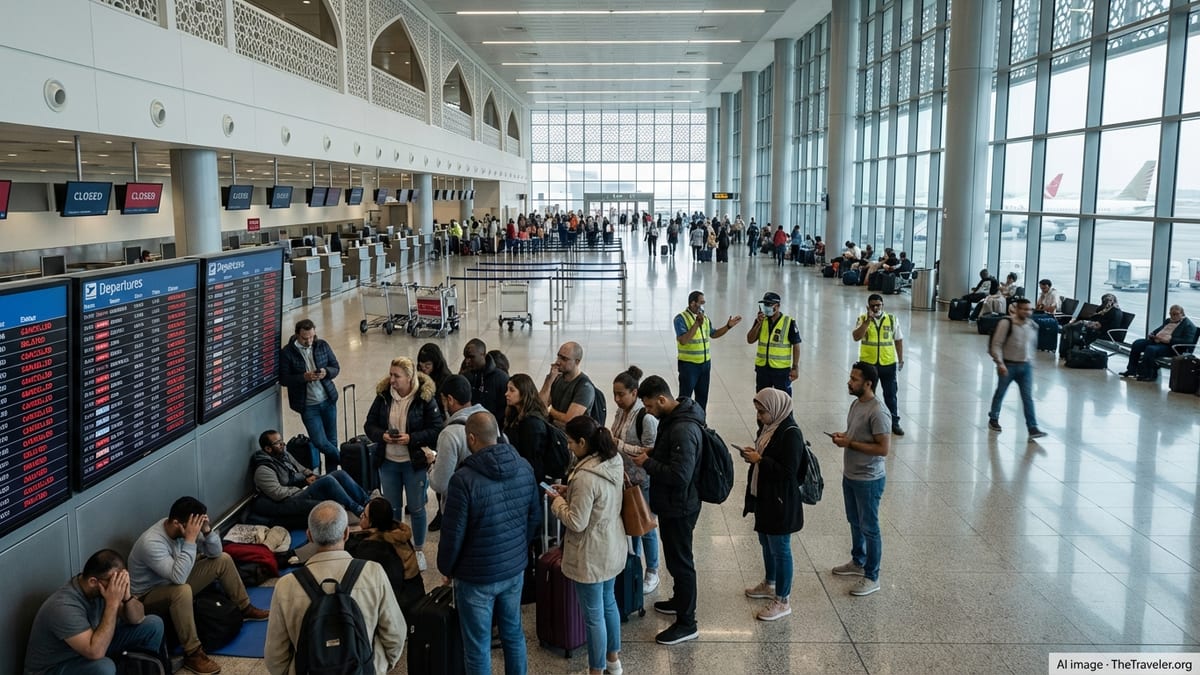
New Wave of Cancellations Hits UAE’s Major Hubs
Travel through the United Arab Emirates’ three main gateways is facing renewed turbulence as airlines respond to a combination of regional airspace constraints, operational pressures and soft capacity on certain routes. Publicly available airport and schedule data for mid May indicate that more than 20 departures and arrivals have been pulled from timetables at Dubai International, Abu Dhabi International and Sharjah International, affecting a web of connections across the Middle East, South Asia and Europe.
Emirates, Flydubai and Air Arabia, which together handle the bulk of passenger traffic at Dubai and Sharjah, feature prominently in the latest disruption. Reported cancellations include services to Bahrain and Doha as carriers trim frequencies on shorter Gulf hops where demand has been dampened by ongoing uncertainty over overflight routings. Regional reporting on earlier waves of disruption in March already highlighted how airspace closures over Iran and Iraq led to dozens of UAE flights being delayed or cancelled in a single day, and network schedules show that knock-on effects are still being felt into May.
Abu Dhabi is also feeling the strain as partner airlines in Europe and the wider region continue to pare back operations. Industry coverage in March documented how several European flag carriers suspended flights to Dubai, Bahrain and Doha for weeks at a time following regional security concerns, forcing Gulf hubs to absorb displaced travellers with limited spare capacity. With those suspensions still in place on some routes, Emirates, Etihad and partner airlines have had little flexibility when weather or airspace restrictions require last-minute adjustments.
Pakistan Routes Face Extended Suspensions
Passengers traveling between the UAE and Pakistan are among those hardest hit in the current phase of disruption. News coverage from Pakistan on 13 May reported that Flydubai has suspended its flights to Islamabad, Lahore and Peshawar until late October, citing operational reasons. Flight-tracking data referenced in that reporting shows that key Flydubai rotations between Dubai and Islamabad, Lahore and Peshawar have been cancelled since at least 7 May, effectively removing a low cost option on some of the busiest corridors between the Gulf and Pakistan.
The timing compounds earlier turmoil on Pakistan routes, where delays and aircraft reroutings had already lengthened journey times through Dubai and Sharjah. Travellers posting publicly on consumer forums this week describe receiving short-notice cancellation notices for Flydubai services between Dubai and Lahore, with rebooking options limited and some passengers being offered vouchers instead of cash refunds. Although such reports are anecdotal, they align with the wider pattern of reduced capacity and schedule reshuffles visible in airline booking systems.
Emirates and other full service carriers continue to serve major Pakistani cities, but the removal of Flydubai frequencies has tightened seat availability and pushed more demand onto remaining flights. Aviation analysts quoted in regional business coverage over recent months have warned that when one Gulf carrier sharply reduces capacity on a high-demand route, it can take weeks for the market to re-balance, particularly when alternative airlines are also juggling their own schedule constraints.
Gulf and Levant Destinations See Ongoing Cuts
The disruption is not limited to South Asia. Routes linking the UAE to Bahrain, Doha and other Gulf and Levant points have also seen continuing adjustments as airlines respond to evolving overflight permissions and local demand. A widely referenced disruptions overview compiled in March noted that multiple carriers, including Royal Jordanian, temporarily halted or reduced flights to several Gulf destinations while Jordanian and Gulf airspace was subject to partial closures. Subsequent operational summaries for Amman’s main airport show Royal Jordanian avoiding certain Gulf points such as Bahrain and Doha for stretches of April and early May.
These changes have been mirrored from the UAE side. Travel-industry briefings on Dubai and Abu Dhabi operations in April cited at least 22 cancellations in a single day after overnight airspace closures, with Emirates, Flydubai and Air Arabia all adjusting their schedules. In the weeks since, timetable data indicates that some of the cut frequencies on short-haul Gulf sectors have not yet been fully restored, leaving thinner schedules to Bahrain and Qatar than were typical earlier in the year.
The resulting pattern for travellers is uneven. Some days see near-normal operations, while others feature clusters of cancellations or equipment downgrades as carriers juggle aircraft and crew. Publicly available information suggests that airlines are prioritising longer-haul services and trunk routes, meaning secondary Gulf and Levant destinations are more exposed to last-minute changes.
Knock-on Effects for Kathmandu, Paris and Other Long-haul Links
Beyond the Gulf and Pakistan, the latest disruptions are rippling across long-haul networks to Europe and Asia. Industry coverage in March and April documented how carriers such as British Airways, Air France and others either suspended or sharply reduced flights to Dubai, Abu Dhabi, Bahrain and Doha, citing regional security concerns and rerouting requirements. These moves have constrained onward connections from Europe to South Asia and Southeast Asia via the UAE, increasing reliance on Emirates, Qatar Airways, Etihad and partner carriers to move passengers to cities such as Kathmandu and beyond.
Within this context, cancellations or retimings on key UAE feeder flights can have outsized effects on distant destinations. Travel advisories issued in recent weeks highlight that passengers heading from European cities such as Paris to Kathmandu, or from the Gulf to secondary Asian points, are particularly vulnerable to missed connections when a Dubai, Abu Dhabi or Sharjah leg is cancelled or delayed at short notice. Displaced passengers may find themselves rebooked through alternative hubs or routed via multi-stop itineraries that add many hours to total travel time.
For now, schedule data and airport operations reports indicate that the majority of long-haul services from Dubai and Abu Dhabi are operating, albeit sometimes on modified routings to avoid restricted airspace. However, even a small number of cancellations on high-demand days can create significant congestion at rebooking desks and strain available hotel capacity for stranded travellers. Reports from recent weather-related disruption in Dubai and Sharjah show how quickly terminals can become crowded when multiple major carriers are forced to delay or cancel services at the same time.
What Travellers Should Watch in the Coming Days
With no firm end date to regional airspace uncertainty and several carriers extending suspensions on specific routes into late May and beyond, the operating environment around Gulf hubs is likely to remain fluid. Publicly available forecasts from aviation data providers show gradual capacity restoration through late May and June, but this is contingent on both stable security conditions and the absence of further severe weather events in the region.
Consumer-rights organisations and travel-industry advisories are urging passengers to pay close attention to airline communications, particularly if they are booked on routes that have seen repeated schedule changes in recent weeks. Routes between Dubai or Sharjah and Lahore, Islamabad, Peshawar, Kathmandu, Bahrain and Doha, as well as selected European links such as Paris, are among those where travellers have most frequently reported late-notice disruptions since early spring.
Analysts note that travellers with critical time-sensitive trips may wish to build longer connection windows or select itineraries with more than one daily frequency on key legs, providing a better chance of same-day reaccommodation if a flight is cancelled. As airlines including Flydubai, Air Arabia, Emirates and Royal Jordanian continue to tweak their networks in response to evolving conditions, flexibility and close monitoring of booking details remain essential for anyone transiting through Dubai, Abu Dhabi or Sharjah in the days ahead.