

More news on this day
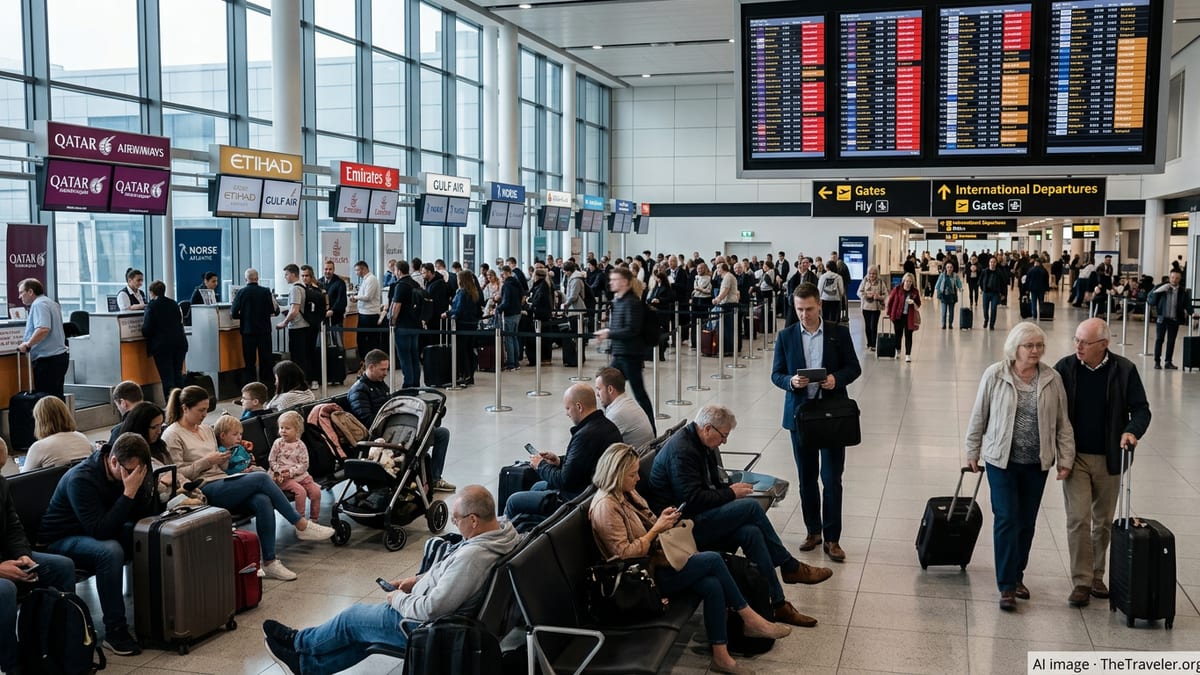
Passengers at Manchester Airport faced mounting frustration on March 5 as 16 long-haul and European services operated by Qatar Airways, Etihad Airways, Emirates, Gulf Air, and Norse Atlantic were cancelled and many more delayed, snarling key routes to Hamad International in Doha, Frankfurt, Hamburg, Belfast, Amsterdam and several other hubs.
Chain Reaction From Middle East Airspace Closures
A fresh wave of disruption at Manchester is being linked by aviation analysts to the continuing airspace restrictions and closures across parts of the Middle East, which have forced Gulf carriers to thin out schedules, reroute long haul flights and reposition aircraft. With major hubs such as Dubai, Doha, Abu Dhabi and Bahrain all operating under constraints, knock on effects have been rippling through European gateways, including Manchester, for several days.
Operational data compiled on March 5 shows that Qatar Airways, Etihad Airways, Emirates and Gulf Air collectively scrubbed 16 services touching Manchester, with additional rotations heavily delayed or rerouted via other European cities. The cancellations affected both inbound and outbound flights, effectively severing normal one stop links from northern England to Asia, Africa and Australasia via the Gulf for a second consecutive week.
While the weather remained largely benign over northwest England, carriers reported crew and aircraft availability problems as jets and flight teams became trapped out of position at Gulf hubs and along congested diversion corridors. Industry observers say the pattern of cancellations at Manchester mirrors wider disruption at other European airports, where airlines are juggling limited slots, altered routings and rapidly changing security guidance.
Airport managers have urged passengers not to assume that a previously confirmed booking will operate as planned, advising travelers to monitor airline apps closely and to avoid traveling to the terminal without a reconfirmed seat on an operating service.
Key Routes to Doha, Frankfurt and Amsterdam Hit Hard
The heaviest impact at Manchester has fallen on trunk routes feeding into Gulf and continental hubs, notably Doha’s Hamad International Airport, Frankfurt Airport and Amsterdam Schiphol. Qatar Airways’ Manchester to Doha link, a vital connector for business travelers and long haul leisure passengers, saw multiple rotations pulled at short notice, leaving would be transit passengers unable to reach onward flights to Asia and Australasia.
Frankfurt and Amsterdam, both crucial for European and transatlantic connections, also featured prominently among the disrupted destinations. Services operated either directly by Gulf carriers in partnership with European allies or as feeder flights for onward Gulf departures were cancelled or pushed back by several hours. For many travelers, this meant misconnecting with long haul flights from those hubs or losing entire itineraries when minimum connection times could no longer be met.
Amsterdam and Frankfurt were already under pressure, handling diversions and special relief flights assembled by Gulf and European airlines to repatriate passengers stranded since the initial airspace closures. The additional schedule strain created by Manchester cancellations further tightened capacity, leaving rebooking options limited and often spanning several days.
In parallel, Middle East related disruption coincided with broader congestion across European airspace, amplifying the operational difficulty of finding alternate routings that respected both safety restrictions and duty time limits for crews.
Knock On Effects for Hamburg, Belfast and Regional Links
Beyond the high profile hub routes, travelers on secondary services from Manchester also felt the impact. Flights connecting to Hamburg, Belfast and other short haul destinations were delayed or cancelled as airlines shuffled aircraft and crews to protect long haul sectors and regulatory commitments. For Norse Atlantic, which relies on tight aircraft utilization between its transatlantic operations and UK bases, even modest schedule changes cascaded into missed rotations and extended ground time.
Hamburg and Belfast passengers reported long queues at transfer desks inside Manchester’s terminals as staff attempted to rebook disrupted journeys via alternative cities or different days. In several cases, travelers bound for Scandinavia or North America via Manchester and other European gateways found themselves offered routings that detoured through multiple hubs, added overnight layovers or shifted their departures by forty eight hours or more.
Regional tourism stakeholders expressed concern that the ongoing unpredictability would deter short city breaks and business day trips reliant on same day or overnight returns. Hoteliers and event organizers in cities such as Belfast and Hamburg warned that clients were already seeking more flexible cancellation terms or postponing trips entirely until schedules stabilize.
Airline sources said the priority remained maintaining a skeletal network of long haul services while gradually restoring intra European links as aircraft and crews rotate back into position, but cautioned that regional punctuality would likely remain volatile for several days.
Stranded Passengers Face Long Queues and Limited Options
Inside Manchester Airport, the human cost of the cancellations and delays was evident in crowded departure halls, floor space dotted with makeshift camps of stranded travelers and swelling lines at airline customer service desks. Passengers reported waiting several hours to speak with agents about rebooking, hotel vouchers or refunds, with many told that the earliest available seats on comparable routes were days away.
Families returning from winter sun holidays and business travelers with fixed meeting schedules were among the hardest hit, facing difficult choices between accepting heavily rerouted itineraries, paying out of pocket for alternative tickets with other airlines, or abandoning trips altogether. Social media posts from the terminal highlighted uncertainty over compensation rules, with many travelers unsure whether the disruption would qualify as extraordinary circumstances outside airline control.
Airport staff distributed water and basic refreshments to the longest stranded groups, but some passengers complained of limited information and inconsistent messaging between airline apps, airport display boards and customer service announcements. Several Gulf carriers reiterated that their mobile apps and text alerts remained the most reliable source of real time flight status and urged customers not to travel to the airport without confirmation.
Consumer advocates advised affected travelers to document all expenses related to the disruption, retain boarding passes and confirmation emails, and follow up in writing with airlines once immediate travel needs are resolved. They also warned that hotel availability near Manchester Airport was tightening quickly as airlines block booked rooms for displaced passengers and crew.
Outlook: Gradual Recovery, Persistent Uncertainty
Operational planners at Manchester and across Europe are working on the assumption that Gulf airspace conditions will ease gradually rather than snap back to normal, meaning that schedules are likely to remain fragile for the rest of the week. Airlines are expected to continue prioritizing a core set of trunk routes while adding selective relief flights from hubs such as Doha, Dubai, Abu Dhabi and Bahrain to clear backlogs.
For Manchester based travelers, this translates into an ongoing period of volatility, with day by day changes to timetables and equipment. Aviation experts say that while the figure of 16 cancellations tied directly to Qatar Airways, Etihad, Emirates, Gulf Air and Norse Atlantic on March 5 is significant, the broader impact is measured in missed connections, rolled over advance bookings and the erosion of traveler confidence in planning time sensitive trips via the Gulf.
Industry bodies are calling for clearer coordination between airports, airlines and national regulators to manage airspace restrictions and communicate more transparently with passengers. Suggestions include consolidated disruption dashboards at major hubs, standardized alerts for cascading delays and more flexible ticketing policies that allow stranded travelers to switch carriers without heavy penalties during extended crises.
Until those measures materialize, passengers flying from or through Manchester on Gulf or transatlantic routes are being urged to build in greater time buffers, keep itineraries as flexible as possible and stay alert to rapid changes in flight status as the regional situation continues to evolve.