


More news on this day
Hundreds of passengers across the United Arab Emirates, China, India, Singapore and Malaysia are facing long waits and missed connections as Gulf-based airlines scale back operations, canceling dozens of services and delaying hundreds more across key routes linking Dubai, Shanghai, Delhi, Singapore and Kuala Lumpur.
Get the latest news straight to your inbox!
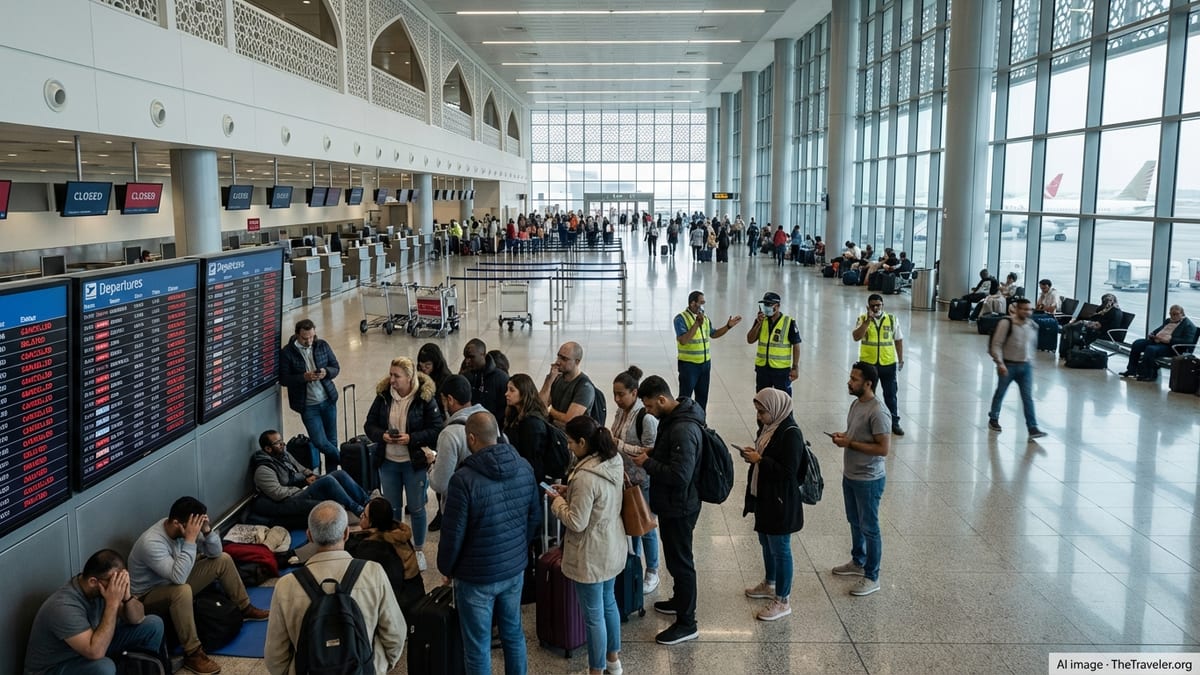
Cross-Regional Disruptions Hit Key Asian Gateways
Publicly available flight-tracking and aviation advisory data for early May 2026 indicate that at least 24 scheduled flights operated by Gulf-based carriers, including Emirates, FlyDubai and Gulf Air, have been canceled within a short time frame, with more than 500 additional services subject to significant delays. The pattern is most visible on trunk routes connecting Dubai with major Asian gateways such as Shanghai, Delhi, Singapore and Kuala Lumpur, where congested departure boards and rolling schedule changes have become common.
Reports from regional media and industry monitoring services describe packed terminals in Dubai and other Gulf hubs as passengers attempt to rebook or reroute journeys at short notice. The knock-on effects are being felt far beyond the Gulf, with airports in China, India, Southeast Asia and Europe all reporting late arrivals and departures on flights that connect through Dubai or other regional hubs.
Although individual delays can be traced to a range of causes, analysts point to a broader backdrop of constrained airspace in parts of the Middle East, lingering operational bottlenecks after earlier mass cancellations and a fragile network still recovering from months of disruption. In practice, this has created a highly volatile operating environment in which day-to-day schedules remain vulnerable to sudden change.
Dubai Remains the Epicenter of Ongoing Schedule Volatility
Dubai International Airport, one of the world’s busiest long-haul hubs, remains at the center of the current round of disruption. Aviation advisories circulated in recent weeks describe ongoing congestion in the airport’s terminals, with passengers affected by previous cancellations still moving through the system at the same time that new delays and schedule changes are being announced.
Operational data collated by travel platforms and flight-tracking services show repeated timetable adjustments on high-density Emirates and FlyDubai routes linking Dubai with major South Asian and Southeast Asian cities. While many services continue to operate, late departures, altered connection times and occasional last-minute cancellations have left travelers struggling to maintain onward itineraries.
Industry commentary suggests that ground-handling capacity and crew scheduling remain under pressure following the large-scale disruptions that began in late February, when wide areas of Gulf airspace were temporarily closed and thousands of passengers were stranded. Even as airspace restrictions have gradually eased, published coverage notes that carriers are still operating on reduced or reprofiled schedules, limiting the flexibility to absorb fresh shocks.
Spillover Effects in Shanghai, Delhi, Singapore and Kuala Lumpur
The strain on Gulf carriers is cascading into Asia’s major airports, where passengers connecting to and from Middle East hubs have been among the most affected. Flight-status boards in Shanghai, Delhi, Singapore and Kuala Lumpur have shown a noticeable cluster of late-running arrivals and departures tied to inbound services from Dubai and other Gulf cities.
In India, local media and airport updates highlight disrupted journeys on popular India–UAE routes, with delays compounding congestion at already busy terminals. Similar scenes have been described at Changi Airport in Singapore and Kuala Lumpur International Airport, where passengers arriving late from the Gulf risk missing narrow connection windows to Australia, Europe and North Asia.
Travel-industry specialists warn that the interconnected nature of global networks means even a limited number of cancellations and prolonged delays at a major hub can have outsized effects. When long-haul flights arrive hours behind schedule, aircraft and crews are often out of position for subsequent legs, forcing airlines to reshuffle rotations and periodically suspend sectors to restore balance.
Gulf Air and Regional Carriers Adjust Networks
Beyond Emirates and FlyDubai, other Gulf-based airlines such as Gulf Air have continued to adjust their timetables and route networks in response to a combination of airspace constraints and shifting demand. Publicly available airline statements and schedule filings reviewed by aviation analysts point to trimmed frequencies on certain Middle East–Asia routes and the continued suspension of select services.
Some Asian carriers, including those based in Malaysia and Singapore, have also maintained or extended suspensions on specific Middle East routes, particularly where airspace closures or detours would add substantial time and cost to operations. These decisions have further reduced the number of available seats through Gulf corridors, limiting options for passengers seeking alternative routings when flights are canceled.
Industry observers note that, while these network changes are designed to stabilize operations and ensure reliability on remaining routes, they can leave travelers with fewer choices during disruption events. With spare capacity already constrained, rebooking hundreds of stranded passengers from canceled flights onto later services can take days rather than hours.
What Passengers Are Being Advised to Do
Consumer advisories issued by travel consultancies and corporate travel managers in recent days recommend that passengers flying through Dubai and other Gulf hubs build additional buffer time into itineraries and monitor their bookings closely. Many airlines are allowing ticket changes within defined date windows, but access to alternative flights may be limited on peak routes between the Gulf, South Asia and Southeast Asia.
Public information from airline customer-notification channels underscores the importance of confirming flight status before traveling to the airport. Passengers are being encouraged to keep contact details updated in airline booking profiles so that they can receive real-time updates on delays, cancellations and gate changes via SMS or email.
Travel experts also emphasize the value of flexible planning while the situation remains fluid. For some journeys between Asia and Europe, routings that avoid the most congested Gulf hubs may offer more predictable travel, even if total travel time is longer. However, with the global aviation system still recalibrating after months of interruptions, no route is entirely immune to disruption, and passengers are being urged to remain prepared for last-minute changes.