


More news on this day
Global hospitality group Wyndham Hotels & Resorts has entered a new partnership with Dubai-based Grovy Developers to develop Ramada Residences by Wyndham at Dubai Islands, a branded residential project that aims to fuse hotel-style services with long-stay coastal living in one of the emirate’s fastest-growing waterfront districts.
Get the latest news straight to your inbox!
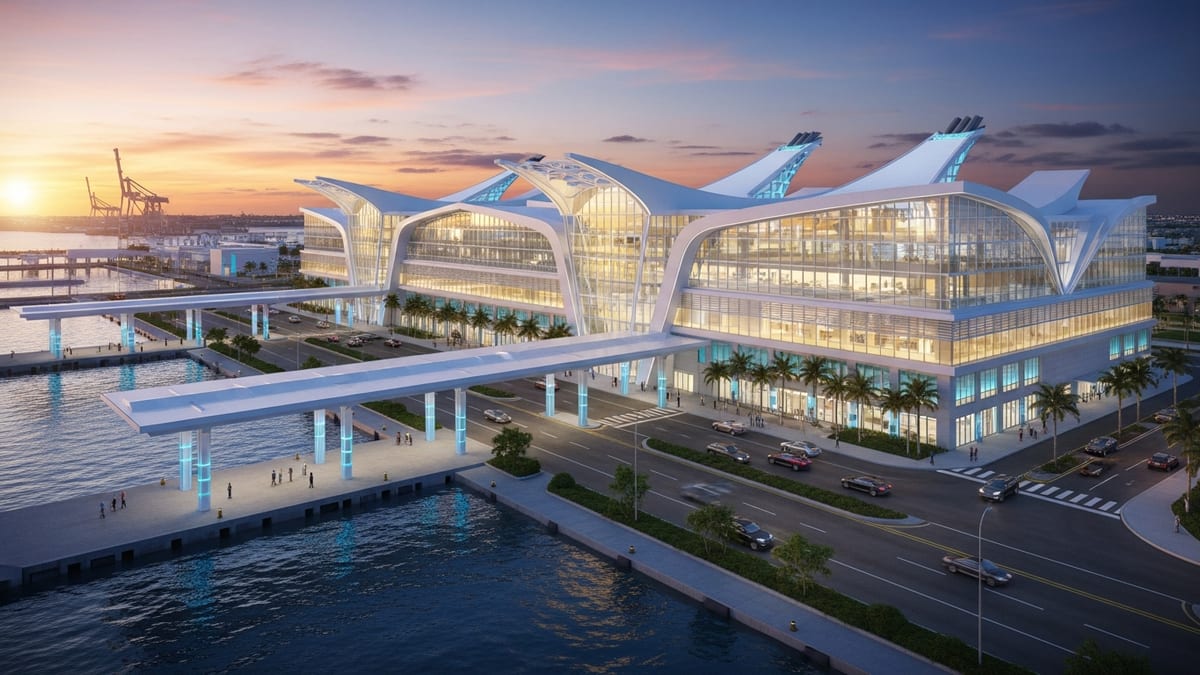
A Strategic Tie-Up in a Fast-Moving Waterfront Market
According to publicly available information, Grovy Developers has signed an agreement with Wyndham Hotels & Resorts to bring the Ramada-branded residences to Dubai Islands, a master-planned cluster of offshore islands positioned as a new coastal gateway for the city. USquare is identified as the development partner on the scheme, underscoring a multi-party collaboration behind the project.
The partnership brings together one of the world’s largest hotel franchising groups with a Dubai developer that has focused on design-led residential communities in emerging neighborhoods. Market observers note that such alliances are becoming more common in the Gulf, as developers seek the credibility and operational standards of international hospitality brands to differentiate new stock in a competitive off-plan environment.
Reports indicate that the signing took place at a launch event in Dubai on May 7, 2026, with senior representatives from Grovy, Wyndham and USquare in attendance. The gathering drew strong interest from brokers and individual buyers, with registrations of expressions of interest reported on site, a sign that branded waterfront assets on Dubai Islands are drawing attention from both local and overseas investors.
The project adds a hospitality-backed residential player to a growing roster of branded and upscale schemes on Dubai Islands, which has been earmarked in city planning documents as a long-term hub for tourism, leisure and mixed-use living aligned with the Dubai 2040 Urban Master Plan.
Ramada Residences at Dubai Islands: Boutique Scale, Resort Positioning
Ramada Residences by Wyndham at Dubai Islands is described in project materials as a fully furnished, hospitality-branded residential complex offering a boutique collection of apartments and penthouses. The scheme will comprise one, two and three bedroom residences alongside four bedroom penthouses, all operated under Wyndham’s quality and service framework.
The development is scheduled for handover in the third quarter of 2027, placing it among the medium-term pipeline of new supply on Dubai Islands. Pricing details and detailed layouts are being circulated through brokerage channels, with launch information positioning the scheme as an upscale option within the branded residence category, rather than at the ultra-luxury super-prime end of the market.
Publicly shared information emphasizes that the residences will be delivered fully furnished, an approach that is increasingly popular with investors who prioritize rapid readiness for occupation or rental. The units are expected to integrate hotel-style interior design, with finishes and fixtures curated to align with Ramada brand standards across kitchens, living spaces and bedrooms.
The project is also reported to have approval for short term leasing on Dubai Islands, which would allow owners to participate in the emirate’s active holiday home and serviced apartment segment. This flexibility is viewed by analysts as a key selling point for waterfront branded residences, where yields can be enhanced by seasonal and tourism-driven demand.
Amenities Focused on Resort Living and Wellness
A strong focus on lifestyle programming is central to the Ramada Residences concept on Dubai Islands. Project documents highlight a slate of more than 20 leisure and wellness amenities, positioning the property closer to a resort than a conventional residential tower.
Among the features promoted to prospective buyers are an aqua gym, golf simulator, open air theatre and a temperature controlled infinity pool overlooking the surrounding seascape. These are set to be complemented by spa and fitness facilities, landscaped terraces and family oriented recreation areas, designed to appeal to both end users and long stay guests.
Industry analysts point out that such amenity-rich environments have become a hallmark of Dubai’s new coastal launches, where developers are competing to create self-contained lifestyle hubs rather than basic accommodation blocks. In the case of Ramada Residences at Dubai Islands, the alignment with a global hospitality operator is expected to support consistent service levels, maintenance and programming across these facilities.
The emphasis on shared spaces echoes wider trends within branded residences globally, where wellness, flexible work zones and curated social areas are increasingly seen as essential components that justify premium pricing and support long term value retention.
Dubai Islands Strengthens Its Position as a Branded Coastal Cluster
Dubai Islands, developed as a multi-island coastal district off the city’s northern shoreline, has been steadily attracting a mix of hotel, resort and residential concepts as infrastructure builds out. Public information describes the master plan as focused on open beaches, extensive green areas and cultural attractions, along with road links that provide direct access to key urban corridors.
In recent months, additional branded projects have been announced on the archipelago, reflecting growing confidence from both international operators and regional developers in the location’s medium to long term prospects. The arrival of Ramada Residences by Wyndham with Grovy Developers and USquare adds another recognized hospitality flag to the island’s skyline, joining a pipeline that includes other luxury and lifestyle brands in various stages of planning and sales.
Market coverage suggests that investor interest in Dubai Islands is being supported by its relative scarcity of direct beachfront plots compared with more mature districts, along with expectations of improved transport connectivity and tourism flows. The inclusion of short term rental approved properties, such as the Ramada-branded residences, is viewed as complementary to the emirate’s broader tourism strategy and its efforts to attract longer-stay visitors.
Analysts note that as more branded residential schemes go on sale across Dubai, differentiation through location, operator reputation and amenity mix is likely to intensify. In that context, projects that combine a waterfront setting, recognizable hospitality brand and curated lifestyle components, such as Ramada Residences at Dubai Islands, are positioned to compete for attention from both regional buyers and international capital.
Implications for Investors and the Branded Residence Segment
The collaboration between Wyndham and Grovy at Dubai Islands reflects a wider regional shift toward hospitality-backed living spaces that blur the line between home and hotel. This hybrid model, which has taken root in established resort markets worldwide, is now gaining critical mass in the Gulf, particularly in cities such as Dubai where tourism and real estate strategies are closely aligned.
Observers say that for individual buyers, branded residences can offer perceived advantages in terms of asset management, resale appeal and rental performance, although premiums over non-branded stock and ongoing service charges remain key considerations. In the case of Ramada Residences, the promise of Wyndham-aligned service standards and the project’s coastal location are likely to be central to its investment narrative.
The scheduled Q3 2027 handover sets a multi-year runway during which macroeconomic conditions, interest rates and travel patterns will all play a role in shaping actual returns. Nonetheless, the early response reported at the Dubai launch event suggests that appetite for waterfront branded product remains resilient, even against a backdrop of evolving global market dynamics.
For Dubai Islands, the addition of a Ramada-branded residence strengthens its positioning as a test bed for new coastal living formats that integrate hospitality, investment and everyday life. As more details emerge on unit configurations, payment structures and operational frameworks, market participants will be watching closely to gauge how this latest partnership between a global hotel name and a local developer performs in an increasingly crowded but still ambitious segment.