


More news on this day
Hundreds of flights were cancelled and thousands more delayed across Asia and the Gulf on May 16, as regional hubs from Tokyo to Abu Dhabi reported rolling disruption that affected at least 366 departures and 2,949 delays, interrupting schedules for major airlines including China Eastern, IndiGo, AirAsia, Etihad Airways and others.
Get the latest news straight to your inbox!
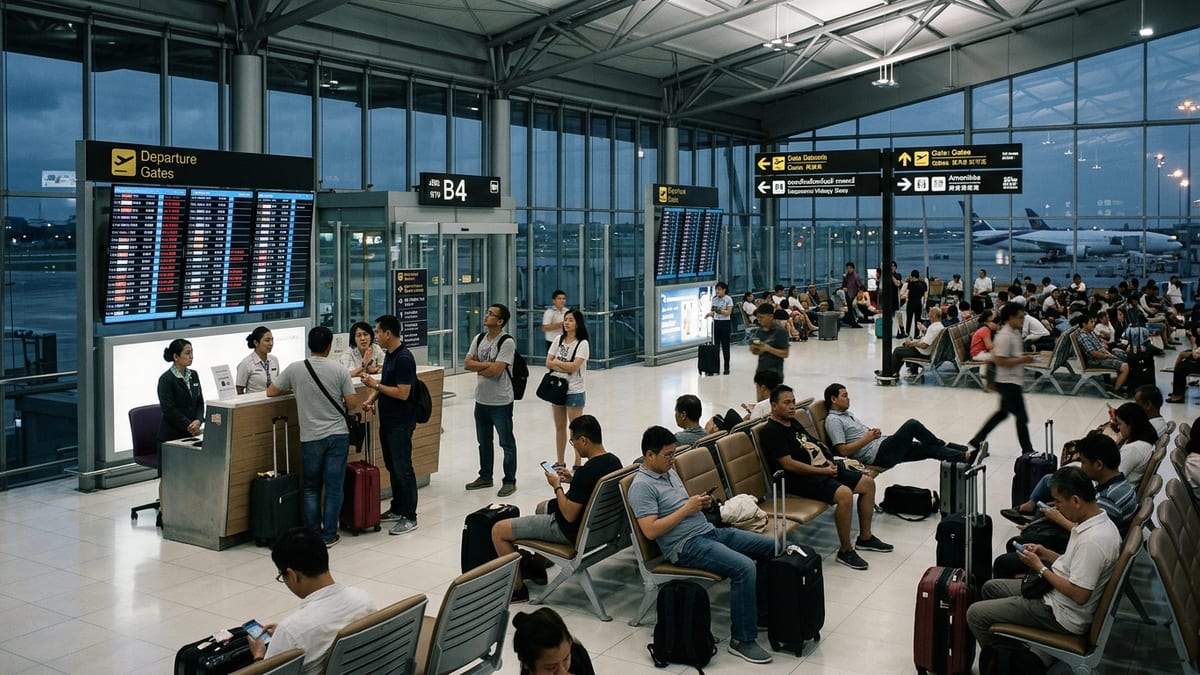
Major Asian Hubs Log Sharp Spike in Cancellations
Publicly available flight tracking data and regional aviation roundups indicate that a fresh wave of operational disruption has moved across key Asian gateways, leading to 366 cancellations within a single day and pushing delay counts close to 3,000 across the region. The pattern mirrors earlier episodes of congestion and weather related disruption that have periodically rippled through East and South Asia in recent months.
Tokyo’s dual airport system, Haneda and Narita, has seen repeated clusters of late running departures on routes linking Japan with China, Southeast Asia and the Middle East. Recent coverage of Asian aviation performance points to below normal on time metrics on some trunk routes, where even modest schedule shocks can cascade into missed connections and aircraft rotation challenges.
In China, Shenzhen and other major coastal hubs have continued to experience volatile day to day performance as airlines balance high demand with busy airspace and evolving route structures. Earlier analyses of regional operations have highlighted days when hundreds of flights were either cancelled or heavily delayed in and out of Chinese cities, leaving terminals crowded and straining rebooking options for both domestic and international passengers.
The latest figures suggest that while individual airports may only show a fraction of the total cancellations on any given day, the combined effect across Asia’s densest corridors can be severe. Travellers with multi leg itineraries that rely on tight connections are particularly exposed when airlines have limited spare aircraft and crew to recover disrupted schedules.
India, Southeast Asia and Gulf Carriers Under Pressure
India and Southeast Asia are once again at the heart of the current disruption wave. Operational data and recent industry reporting show Indian low cost giant IndiGo facing persistent pressure on punctuality, with past months marked by elevated cancellation counts and a deterioration in on time performance amid technology issues, congested airports and tighter crew rostering rules. These underlying constraints make the carrier more vulnerable when regional airspace or weather conditions deteriorate.
In Southeast Asia, AirAsia and affiliated brands, which play a central role in connecting Bangkok, Kuala Lumpur, Singapore and secondary cities, have been reworking parts of their schedule in response to cost pressures and demand shifts. Recent announcements from Thai AirAsia, for example, have pointed to temporary reductions on certain international routes from Bangkok due to high fuel prices, narrowing options for travellers who rely on low cost connections within the region.
Singapore, Bangkok and other tourism focused gateways have also reported substantial numbers of delays. Travel industry digests published in recent weeks describe days when thousands of flights across Asia were late departing or arriving, with Singapore and Thai carriers among those affected. With peak travel periods returning across the region, minor operational setbacks can quickly translate into crowded departure halls, stepped up use of standby lists and longer queues at service desks.
In the Gulf, Abu Dhabi based Etihad Airways has been contending with rolling schedule adjustments that affect its links to Asia. Public trackers and passenger accounts highlight isolated cancellations on services connecting Abu Dhabi with Chinese and Indian destinations, alongside a higher than typical share of delayed departures. Because Abu Dhabi serves as a key transfer point for travellers moving between Europe, India and Southeast Asia, even a small number of disrupted flights can have outsized effects on onward connections.
China Eastern, IndiGo, AirAsia and Etihad Among Hardest Hit
Across today’s disruption statistics, a cluster of carriers stands out for their exposure. China Eastern, with a dense network into and out of major Chinese coastal cities, features prominently on lists of impacted airlines whenever congestion or weather affects eastern China. Coverage of earlier disruption days has repeatedly cited the airline among those cancelling selected services and accumulating extended delays at busy hubs.
IndiGo’s scale in the Indian domestic market and its growing international footprint mean that irregular operations can spread quickly across its system. When cancellation numbers rise at key Indian gateways such as Delhi, Mumbai or Bengaluru, flights into Southeast Asia and the Gulf often feel the impact as aircraft and crews arrive late or not at all. Regional media previously documented days when the airline reported more than a thousand cancellations in a single month, underscoring the structural stress on its operation.
Low cost group AirAsia, with operations spanning Thailand, Malaysia and other Southeast Asian markets, also appears frequently in disruption tallies. Flight status databases show recurrent delays on certain Bangkok and Kuala Lumpur departures, and recent schedule updates include trimmed capacity on some routes linking Thailand with South Asia and other neighbouring countries.
Etihad Airways, acting as a connector between Abu Dhabi and Asian cities including Tokyo, Bangkok, Singapore and multiple Indian destinations, has faced a mix of delayed flights and selective cancellations. Flight tracking dashboards indicate days when a notable share of its departures operate late, particularly on long haul or tightly timed connecting services, adding friction for passengers relying on smooth transfers through Abu Dhabi’s hub.
Travellers Face Missed Connections and Overnight Delays
The practical impact of 366 cancellations and nearly 3,000 delays in a single regional cycle is felt most acutely by passengers navigating complex itineraries. Reports from recent disruption episodes across Asia describe thousands of travellers stranded in terminals from Beijing and Tokyo to Kuala Lumpur and Singapore, often confronting missed connections, rebooked routes through unfamiliar hubs and, in some cases, forced overnight stays.
When cancellations affect flights at Tokyo, Shenzhen, Bengaluru, Singapore, Bangkok and Abu Dhabi simultaneously, the knock on effects rapidly extend beyond point to point routes. Passengers heading to secondary cities may see their journeys rerouted through alternative hubs, while those traveling onward to Europe, Australia or North America can lose their original long haul connections and face lengthy rebooking queues.
Travel industry commentary notes that the most vulnerable itineraries are those with short connection windows or involving multiple carriers, particularly when separate tickets are involved. In such cases, even a relatively minor delay on an initial leg can result in a missed onward flight and a more complicated dispute over who bears responsibility for rebooking or accommodation.
Airlines in the region have repeatedly urged passengers through public advisories and website guidance to monitor flight status closely on the day of travel and to allow extra time at congested airports. However, the scale of today’s figures illustrates that personal preparation can only go so far when disruption reaches across an entire region.
Underlying Causes: Congestion, Weather and Tight Schedules
While precise causes for each of the 366 cancellations vary, regional reporting and historical performance data point to a familiar blend of drivers: congested airspace, adverse weather in key corridors, tighter post pandemic schedules and limited spare capacity in aircraft and crew. Earlier this year, for example, a winter weather system moving across East Asia triggered extensive delays at Beijing, Tokyo and Delhi, as carriers including Air China, IndiGo, Singapore Airlines, Thai Airways and Japan Airlines trimmed or reshuffled flights.
On other days, localized thunderstorms in Southeast Asia or sandstorms affecting Gulf airports have forced holding patterns, diversions and ground stops that quickly jar carefully planned rotations. For carriers operating near full capacity, a single extended delay can ripple through an entire day’s program, especially when crews approach duty time limits or when turnarounds at busy airports are already compressed.
The rapid rebound in demand for both leisure and business travel across Asia has also narrowed operational buffers. Airlines have been keen to restore or expand frequency on lucrative routes linking cities such as Shanghai, Tokyo, Singapore, Bangkok, Mumbai and Abu Dhabi, but rebuilding staffing, maintenance and spare aircraft pools has taken longer. Industry analysts note that this imbalance increases the risk that any disruption, whether technical, meteorological or regulatory, will translate into high cancellation and delay counts.
With several peak travel periods still ahead in 2026, aviation observers suggest that similar days of elevated disruption are likely unless structural constraints in airspace management, airport capacity and staffing are addressed. For now, passengers flying on carriers such as China Eastern, IndiGo, AirAsia, Etihad and their regional competitors are being advised in public guidance to maintain flexible plans, build longer connection buffers and stay alert to last minute schedule changes.