


More news on this day
A freight train derailment in suburban Bensalem, Pennsylvania, has renewed public concern over hazardous materials moving through residential corridors, after several derailed cars believed to be carrying flammable or otherwise dangerous substances prompted temporary shelter-in-place and evacuation orders for nearby neighborhoods.
Get the latest news straight to your inbox!
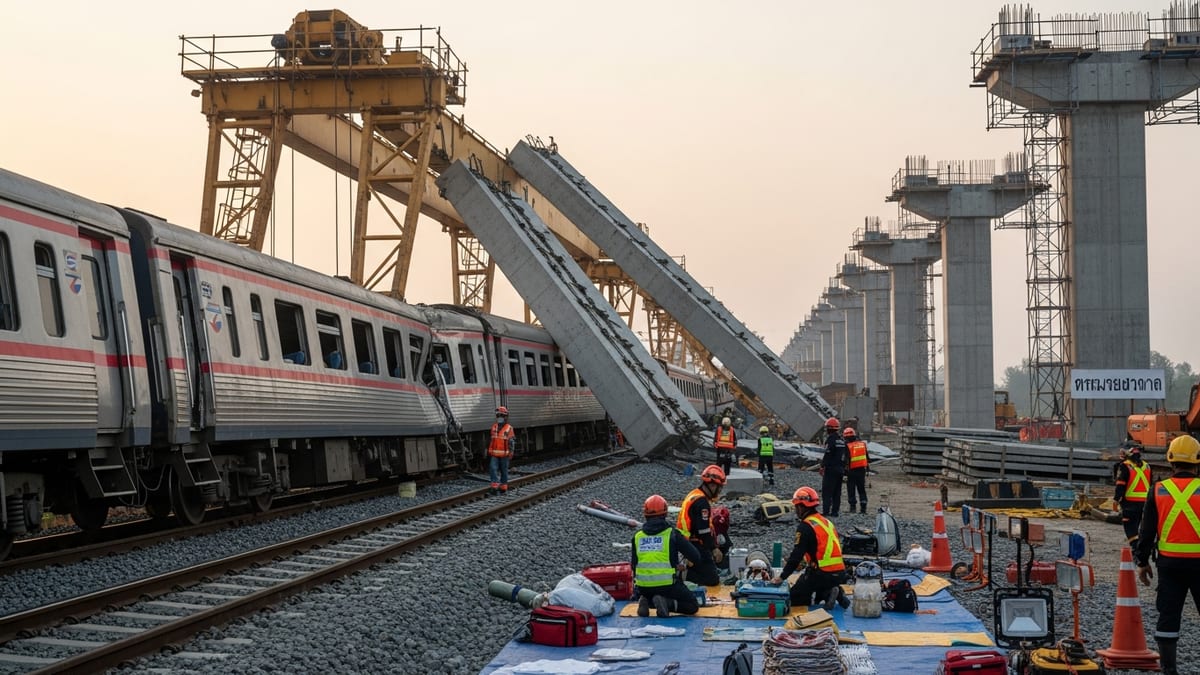
Derailment Near Neshaminy Falls Spurs Emergency Alerts
Reports indicate that more than a dozen freight cars left the tracks near the Neshaminy Falls station area on Tuesday, June 30, 2026, in Bensalem Township, just northeast of Philadelphia. Local coverage from multiple outlets describes a chaotic scene of twisted railcars, some stacked and leaning at sharp angles, close to homes, businesses, and commuter routes.
Initial information shared with the public pointed to at least two to three railcars labeled for hazardous or potentially flammable cargo. While detailed cargo manifests have not yet been widely released, images and eyewitness accounts circulating in local and regional media show tank and box cars marked with hazmat placards, prompting an immediate high-level emergency response.
Specialized hazardous materials teams were dispatched alongside fire and rescue crews. Publicly available information shows that investigators and cleanup contractors remain on scene as they work to stabilize derailed equipment and verify the condition of any hazardous cargo still on the train.
Rail traffic through the corridor has been disrupted as crews clear debris and inspect track and signaling infrastructure. Passenger services using adjacent lines have been subject to delays or rerouting as safety inspections continue.
Hazmat Concerns, Shelter-in-Place Orders, and Evacuations
Out of caution, nearby residents and businesses were initially instructed to shelter in place as hazmat teams assessed potential leaks, air quality, and fire risk. Coverage from regional broadcasters describes guidance for people to stay indoors, close windows, and limit outdoor activity as crews checked the derailed cars for any sign of release.
Some properties closest to the derailment site were temporarily evacuated. Reports from local news outlets and community media indicate that these measures were lifted later in the day once responders completed preliminary testing and determined that any hazardous cargo remained contained within the railcars.
According to current reporting, no significant leaks have been confirmed and there have been no widespread injuries attributed to hazardous materials exposure. Medical evaluations to date have focused mostly on minor injuries and precautionary checks, while environmental monitoring has concentrated on the immediate trackside area and nearby drainage features.
Despite the favorable early findings, the incident has fueled anxiety among residents who recall recent high-profile derailments elsewhere in the region and across the country. Many are closely following public updates on what exactly was in the affected cars and how those materials are regulated in urban and suburban rail corridors.
What Is Known About the Hazardous Materials Involved
Published coverage from local outlets and rail-focused reporting indicates that at least two of the derailed cars were designated for hazardous and potentially flammable materials. Some accounts reference placards associated with industrial chemicals and solvents, commonly used in manufacturing, cleaning, and other commercial applications.
Early community reporting, including photos and video shared publicly, suggests that the train was a mixed-freight consist carrying a combination of standard boxcars and tank cars. Observers have pointed to labels consistent with materials such as alcohol-based products and other flammable liquids, although official cargo lists have not been comprehensively detailed in public forums.
As of July 1, 2026, publicly available information from regional news outlets indicates that inspections have not detected active releases from the hazardous-material cars involved. Air monitoring results shared in media reports describe normal readings in surrounding residential areas, and there have been no broad advisories on contaminated drinking water or soil.
Even without confirmed leaks, the presence of hazardous cargo in a derailment zone underscores the potential severity of such incidents. Emergency planners often highlight that the risk profile can shift rapidly if a tank car is breached, if a fire develops, or if changing weather conditions cause vapors to spread, which is why precautionary orders were imposed so quickly in Bensalem.
Response Efforts and Ongoing Investigation
Clean-up and investigative work is expected to continue for days as crews re-rail or remove damaged cars, repair track, and document the sequence of events. Railroad contractors are using heavy equipment to stabilize and separate the derailed cars, while environmental specialists remain on site to test soil and water near the incident area.
According to published coverage, federal rail safety officials are anticipated to review mechanical data, track conditions, and train handling in the moments leading up to the derailment. Investigators typically examine wheelsets, braking systems, couplers, and any recorded data from onboard systems to determine whether equipment failure, track defects, or human factors played a role.
Publicly available information indicates that the railroad is coordinating with local governments and state environmental agencies to maintain air and water sampling in the short term. These results are expected to inform any additional remediation steps, such as removing contaminated ballast or soil, if future testing uncovers localized impacts.
The incident is also prompting renewed discussion about how information on hazardous cargo is shared with local emergency responders and the public. Advocates for greater transparency often argue that communities along busy freight routes should have clearer advance knowledge of the types of chemicals that move regularly through their neighborhoods.
Rail Safety, Hazardous Cargo, and the Wider Pennsylvania Context
The Bensalem derailment arrives at a time of heightened scrutiny over trains carrying hazardous materials in Pennsylvania and across the United States. High-profile events in recent years, including the 2023 East Palestine derailment just over the state line in Ohio, have drawn attention to what happens when tank cars loaded with industrial chemicals leave the tracks and potentially spill or burn.
State-level preparedness guidance highlights that hazardous materials move daily by rail through urban centers, suburbs, and rural areas. Pennsylvania’s emergency planning information notes that chemicals ranging from flammable liquids to corrosive substances and toxic gases travel on freight lines that often parallel major highways and residential neighborhoods.
Transportation safety data discussed in public reports show that, while the overall rate of train accidents has improved over time, derailments involving hazardous cargo remain a critical focus for regulators, railroads, and emergency planners. In particular, mixed-freight trains like the one that derailed in Bensalem often combine ordinary consumer goods with industrial chemicals in the same consist, complicating response strategies when something goes wrong.
For residents and travelers in southeastern Pennsylvania, the Bensalem derailment is a reminder that even non-catastrophic incidents can have outsized effects when hazardous materials are involved. Temporary shelter orders, transport disruptions, and lingering concerns about environmental safety can ripple beyond the immediate crash site, affecting confidence in the broader rail network that underpins both regional commerce and long-distance travel.