


More news on this day
A freight train derailment near Bensalem in Bucks County, Pennsylvania, triggered a large emergency response and temporary shelter-in-place orders this week, as hazmat crews moved in to assess potentially hazardous cargo and secure a busy rail corridor north of Philadelphia.
Get the latest news straight to your inbox!
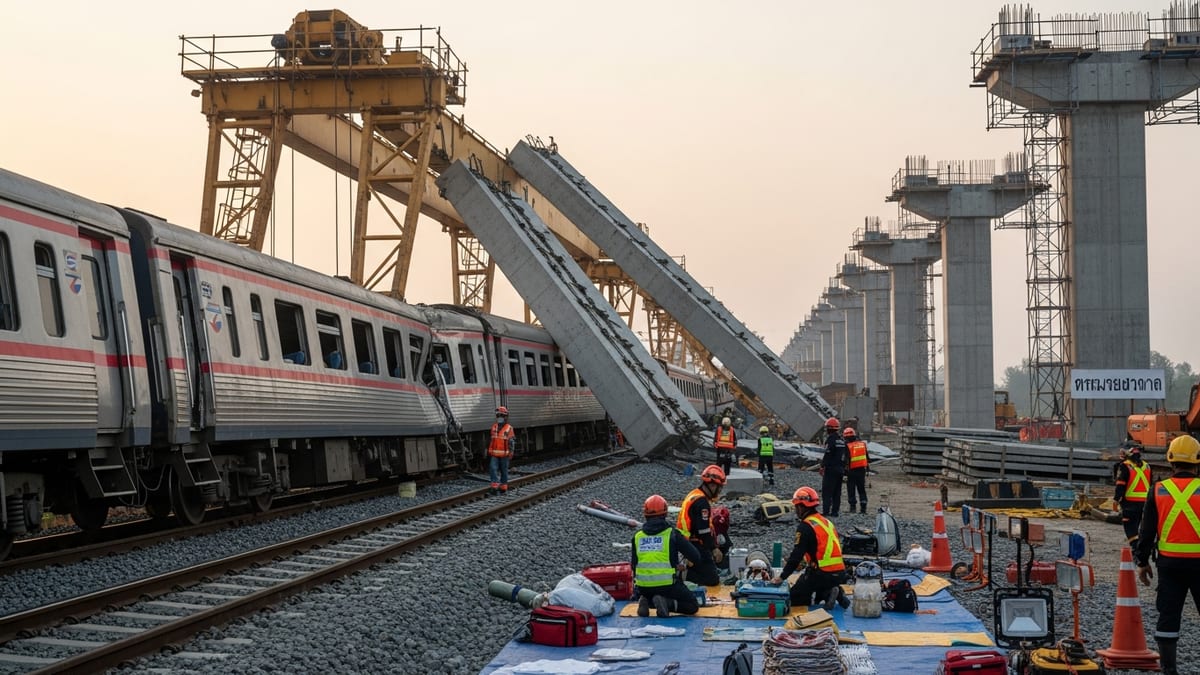
Derailment Near Neshaminy Falls Sparks Emergency Response
Publicly available information indicates that the derailment occurred on Tuesday afternoon, June 30, 2026, between Street Road and the Neshaminy Falls station area, in or near Bensalem Township. Reports describe more than a dozen freight cars leaving the tracks, with several cars coming to rest at angles that raised initial concern about their stability and contents.
Images and videos shared by regional news outlets and residents show long strings of cars buckled and off the rails close to residential and commercial areas. The incident took place along a corridor that carries both freight and nearby commuter services, immediately heightening concern about potential impacts on people living and working nearby.
Early coverage notes that emergency dispatchers quickly classified the situation as a possible hazardous materials incident because at least one derailed car was believed to be carrying flammable or otherwise sensitive industrial products. That classification brought hazmat specialists to the scene alongside fire, medical, and police units.
Rail operator representatives have indicated that an internal review of the train consist and cargo is underway, as investigators work to reconstruct the movements of the train and the precise sequence that led to the derailment.
Shelter-in-Place Orders and Precautionary Evacuations
Residents in sections of Bensalem and neighboring Feasterville reported receiving alerts advising them to stay indoors, close windows, and avoid the area around the tracks shortly after the derailment. Some commercial properties in the immediate vicinity were also instructed to pause operations while crews assessed potential risks from any damaged tanks or containers.
According to published coverage, these shelter-in-place directives remained in effect for roughly two hours before being lifted. During that period, hazmat teams conducted air monitoring and visual checks of the overturned cars, searching for signs of leaks, vapor plumes, or chemical odors that might signal a release.
Several residents described the sudden alerts as unsettling, particularly given heightened sensitivity around rail incidents involving hazardous materials in recent years. Nonetheless, no mass evacuation of a wider radius was reported, indicating that field tests and inspections did not reveal conditions that would justify moving larger numbers of people out of their homes.
By early evening, the formal shelter-in-place guidance and targeted evacuations had been rescinded, and local officials stressed through public statements and media briefings that the situation had transitioned from immediate emergency response to stabilization and cleanup.
Hazmat Assessment Finds No Confirmed Leaks
Key details emerging from regional reporting emphasize that, despite the scale of the derailment and the presence of hazardous materials on the train, hazmat teams did not find evidence of an active leak affecting surrounding neighborhoods. Some coverage notes that at least one car bore placards for common industrial chemicals such as isopropyl alcohol, a flammable but familiar solvent used in manufacturing and consumer products.
Specialized technicians conducted air sampling near the derailed cars and in bordering streets to monitor for volatile organic compounds or other harmful substances. Publicly accessible updates indicate that these readings did not show concentrations that would pose a significant threat to residents downwind of the site.
Environmental officials and railroad contractors are expected to continue more detailed soil and ballast testing around the tracks in the coming days. Even in the absence of a large spill, derailments of this type can scatter debris, lubricants, and other materials that must be documented and removed to restore the corridor to its previous condition.
Travelers and nearby communities have become especially attentive to environmental reporting after high-profile derailments elsewhere in the country. As a result, agencies face sustained pressure to make monitoring results available quickly and to explain the criteria used to declare an area safe.
Travel Disruptions Across Philadelphia’s Northern Suburbs
The derailment had an immediate impact on rail and road travel in northern suburbs of Philadelphia. Sections of roadway near the incident were closed to civilian traffic so heavy equipment and emergency vehicles could access the site, causing congestion on parallel routes used by commuters and freight haulers.
According to coverage from regional transportation reporters, commuter rail service on nearby lines was temporarily suspended or rerouted while crews confirmed that no passenger trains would have to pass close to the damaged freight cars. Even though the affected tracks belong to a freight carrier, knock-on effects rippled through the broader network, particularly for riders heading toward Center City during the evening rush.
Service updates posted throughout Tuesday evening and Wednesday indicate that regular schedules were gradually restored as inspectors cleared individual track segments and confirmed that signals, overhead power lines where applicable, and switching equipment had not been compromised. For some travelers, that meant relying on alternate stations or transferring to subway and bus services for part of the journey.
Local businesses that depend on reliable freight deliveries may also face short-term disruptions as the rail operator stages heavy cranes and maintenance trains in the area to remove damaged cars and repair track beds. Rerouted freight could add pressure to other corridors, although rail carriers typically seek to minimize customer impact by shifting traffic where spare capacity exists.
Safety Questions and Next Steps for Rail Operations
In the aftermath of the Bensalem derailment, attention is turning to the condition of the line and the regulatory framework that governs trains carrying hazardous materials through densely populated regions. Published analyses note that the corridor sees frequent traffic and parallels highways, residential streets, and commercial centers, all of which heighten the potential consequences of any major incident.
Investigators are expected to examine track conditions, train speed, recent maintenance records, and potential equipment failures such as wheel or axle defects. Federal oversight agencies routinely participate in such investigations, along with state emergency management officials and company safety teams, although formal findings can take months.
For travelers and local communities, the incident reinforces ongoing debates about how and where dangerous goods should be transported, what kind of advance notification communities should receive, and how robustly railroads invest in infrastructure upgrades. Recent derailments across the region and elsewhere in the United States have already prompted calls for stronger rules on tank car design, braking systems, and routing away from dense neighborhoods where feasible.
In the short term, cleanup crews in Bucks County are working to clear the wreckage, restore normal rail operations, and document any environmental impacts. For visitors and residents navigating the Philadelphia area, transportation agencies advise monitoring service alerts and traffic reports closely, as intermittent delays and detours may persist while the rail line is repaired.