


More news on this day
Across the Caribbean, scientists and conservation groups are racing to contain Stony Coral Tissue Loss Disease, a fast-moving epidemic that is stripping once-vibrant reefs of living coral and raising alarms for tourism, fisheries and coastal protection.
Get the latest news straight to your inbox!
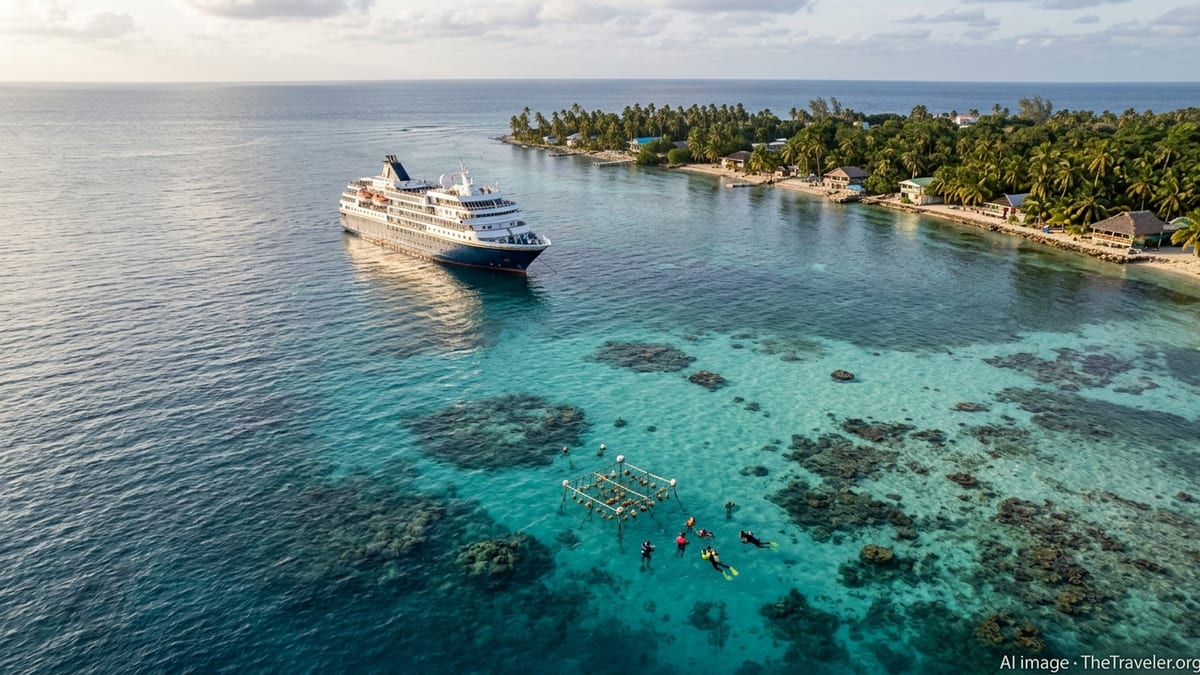
A Fast-Moving Threat to the Caribbean’s Signature Reefs
Stony Coral Tissue Loss Disease, first identified off Florida in 2014, has spread through much of the wider Caribbean in little more than a decade, according to public scientific summaries. The disease affects more than 20 species of reef-building corals and is widely described in the research community as one of the most lethal coral epidemics ever recorded in the region.
Field observations compiled by regional and United States agencies indicate that once lesions appear on a colony, tissue can slough away in a matter of weeks, leaving behind bare skeleton. Studies describe mortality rates that often exceed those of earlier Caribbean coral diseases, helping to explain why many reefs that once supported dense thickets of hard corals now show large areas of exposed rock and algae.
The timing could hardly be worse. Recent analyses of Caribbean reef status suggest the region has already lost roughly half of its living coral cover over recent decades, driven by a combination of warming seas, stronger storms, pollution and other diseases. SCTLD is now seen by many research groups as a major new driver of that decline, arriving just as some destinations had begun to market their reefs as recovery success stories.
For travel and tourism, the stakes are high. Economic reports from multilateral institutions estimate that tourism accounts for a double‑digit share of GDP and employment in many Caribbean economies, with reef-related activities such as diving, snorkeling and sport fishing forming a significant slice of visitor spending. As the disease advances, tourism boards and local operators are increasingly factoring reef health into long-term planning.
Regional Task Forces and Coordinated Response Plans
In response to the scale of the outbreak, a suite of regional and national task forces has emerged to coordinate surveillance and treatment. Technical documents from the Caribbean Environment Programme describe SCTLD as a transboundary crisis and call for shared protocols on everything from monitoring to vessel decontamination.
Caribbean UK Overseas Territories have adopted a joint treatment and management strategy that sets out practical steps for dive teams and environment departments, including prioritizing high‑value reef sites and standardizing data collection. In Puerto Rico and the United States Virgin Islands, publicly available action plans outline emergency response frameworks that integrate SCTLD treatments into broader coral restoration and marine protected area management.
Regional training workshops supported by international partners have helped harmonize methods across borders. These events focus on identifying the disease in the field, recording its spread and safely applying interventions. In parallel, a semi‑annual newsletter and technical bulletins circulated by marine science agencies keep practitioners updated on treatment refinements, new research and funding opportunities.
The growing network of practitioners now extends from Florida through the Bahamas, Greater Antilles and down into the Eastern Caribbean, allowing individual islands to tap into shared expertise rather than developing approaches in isolation. This collaborative structure is increasingly seen as essential, as currents and vessel traffic can move the disease far faster than any single jurisdiction can respond.
New Tools: From Antibiotics to Probiotics and Beneficial Bacteria
At the reef level, much of the response has focused on buying time for susceptible coral species. Early in the outbreak, controlled field trials in Florida and nearby sites tested antibiotic pastes applied directly to active lesions. Published results show that carefully targeted applications could halt or slow tissue loss on individual colonies, although concerns about overuse and logistics have limited their wider deployment.
More recently, scientists have begun experimenting with biological alternatives. Research released by the Smithsonian Institution in 2025 reported that probiotic treatments made from naturally occurring beneficial bacteria slowed the advance of SCTLD on some great star corals in Florida. Separate updates from the Perry Institute for Marine Science describe promising trials in March 2026 around San Andrés Island, Colombia, where beneficial bacteria sourced from disease‑resistant corals are being evaluated as a new defensive line.
Alongside these interventions, new diagnostic tools are coming online. A 2026 announcement from Woods Hole Oceanographic Institution detailed work showing that the microbial community in seawater surrounding corals can provide an early warning of disease, potentially giving managers more time to act before visual symptoms become severe. Other studies are probing the coral microbiome itself, seeking to understand how SCTLD destabilizes the delicate relationships between corals and their symbiotic microbes.
Researchers are also mapping which regions could be at highest risk if the disease spreads beyond its current range. A 2025 study from the United States Geological Survey modelled global coral vulnerability to SCTLD, highlighting potential biosecurity implications for other tropical reef systems. Although the pathogen behind the disease has not yet been definitively identified, such work is helping guide ballast‑water policies, monitoring priorities and contingency plans.
Local Tourism Hubs Adapt to a Changing Underwater Landscape
On the ground, tourism‑dependent islands are already adjusting to the new reality. Dive operators in destinations such as the Bahamas, Mexico’s Caribbean coast and parts of the Lesser Antilles are reporting shifts in site selection, with a greater emphasis on locations where coral diversity remains relatively high or where management actions are under way.
In some cases, authorities have introduced temporary closures or modified access rules for specific sites while treatment or monitoring is under way. Divers may encounter decontamination protocols at shops or marine parks, including gear rinses and guidance on visiting multiple sites in a single day, reflecting efforts to reduce the risk of transmitting the disease between reefs.
Destination marketers are responding by broadening the story they tell about coastal nature. For islands heavily affected by SCTLD, this can mean highlighting seagrass meadows, mangroves, shipwrecks and pelagic wildlife alongside remaining healthy coral gardens. Some tourism boards are also promoting citizen‑science experiences, where visitors can assist with reef surveys under the supervision of trained guides.
These adjustments are taking place while the region also faces other environmental pressures, including recurring sargassum seaweed influxes and recent global coral bleaching events. For travelers, this mixture of challenges underscores the value of choosing operators that follow reef‑friendly practices and support restoration initiatives.
From Crisis to Long-Term Reef Resilience
Beyond emergency response, regional experts are increasingly framing SCTLD as part of a broader conversation about reef resilience. Strategic documents from national and territorial governments in the Caribbean now link disease management with goals such as reducing land‑based pollution, enhancing wastewater treatment and expanding marine protected areas.
Restoration programs are re‑evaluating their coral stocks in light of new findings about disease susceptibility. A 2026 study examining a Caribbean coral species used in outplanting projects found low levels of inherent SCTLD resistance in some restoration collections, pointing to the need for more rigorous screening and genetic diversity in nurseries.
International climate assessments and development reports stress that protecting coral reefs is not only an ecological priority but also an economic one, given their role in supporting fisheries, safeguarding shorelines and attracting visitors. Within that context, slowing the spread and severity of SCTLD is viewed as a critical bridge measure while global efforts to curb greenhouse gas emissions and local pollution continue.
For travelers, the outcome of this scientific and policy push will help determine what Caribbean reefs look like in the coming decades. As regional experts refine treatments, strengthen monitoring and integrate disease management into wider coastal planning, the hope is that enough coral diversity can be preserved to keep the region’s underwater landscapes recognizable for future generations of visitors.