


More news on this day
Spain and its Mediterranean neighbours Italy, Greece, Portugal and France are confronting a rapidly warming climate that scientists warn could push peak summer temperatures close to 50 degrees Celsius in coming decades, intensifying wildfires, disrupting travel and forcing a rethink of mass tourism across Southern Europe.
Get the latest news straight to your inbox!
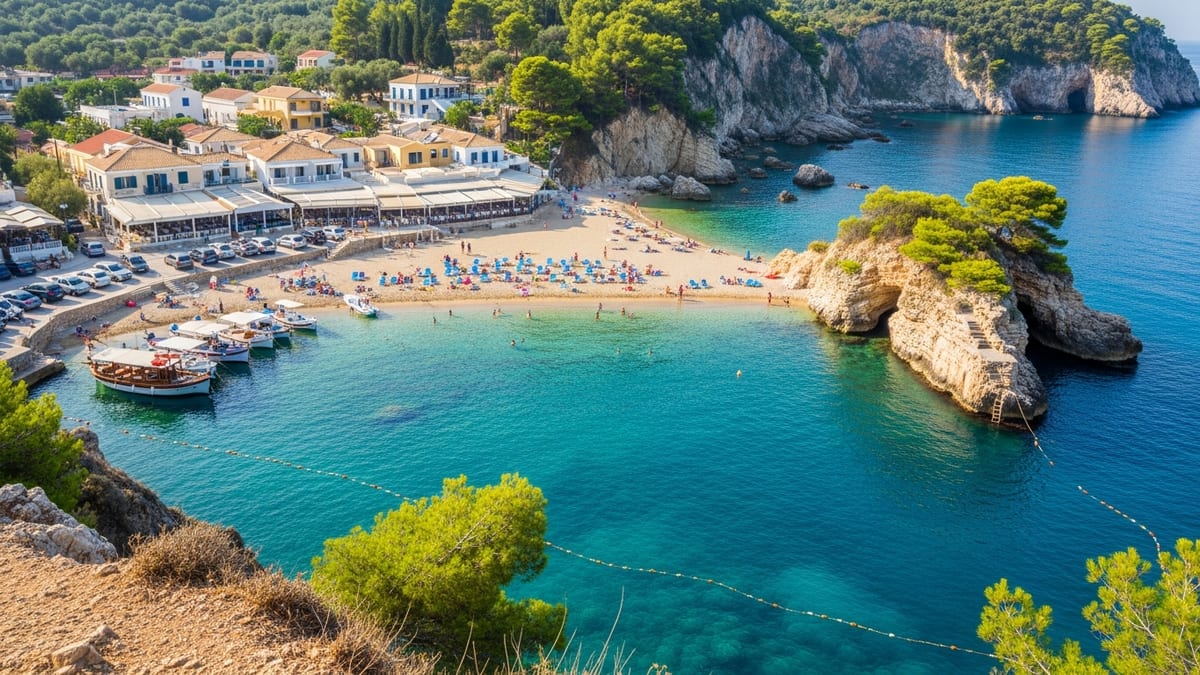
Records Fall as Southern Europe Becomes a Heat Hotspot
Recent years have confirmed Southern Europe as one of the global epicentres of extreme heat. Climate monitoring by European and international agencies indicates that Europe is the fastest-warming continent, with average temperatures rising around twice as quickly as the global mean. Successive summers since 2022 have brought recurring heatwaves that have shattered national records and left popular holiday regions sweltering for weeks at a time.
Continental Europe’s official temperature record stands at 48.8 degrees Celsius, measured in Sicily in August 2021. Spain is not far behind, with a national record of 47.4 degrees recorded in Andalusia the same summer, while Greece and Portugal have each seen temperatures push into the mid-40s. Climate attribution studies for events in Spain, Italy and Greece suggest that such extremes, once considered extraordinarily rare, are already many times more likely in today’s warmer climate.
Heatwaves in 2022, 2023, 2024 and 2025 brought widespread impacts across Spain, Portugal, France, Italy and Greece, with hundreds of heat-related deaths during individual episodes and tens of thousands estimated over full seasons. Publicly available health and climate assessments highlight that many of those affected were older people, outdoor workers and tourists unaccustomed to prolonged exposure to extreme heat.
Data released by the Copernicus Climate Change Service and the World Meteorological Organization show that 2024 was the warmest summer on record in Europe, with southern regions repeatedly experiencing daytime temperatures above 40 degrees and “tropical nights” when minimum temperatures stayed above 20 or even 25 degrees. In Greece, meteorological records indicate that the country endured its longest heatwave on record in July 2024, while large areas of Spain and Portugal reported extended runs of days above 35 degrees.
From Forty to Fifty Degrees: What Climate Projections Show
Climate projections for the Mediterranean basin point to a future in which today’s extremes become increasingly routine. Scientific assessments from European and United Nations bodies describe Southern Europe as a climate change hotspot where average temperatures and the frequency, duration and intensity of heatwaves are projected to increase markedly through the century.
Regional climate model simulations for high-emissions scenarios show that by mid to late century, peak summer temperatures approaching or even exceeding 50 degrees Celsius could occur in parts of Spain, southern Italy and inland Greece. While not all models agree on the exact timing or location, there is broad scientific consensus that maximum temperatures will trend upwards as global warming advances, especially in already hot, dry interior regions.
Alongside rising air temperatures, the combination of humidity, radiant heat and low wind can drive dangerous levels of heat stress. Recent Copernicus analyses have mapped a rapid increase in the number of days with “strong” or “extreme” heat stress across southern and eastern Europe, meaning that outdoor activity becomes increasingly risky for the human body, particularly for unacclimatised visitors.
Long-term outlooks published by the European Environment Agency and other research groups suggest that under higher warming pathways, summers in parts of Spain, Portugal and southern France could resemble present-day conditions in some of the hottest regions of North Africa. In practical terms, that would translate into longer, earlier and more intense heatwaves, with fewer cool nights to provide relief.
Wildfire Seasons Intensify Across Holiday Heartlands
As temperatures soar and rainfall patterns shift, wildfire risk across Southern Europe is rising sharply. Monitoring by European fire agencies and scientific groups shows that the western and central Mediterranean has experienced a marked increase in the number of days each year with “very high” or “extreme” fire danger, driven by hotter, drier summers and earlier spring drying of vegetation.
Spain, Portugal, Italy, Greece and southern France, all heavily visited by international tourists, have seen a succession of severe fire seasons since the late 2010s. In several recent years, major wildfires have forced evacuations from resort areas, closed roads and airports and filled coastal skies with smoke at the height of the holiday season. In Greece and Italy, fires in 2023 and 2024 burned near major islands and tourist hubs, while parts of inland Spain have faced fast-moving blazes linked to extreme heat episodes.
Climate attribution studies focusing on Mediterranean wildfires indicate that warming has already increased the likelihood of the hot, dry conditions that allow fires to spread rapidly. Research cited by European climate bodies suggests that future summers featuring temperatures near 50 degrees in parts of Southern Europe would likely coincide with longer, more intense fire seasons, especially where land management and water resources are already under strain.
Urban and peri-urban areas popular with visitors are also vulnerable. Expanding suburbs into fire-prone hillsides around Mediterranean cities, combined with hotter and windier conditions, raise the risk that blazes could threaten hotels, rental properties and local infrastructure, multiplying the disruption for both residents and tourists.
Travel Disruption, Health Warnings and Shifting Tourism Seasons
The tourism industry in Spain, Italy, Greece, Portugal and France is closely watching how extreme heat and fire risk intersect with travel demand. Travel advisories from national and international bodies are increasingly drawing attention to heat-related health risks, wildfire danger and air quality issues during peak summer months, sometimes urging visitors to adjust activities or avoid outdoor exertion during the hottest hours.
In recent summers, high temperatures have disrupted rail and air travel in several European countries, with tracks buckling, equipment overheating and airports adjusting operations. Wildfires have temporarily closed highways, rail lines and regional airports, stranding travellers or forcing last-minute changes to itineraries. Reports from tourism boards and industry analysts note that some destinations have seen cancellations or early departures during major heatwaves, particularly among families and older travellers.
Public health agencies now routinely issue graded heat alerts, recommending that residents and visitors seek shade, stay hydrated and check on vulnerable people. In Spain, Italy and France, municipal authorities have opened cooling centres and extended public pool hours during severe heat episodes, while health ministries have promoted awareness campaigns targeting tourists who may be unfamiliar with local conditions.
Travel industry research suggests a gradual shift in preferences, with some visitors opting for shoulder-season trips in late spring or early autumn when temperatures are milder. Cooler coastal regions, higher-altitude destinations and northern European alternatives are also attracting interest from travellers concerned about extreme heat, even as traditional Mediterranean hotspots continue to draw large numbers of visitors overall.
Adapting Iconic Destinations to a Hotter Future
As projections point towards hotter summers and possible fifty-degree extremes in parts of Southern Europe, governments and local authorities are accelerating adaptation measures aimed at keeping destinations viable and safer for residents and visitors. Urban planning strategies published by Mediterranean cities highlight investment in shade, trees and reflective surfaces to reduce the urban heat island effect that can push city temperatures several degrees higher than surrounding areas.
Tourism ministries and regional authorities in Spain, Greece, Portugal, Italy and France are promoting measures such as upgraded building insulation, expanded air conditioning, redesign of public spaces and revised working hours for outdoor staff. Some coastal resorts are reconsidering event schedules, shifting cultural and sporting activities to cooler parts of the day or different times of year.
At the same time, climate and economic assessments warn that adaptation will have limits if global emissions are not reduced. Analyses by European agencies and international financial institutions conclude that without significant cuts in greenhouse gases, Southern Europe’s tourism economy faces mounting risks from extreme heat, drought, water scarcity and wildfires, particularly in inland and low-lying coastal areas.
For now, Southern Europe remains one of the world’s most visited regions, but its future as a summer playground is entering a period of profound change. As temperatures climb and the spectre of fifty-degree summers looms closer for some areas, the way people travel, when they travel and where they choose to go in Spain, Italy, Greece, Portugal, France and beyond is likely to evolve, reshaping one of the world’s most iconic holiday landscapes.