


More news on this day
For nearly four years, a former Canadian flight attendant quietly crisscrossed North America and beyond, slipping into aircraft jump seats and economy cabins by posing as an airline pilot, securing hundreds of free flights before aviation and law enforcement systems finally caught up with him.
Get the latest news straight to your inbox!
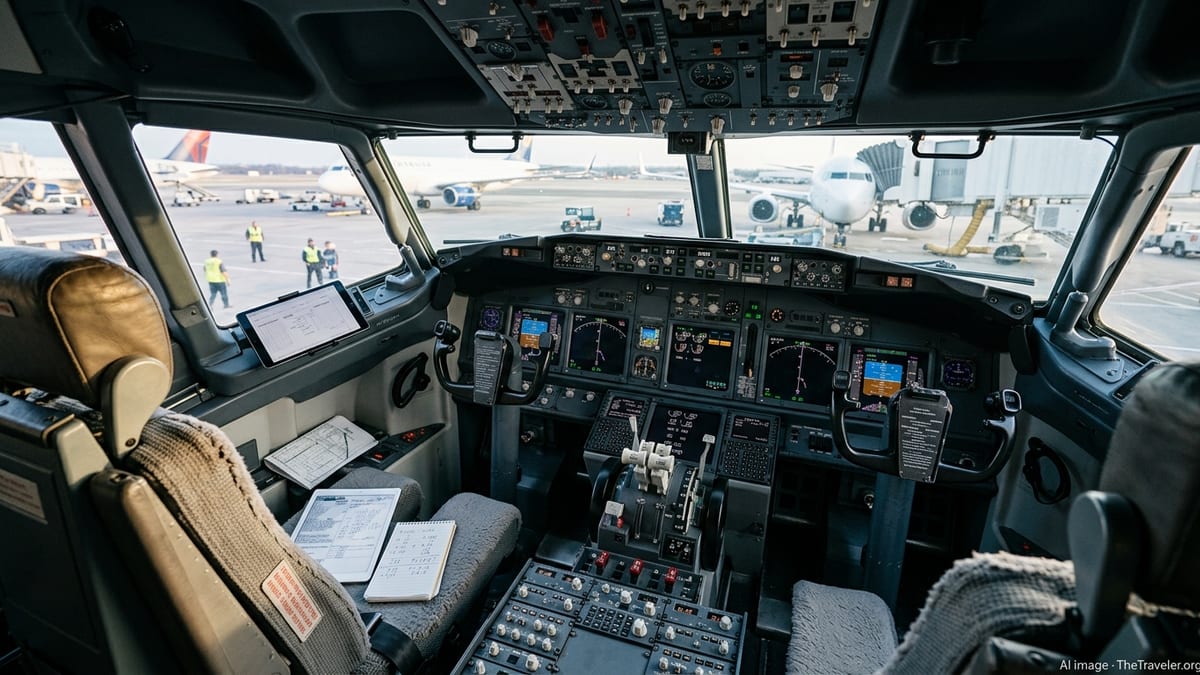
A Four-Year Global Joyride Masquerading as Duty Travel
Court filings in the United States describe a travel scam that unfolded between January 2020 and late October 2024, centered on Dallas Pokornik, a Toronto-based former flight attendant who had once worked for a Canadian carrier. After leaving that job, publicly available case documents state that he held on to the idea of staff travel, allegedly turning it into a personal global pass.
Prosecutors in Hawaii and related coverage in Canadian and international media outline how Pokornik used a fictitious or misleading employee identification badge to convince at least three airlines that he was an active commercial pilot. By presenting himself as a crewmember, he was reportedly able to access travel benefits that would normally be limited to on-duty pilots repositioning for work or commuting to their home base.
Over the roughly four-year period, filings say he obtained “hundreds” of flights at no cost, often flying standby and, in some cases, seeking access to cockpit jump seats. The journeys included travel within North America and to Hawaii, transforming what would otherwise have been a costly itinerary into an illicit, first-class view of modern air travel networks.
The scale of the activity, spanning years and multiple carriers, has drawn comparisons in news reports to the Hollywood film “Catch Me If You Can,” though in this case the alleged con focused less on cash and more on movement. For the travel industry, the case is emerging as a cautionary tale about how much trust is still embedded in crew travel systems designed for speed and convenience.
Inside the Scam: How Crew Travel Systems Were Exploited
While many details remain sealed or anonymized in court records, publicly reported information provides a broad outline of how the four-year scheme functioned. Airlines maintain internal channels that allow pilots and other staff to book seats or standby travel at heavily discounted or zero cost, as well as to request cockpit jump seats for operational needs. These systems are intended to be quick and relatively frictionless, on the assumption that those using them are already vetted employees.
According to published coverage drawing on the Hawaii case, Pokornik allegedly took advantage of that trust by using an employee badge that either no longer reflected his real employment status or misrepresented his role entirely. The badge, combined with his prior industry experience, appears to have given him enough familiarity with jargon, procedures and expectations to blend in at airport gates and on board aircraft.
Industry experts quoted in various outlets describe how pilots and crew typically pass through security using “known crew member” programs and specialized lanes. In those systems, an airline or security database confirms the person’s identity and employment, while visual checks are conducted against a photo on a card or in a system. In practice, however, gate agents and cabin crew often rely on quick visual scans and the assumption that anyone holding the right badge and speaking the right language belongs there.
Reports indicate that in some instances Pokornik traveled as a jump-seating pilot, occupying a cockpit or cabin jump seat usually reserved for commuting aviators. In other cases he simply used staff booking channels to generate free tickets. Federal regulations limit the use of cockpit jump seats to operational purposes, but the case suggests that opportunities for abuse can arise when staff status is misrepresented and not independently verified at each step.
Why Airlines Did Not Catch Him Sooner
The question that has most perplexed both travelers and aviation professionals is how a non-pilot managed to move through airline systems for years without triggering alarms. Publicly available commentary from pilots, aviation consultants and former airline staff suggests a combination of fragmented databases, varying verification practices and long-standing cultural trust in employee credentials.
Employee travel programs often extend across alliance partners and reciprocal agreements, allowing staff from one airline to fly on another at reduced or no cost. Each participating carrier may operate different booking platforms and verification routines, and in some cases rely heavily on the integrity of information provided by the originating airline. That patchwork can create opportunities for someone armed with convincing but inaccurate documents to avoid consistent scrutiny.
Reports referencing the case note that gate agents and flight attendants generally face intense time pressure, particularly during boarding. With tight departure windows and full flights, carefully cross-checking every jump seat request or staff standby listing against an external database may not always be practical. In that environment, a uniform, badge and confident demeanor can carry significant weight.
The case has also revived discussion of historic aviation frauds, including well known stories of impostors and overstatement in aviation memoirs. By contrast, the allegations against Pokornik draw on digital booking records and contemporary airport security systems, highlighting how even in an era of biometric checks and electronic manifests, human factors and procedural shortcuts can still be exploited.
Security, Liability and What Changes Next
For airlines, the incident has implications that extend beyond the cost of lost revenue. Crew jump seats intersect with critical safety and security considerations, particularly when located in or near the cockpit. While reports so far emphasize that there is no public evidence of interference with flight operations, the idea that someone without proper credentials could occupy such a position is likely to prompt renewed scrutiny from regulators and airline safety departments.
Industry analysts quoted in recent coverage suggest that carriers involved, along with others watching the case, are likely reviewing how they authenticate employee credentials at multiple touchpoints. That could include closer integration between staff databases, updated photo verification tools, and more stringent requirements when employees from outside carriers request jump seats or crew travel privileges.
Some commentators in aviation circles point to a longstanding tension between making life easier for legitimate crew and closing off opportunities for abuse. Pilots commuting between bases, or staff repositioning for work, rely on efficient access to flights that may already be close to capacity. Adding layers of checks could slow operations and increase costs, but ignoring the lessons from a four-year fraud case carries risks of its own, both financial and reputational.
Legal repercussions for impersonating airline crew and obtaining flights by deception can be significant, involving wire fraud and related charges that carry the possibility of lengthy prison terms and substantial fines. For would-be copycats, the case serves as a reminder that digital records in modern airline systems preserve a detailed trail of every journey, even if detection may be delayed.
What Travelers Should Know About the Case
While the allegations in the Hawaii case center on internal staff travel mechanisms, the story has prompted understandable questions from ordinary passengers about their own safety. Aviation security specialists cited in public reporting have emphasized that passenger screening, identity checks at check in and boarding, and cockpit security measures remain governed by tightly defined regulations that differ from staff travel processes.
For most travelers, the risk posed by a fake pilot using staff benefits is less about direct interference with flight operations and more about what it reveals regarding back end systems. The episode underlines that staffing databases, interline agreements and loyalty style perks for employees can carry vulnerabilities if not periodically audited and updated. It also shows how legacy practices created in a smaller, more tightly knit industry can struggle to keep pace with today’s scale and complexity.
From a travel perspective, the case is a window into the hidden infrastructure that helps keep the world’s route networks functioning, from jump seats for commuting crew to reciprocal travel arrangements across alliances. When that infrastructure is misused, it is often detected only after patterns of behavior emerge across multiple flights and carriers, as appears to have happened here.
As airlines and regulators move to tighten systems in the wake of the revelations, frequent flyers and occasional travelers alike are likely to see little visible change at the boarding gate. Behind the scenes, however, the story of a fake pilot who flew free for four years is likely to drive new conversations about how trust, technology and travel benefits intersect in modern aviation.