


More news on this day
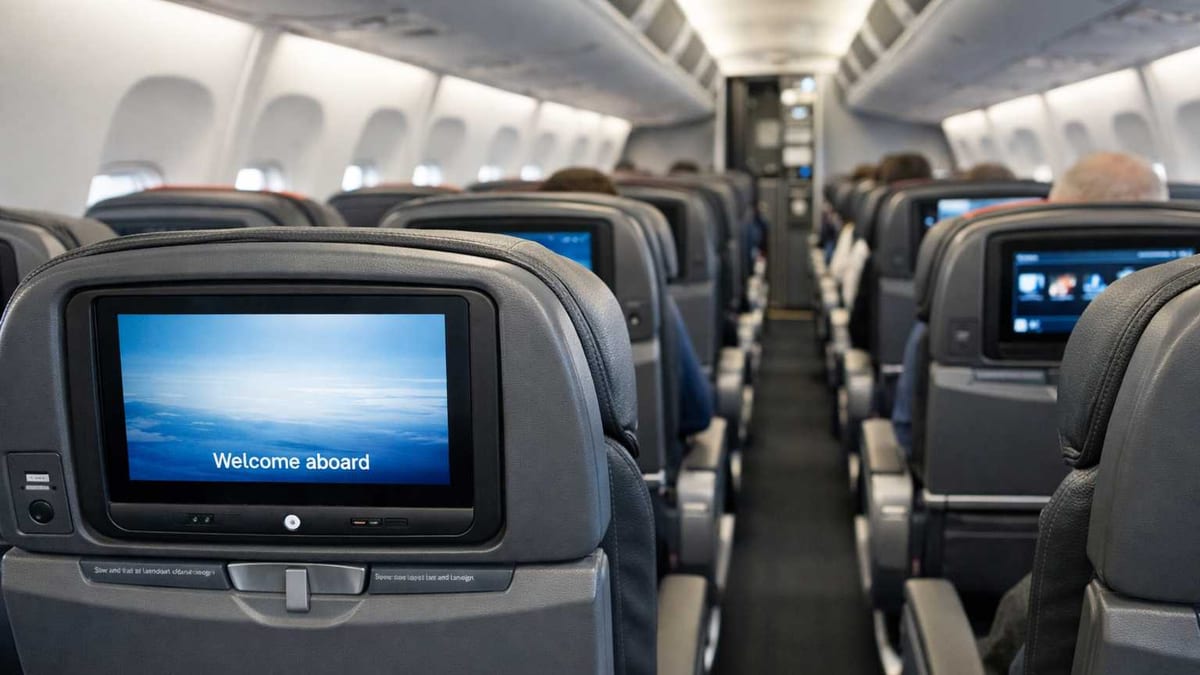
American Airlines is set to introduce new seatback entertainment screens across its narrowbody fleet, reversing years of reliance on passengers’ personal devices and escalating competition with rivals that have invested heavily in onboard technology.
Get the latest news straight to your inbox!
A Major Shift in American’s In-Flight Entertainment Strategy
Publicly available information indicates that American Airlines has committed to installing individual seatback screens on all of its narrowbody aircraft, marking a significant shift from its previous “bring your own device” approach. For much of the past decade, the carrier focused on streaming entertainment to personal phones and tablets, while gradually removing legacy screens from most single-aisle cabins.
Recent coverage of the announcement describes a new generation of in-flight entertainment hardware that will be installed on upcoming Boeing and Airbus narrowbody deliveries, as well as retrofitted onto existing jets over time. Reports indicate that the program will touch virtually the entire mainline narrowbody fleet, which includes various versions of the Boeing 737 and Airbus A320 family that operate the majority of American’s domestic and short-haul international flights.
The move aligns American more closely with competitors such as Delta Air Lines and United Airlines, which have spent recent years highlighting onboard technology as a differentiator. Industry reporting has often contrasted American’s device-based strategy with rivals that promoted the comfort and predictability of a dedicated screen at every seat.
For passengers, the shift signals a return to a more traditional layout on many U.S. routes, particularly for travelers accustomed to flying with American before the removal of most narrowbody screens. It also underscores how quickly customer expectations and competitive dynamics can push large network airlines to revisit earlier fleet decisions.
Details of the New Seatback Systems
According to published descriptions of the program, the new entertainment systems will feature large-format 4K-capable displays paired with upgraded power and connectivity at each seat. Reports highlight that the hardware is being billed as a “next-generation platform,” with an emphasis on both screen quality and user experience.
The screens are expected to offer individual on-demand libraries of films, television series, and other content, along with interactive maps and real-time flight information. Coverage of the announcement notes that the interface will support personalized recommendations, allowing passengers to browse options in a manner more similar to modern streaming platforms than to older, linear in-flight channels.
American’s plans also encompass expanded charging options, typically including USB-C outlets alongside existing power ports. This reflects a broader trend in cabin design, where airlines increasingly view entertainment systems, connectivity, and power as part of a single digital ecosystem rather than separate amenities.
Another notable feature highlighted in reports is support for pairing with passengers’ personal headphones and earbuds. While wired headphone jacks remain standard, newer systems are being configured to accommodate wireless audio, responding to the widespread adoption of Bluetooth devices in recent years.
Fleet-Wide Rollout and Timeline
Industry coverage indicates that installation of the new seatback screens will begin with American’s future narrowbody deliveries before expanding to retrofits of in-service aircraft. Reports describe the first newly delivered jets with the upgraded interiors as entering the fleet later this decade, with Boeing 737 and Airbus A321 variants among the earliest beneficiaries.
The retrofit program is expected to span multiple years, reflecting both the size of American’s narrowbody fleet and the logistical complexity of interior overhauls. Work of this scale generally requires careful coordination with maintenance schedules, as aircraft are rotated through modification lines to minimize disruption to daily operations.
In parallel with the entertainment upgrades, reporting notes that American is also refreshing other aspects of its narrowbody interiors, including overhead storage, lighting, and seating layouts. These changes are designed to deliver a more consistent passenger experience regardless of aircraft type, helping to reduce the variability that travelers sometimes encounter when flying different configurations.
Although precise completion dates for a fully retrofitted fleet have not been widely detailed, the announcement signals a long-term commitment to keeping screens in the cabin. That marks a clear departure from past statements in which the airline strongly favored a screenless model for most domestic flights.
Competitive Pressure and Changing Passenger Expectations
Analysts following the U.S. airline sector have framed American’s decision as part of a broader arms race in cabin experience among the country’s largest carriers. Over the past several years, multiple airlines have publicized large investments in seatback screens, high-speed Wi-Fi, and upgraded premium cabins to win and retain frequent flyers.
Reports on traveler sentiment suggest that seatback entertainment remains a highly visible marker of product quality for many customers, even as personal devices have become nearly universal. Passengers often associate built-in screens with a more modern aircraft and a more premium experience, particularly on longer domestic segments where they are likely to watch full-length movies or series.
Consumer-facing coverage also points to practical advantages of dedicated screens, including freeing up personal devices for work or messaging, avoiding battery drain, and simplifying access for families traveling with children. For some travelers, the ability to start watching content without logging into a portal or downloading an app is another appeal.
American’s reversal on narrowbody seatback screens illustrates how changing expectations can influence even previously decisive strategy shifts. What was once framed as a move toward a lighter, more flexible cabin centered on personal devices is now being recalibrated in response to passenger preferences and rival investments.
Integration With Wi-Fi and Premium Cabin Changes
The seatback screen initiative is emerging alongside American’s broader technology and cabin refresh plans, which include upgraded onboard connectivity and reconfigured premium seating. Recent business coverage has highlighted the airline’s work with satellite providers to enhance Wi-Fi performance on a large portion of its narrowbody fleet, a step that complements more sophisticated in-flight entertainment systems.
With improved connectivity, seatback platforms can support richer content libraries, up-to-date information, and potentially more interactive services over time. While the new systems are primarily described as on-demand entertainment portals, industry observers often note that the combination of fast Wi-Fi and advanced screens could pave the way for additional features, such as more personalized offers or destination content.
Separately, American is adjusting the number and layout of premium and extra-legroom seats on key narrowbody types. Publicly available information on the interior program indicates growth in first class and extra-legroom seating, aligning the cabins more closely with demand from frequent business travelers and high-status loyalty program members.
Together, these steps point to a strategy centered on raising the perceived value of American’s domestic product. By pairing more generous premium seating with modern entertainment and connectivity at every seat, the airline is attempting to shift the narrative from cost-cutting to investment in the onboard experience, particularly on the high-frequency routes that define its U.S. network.