


More news on this day
A sudden surge in jet fuel costs this summer reshaped American Airlines’ near-term climate strategy, prompting the carrier to pause an experimental contrail-reduction trial while it grappled with higher operating expenses and trimmed parts of its route network.
Get the latest news straight to your inbox!
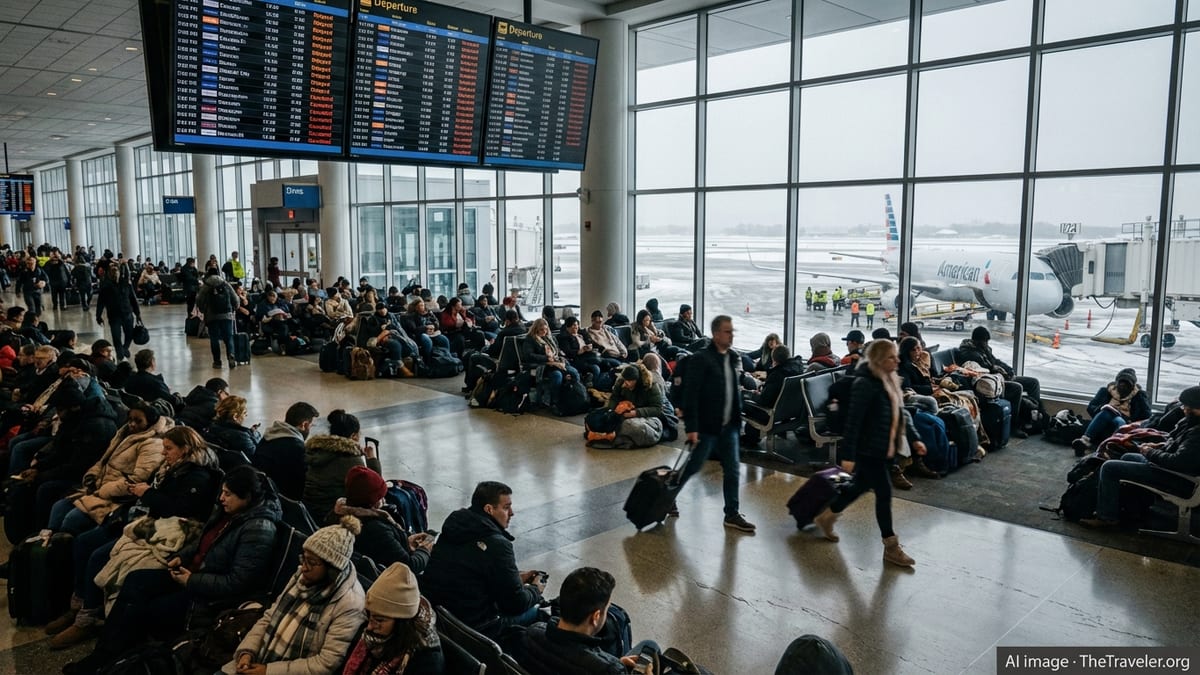
A Climate Trial Placed On Hold
American Airlines has emerged as a prominent test bed for new climate technologies, including an initiative with Google and nonprofit partners to reduce the warming impact of flight contrails. The program uses forecasting tools and updated flight-planning software to steer aircraft away from atmospheric conditions that are most likely to produce long-lasting contrails, which can trap heat in the atmosphere.
The trial, launched in 2025 as a 16-week experiment, delivered promising early results. Publicly available information on the project indicates that targeted changes in altitude and routing cut contrail formation on participating flights by more than half, without major disruptions to schedules. Aviation analysts have highlighted the work as one of the few immediately scalable climate measures available to airlines while they wait for cleaner fuels and new aircraft technologies to mature.
This year, the airline expanded the experiment into a longer-running operational trial to better understand how contrail avoidance would perform across different seasons and traffic patterns. That effort was expected to continue through the busy summer travel months. Instead, an abrupt increase in fuel prices forced a change of plans, and the airline opted to pause the climate trial as it reworked schedules and capacity.
Fuel Prices Spike And Budgets Tighten
The backdrop to the pause is a fuel market shock that has rippled across the U.S. airline industry. Jet fuel costs began climbing in late spring amid renewed geopolitical tensions in the Middle East, pushing crude oil prices higher and narrowing refinery margins that historically kept aviation fuel comparatively stable. Market coverage shows that benchmark U.S. jet fuel prices rose more than 50 percent in a matter of weeks.
American’s latest financial filings underscore how quickly those shifts translated into higher costs. The company reported that its aircraft fuel and related taxes in the second quarter of 2026 were more than 80 percent higher than a year earlier, with the average price per gallon rising from a little over two dollars to just above four dollars. Fuel is typically the second-largest expense for major carriers after labor, and such a move can add billions of dollars to annual operating bills.
With fuel suddenly more expensive, American adjusted its full-year profit outlook and signaled that it would have to manage capacity carefully. Reports on the company’s guidance indicate that executives now expect a higher cost per available seat mile than originally forecast, largely because of energy prices. That shift left less room in the budget for experimental flying that might require off-optimal routings, even when those flights are designed to reduce climate impacts.
Route Cuts Collide With Sustainability Goals
The clearest public sign of the cost pressure came in the network itself. Over the summer, American announced temporary suspensions of six domestic routes, many of them longer near-transcontinental services that consume large amounts of fuel. Coverage by travel and business outlets described the changes as short-term adjustments rather than permanent withdrawals, with flights paused from early August to early October, a shoulder-season period when demand typically dips after the peak summer rush.
Reports on the suspensions indicate that the affected routes served roughly 1.4 million passengers annually before the cuts, highlighting the scale of the adjustment. The airline framed the move as a response to higher operating costs tied directly to jet fuel, bringing capacity more in line with revised demand forecasts and the new economic reality of running longer-haul flights.
For travelers, the immediate impact is fewer nonstop options and, in some cases, the need to connect through American’s hubs instead of flying point to point. For the airline’s climate agenda, the network reshuffle had a secondary effect: the pause of the contrail trial, which relied on the availability of certain flights and routings to test different operational strategies in real-world conditions.
Industry analysts note that climate-focused flight experiments often depend on schedule flexibility. When carriers are forced to cut or consolidate routes and maximize fuel efficiency on remaining services, there is less room to vary altitude or routing purely for research reasons. In that environment, American’s decision to temporarily halt the trial reflects the practical constraints of running a commercial airline through an energy price spike.
Balancing Immediate Costs With Long-Term Climate Strategy
Despite this summer’s pause, American has not backed away from its broader climate commitments. The airline has publicly set a goal of reaching net-zero greenhouse gas emissions by 2050 and aims to replace 10 percent of its jet fuel consumption with sustainable aviation fuel by 2030. Company sustainability disclosures show that American used nearly three million gallons of neat sustainable aviation fuel in 2024, a small but growing share of its total fuel mix.
Scaling that cleaner fuel supply has proven difficult. American and other carriers routinely describe three main hurdles: limited production, high prices compared with conventional jet fuel, and the need for stronger policy incentives to attract investment in new plants. Even as the airline signs new purchase agreements, including a recent multi-year deal linked to corporate buyers through a certificate system, sustainable aviation fuel still costs significantly more than fossil-based alternatives.
In this context, operational measures such as contrail avoidance are seen as complementary tools that can deliver climate benefits in the near term. The paused trial with Google and academic partners is designed to show whether airlines can meaningfully reduce contrail-related warming using existing aircraft and modest changes in flight planning. Early data from the initial 2025 experiment suggested that targeted interventions could cut contrail formation without driving up fuel burn excessively, an important consideration when energy prices are volatile.
The fuel shock of 2026, however, has made that trade-off more sensitive. Even small increases in distance or time aloft can carry substantial cost when every gallon of fuel is more expensive. As a result, American appears to be prioritizing the most direct and fuel-efficient routings during the current price spike, with plans to resume more experimental flying once markets stabilize and the northern hemisphere’s busy summer season is over.
What To Expect As The Trial Resumes This Fall
American has indicated through public statements and sustainability materials that it hopes to restart its contrail-reduction work later this year, targeting the fall and winter period when traffic patterns shift and fuel markets may be less volatile. Industry observers expect the resumed effort to build on lessons from both the original 2025 experiment and the abbreviated expansion this year.
One area of focus is likely to be integration with day-to-day operations. The trial relies on aligning the airline’s flight planners, dispatchers, and pilots around new tools that flag contrail-prone regions of the atmosphere. The more seamlessly these signals can be built into existing decision-making, the easier it becomes to maintain contrail avoidance even when cost pressures rise.
Another priority will be quantifying benefits in a way that resonates with investors and regulators. If American can demonstrate that contrail avoidance reduces climate impact at relatively low cost compared with other measures, it may strengthen the case for broader adoption across the industry. That argument could become more compelling if fuel prices ease, giving airlines slightly more financial room to accommodate route adjustments for environmental reasons.
For now, the pause of American’s climate trial illustrates the tension between short-term economics and long-term sustainability in commercial aviation. As fuel prices spike, carriers face difficult choices about where to deploy aircraft, how to protect margins, and which climate initiatives can withstand sudden cost shocks. How American navigates the restart of its contrail experiment this fall will be closely watched as a test of whether innovative climate solutions can survive the realities of an industry still tethered to volatile fossil fuels.