


More news on this day
Departing flights at Heathrow and several major UK airports were hit by significant disruption on Tuesday 8 September after a technical problem at air traffic control provider NATS led to widespread delays and reports of grounded aircraft across the country.
Get the latest news straight to your inbox!
Departures halted as national control centre reports fault
Publicly available information from flight-tracking services and airport websites shows that a technical issue at NATS’ Swanwick air traffic control centre has resulted in severe disruption to outbound services from London Heathrow and other UK airports on Tuesday afternoon. Live departure boards indicate a wave of delays and cancellations, with many flights listed as “delayed” or “departed late” and some departure times pushed back by several hours.
According to published coverage, Heathrow confirmed that the NATS fault is affecting departing flights from multiple UK airports, while arriving services are currently able to continue operating, albeit with some knock-on disruption. Reports indicate that the issue has triggered temporary departure ground stops at Heathrow at points during the afternoon, with aircraft held at gates and on taxiways while air traffic capacity is restricted.
Media outlets and aviation monitoring sites describe the problem as a “technical issue” or “technical error” at the national control centre rather than an airport-specific failure. Engineers are reported to be working on resolving the fault, but passengers are being warned that delays may persist even after systems are back online as airlines work through the backlog of traffic.
Impact across Heathrow, Gatwick and other UK hubs
The disruption is not confined to Heathrow. Coverage from UK and international news organisations indicates that Gatwick, Manchester, Stansted and Edinburgh are among the airports experiencing restrictions on departures linked to the NATS issue. Some airports have advised that the fault “might impact” operations, while live boards already show late departures and extended turnaround times on affected routes.
At Heathrow, one of Europe’s busiest hubs, the effects are particularly visible. Aviation-focused outlets report that all departures were temporarily halted around early afternoon local time following an air traffic control system failure, before some movements gradually resumed. Aircraft already in the air have largely been able to continue inbound, but outbound schedules remain heavily compressed, with airlines forced to hold aircraft on the ground until slots become available.
Travelers at Gatwick and other major airports are reporting long waits in departure lounges and on board parked aircraft as crews await clearance to push back. Social media posts shared by passengers suggest that delays of two to four hours are common on some routes, while others have been told to expect potential cancellations if the issue takes longer to resolve.
What travelers flying today should expect
For passengers due to travel to or from the UK on 8 September, airlines and airports are urging a close watch on live flight information. Heathrow’s passenger updates advise that the NATS technical issue is impacting departing flights across UK airports and that customers should check directly with their airline for the most accurate and up-to-date status of their service rather than relying solely on printed or earlier schedules.
Given the scale of the disruption, even flights that ultimately operate may do so with substantial delays. Travelers with onward connections, including long-haul departures from Heathrow and other hubs, are particularly vulnerable to missed links as departure backlogs ripple through the network. Some European airports are already holding UK-bound aircraft on the ground or assigning extended departure slots to avoid further congestion in British airspace.
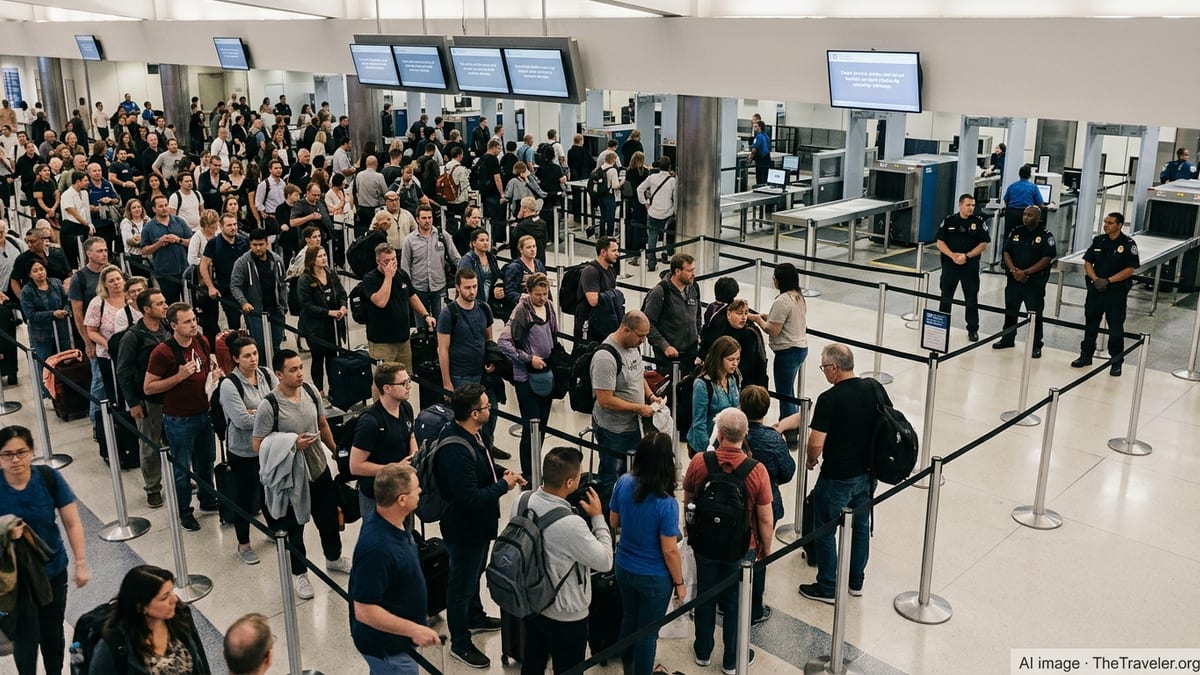
Passengers in terminals should be prepared for crowded departure areas and potentially longer waits at security and boarding gates as flights are repeatedly retimed. Those yet to leave home are being strongly encouraged, via public travel advisories and media reports, to confirm whether their flight is still scheduled to operate before heading to the airport and to build in extra time in case of queues and late-notice gate changes.
How long could the disruption last?
As of mid-afternoon on Tuesday, NATS had not publicly confirmed a precise timeframe for a full resolution of the technical problem, and reports suggest that engineers remain focused on isolating and fixing the fault. Previous incidents involving national air traffic systems, both in the UK and elsewhere in Europe, indicate that even relatively short technical outages can take many hours to clear in operational terms once traffic begins moving again.
Network data collated by Eurocontrol and other aviation bodies in earlier months of 2026 show that technical issues at major control centres can quickly generate thousands of minutes of delay, with the after-effects often extending well into the evening peak. Industry analysis suggests that Heathrow and other London airports are particularly sensitive to such constraints because they already operate close to capacity during most of the day.
Travel industry commentators are therefore advising that disruption is likely to continue into Tuesday evening, even if NATS is able to restore normal system performance more quickly. Airlines may need to reshuffle aircraft and crew, rebook passengers who miss connections, and in some cases cancel later rotations to bring schedules back into balance.
Advice for affected passengers and future bookings
For those already caught up in today’s delays, the primary recommendation from publicly available guidance is to stay in contact with the operating airline, which is responsible for rebooking and any care and assistance offered at the airport. Many carriers are updating passengers via their mobile apps and text alerts, and some are offering free rebooking options on alternative departures where capacity allows.
Passengers traveling later this week may see some residual schedule adjustments as airlines reposition aircraft and crews, but there is currently no suggestion in public reporting that the underlying NATS issue is a long-term systems problem. Prospective travelers are nevertheless encouraged to monitor news updates and check their booking details regularly, particularly for early-morning departures in the next 24 hours that may be impacted by today’s aircraft and crew displacement.
Those with flexible plans might consider allowing more generous connection times when booking itineraries involving Heathrow and Gatwick in the coming days, in case of continued congestion. Travel insurers typically expect passengers to follow airline guidance and to retain documentation of delays and cancellations, so keeping boarding passes, delay notifications and receipts for any additional expenses may be important for later claims.