


More news on this day
Passengers aboard the Dutch-flagged expedition ship MV Hondius remain in an extended offshore quarantine off the West African region after a deadly hantavirus outbreak turned an Antarctic cruise into a weeks-long ordeal at sea.
Get the latest news straight to your inbox!
From Antarctic Adventure to Medical Emergency
The MV Hondius set out from Ushuaia, Argentina, on April 1 as a polar expedition cruise, carrying fewer than 150 passengers and crew toward the remote islands of the South Atlantic and the fringes of Antarctica. Publicly available itineraries describe a classic austral-season voyage, promising wildlife encounters, scientific lectures, and landings on some of the world’s most isolated outposts.
That isolation has taken on a very different meaning in recent days. According to published coverage, at least three passengers who sailed on the Hondius have died following infection with a hantavirus identified as the Andes virus, a rodent-borne pathogen rarely seen outside South America. Several other passengers and crew are reported to have developed suspected or confirmed infections after leaving or remaining on the ship.
Reports indicate that the first clear signs of trouble came in late April, when a passenger developed fever and respiratory symptoms and later died. As test results from passengers who had already disembarked began to return positive for hantavirus, the ship’s routine journey rapidly transformed into an international public health incident.
Analysis published by medical and science outlets notes that Andes virus can, in rare circumstances, spread from person to person during close, prolonged contact. On a compact expedition vessel with shared dining rooms, lounges, and gangways, that possibility raised immediate concern for everyone still aboard.
Adrift Between Cape Verde and the Canary Islands
In the days after the outbreak was recognized, the Hondius was held at sea near Cape Verde, the island nation off West Africa that had been one of its scheduled waypoints. Government statements and media reports from the region describe how local authorities requested the vessel remain offshore while health risks were assessed, effectively stranding passengers and crew in a floating quarantine zone.
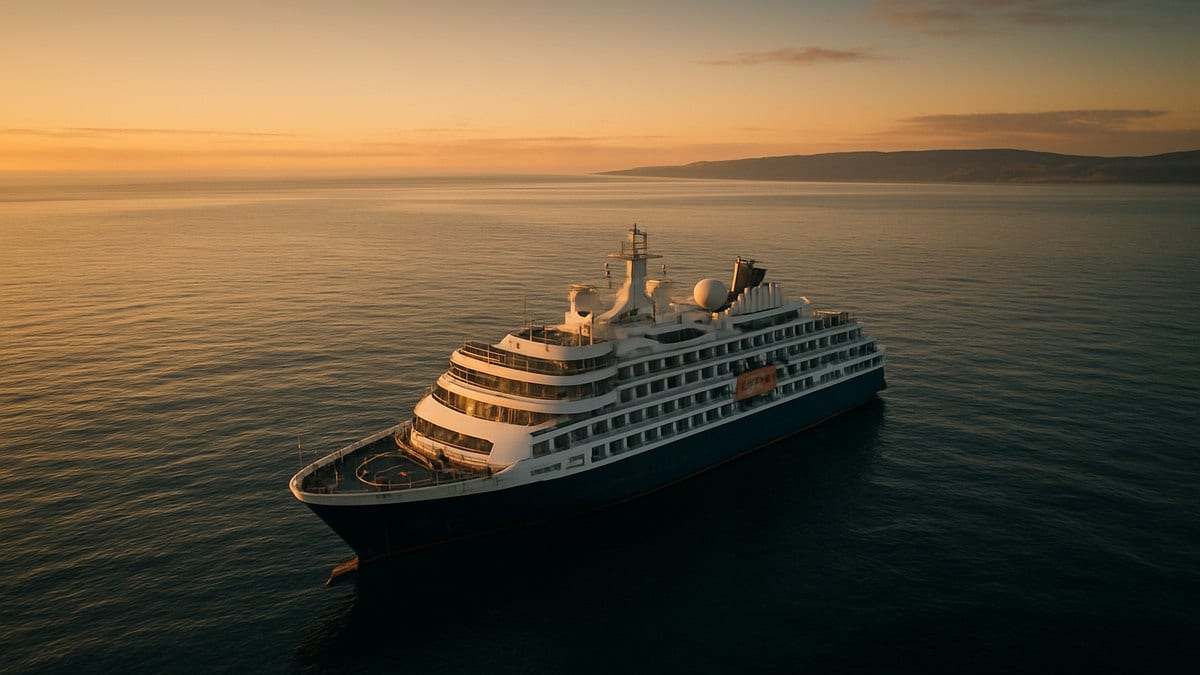
Drone and satellite images published by international news outlets have shown the ship anchored at a distance from land, with medical personnel shuttling by small vessel for assessments and limited evacuations. With no port immediately willing or prepared to receive everyone on board, the Hondius became a test case in how to manage a high-consequence infectious disease incident in international waters.
Attention has since shifted northward. Spanish and European media report that Spain is preparing to receive the ship in the Canary Islands, with Tenerife identified as the planned destination. Passengers are expected to be moved to an isolated, cordoned area for further testing and monitoring once the vessel arrives, but the exact timetable and disembarkation protocols remain fluid.
Complicating the picture is the fact that some travelers left the ship earlier in the voyage, before the outbreak was confirmed. Public health agencies in Europe, Africa, and South America have launched tracing efforts linked to commercial flights and ferry routes used by those passengers, underscoring how a localized shipboard event can ripple across continents.
Life in Prolonged Quarantine at Sea
Accounts compiled by outlets such as The Guardian, The Atlantic, and The Week describe a shipboard atmosphere that oscillates between quiet routine and mounting anxiety. With landing operations suspended and normal excursions canceled, daily life has narrowed to cabins, corridors, and shared spaces where distancing is encouraged but difficult.
Passengers reportedly receive regular temperature checks and health questionnaires, and some have been confined largely to their cabins for precautionary isolation. Meal services, lectures, and social activities have been scaled back or rearranged to reduce close contact, while cleaning protocols have intensified. For a ship designed to showcase the natural world, the current focus is squarely on its own internal environment.
Psychological strain is emerging as a central challenge. Travelers are not only confronting the fear of infection and concern for those already hospitalized, but also uncertainty about when they will be allowed ashore and what awaits them there. According to published first-person accounts, some worry about stigma in their home countries, following sensational headlines and social media commentary about the “hantavirus cruise.”
Crew members face a dual burden, responsible for maintaining critical operations and guest support while navigating their own potential exposure. Reports indicate that at least one crew member has required urgent medical evacuation and intensive care, highlighting that the virus has not spared those working behind the scenes.
A Rare Virus in an Unlikely Setting
Hantaviruses are typically associated with rodents in specific geographic regions, and most known outbreaks have been linked to rural or wilderness exposure on land. Public health summaries note that the Andes virus strain suspected in this incident is endemic to parts of Argentina and Chile, where infections have been documented following contact with contaminated rodent droppings or nesting materials.
The appearance of such a virus on an expedition cruise ship returning from polar waters has prompted questions about how and when transmission occurred. Epidemiological reconstructions cited in recent coverage suggest that exposure likely happened earlier in the itinerary, before the vessel reached its most remote stops. Investigators are working to determine whether infections stemmed from a single initial case or multiple introductions, and how much, if any, secondary person-to-person spread took place on board.
Medical experts quoted in major outlets emphasize that hantavirus pulmonary infections, including those caused by Andes virus, can progress rapidly from flu-like symptoms to severe respiratory distress. Supportive care, often in intensive care units, is the mainstay of treatment, and outcomes depend heavily on early recognition and access to advanced medical facilities.
The Hondius episode is also drawing renewed attention to infection-prevention practices on specialty cruises, which often operate far from large hospitals. Expedition operators typically advertise strict biosecurity protocols aimed at protecting fragile ecosystems. Now, observers note, those same voyages are being scrutinized for how well they protect guests and crew from emerging infections that may arise long before the polar landscapes come into view.
Global Scrutiny of Cruise Health Protocols
The unfolding situation off West Africa is being closely watched by governments, health agencies, and the wider travel industry. Comparisons are already being drawn with the early months of the COVID-19 pandemic, when several large cruise ships became emblematic of the challenges posed by outbreaks in closed, mobile settings that cross multiple jurisdictions.
According to statements and press briefings reviewed by international media, the World Health Organization and national public health bodies are monitoring the Hondius outbreak as they coordinate contact tracing and laboratory analysis. Investigators are examining how quickly initial symptoms were recognized, what steps were taken on board, and how decisions about port access and evacuations were made.
Cruise industry analysts note that expedition ships such as the Hondius represent a growing, higher-priced niche focused on remote destinations. The current crisis may prompt renewed debate over medical staffing requirements, onboard diagnostic capabilities, and contingency plans for handling severe infectious diseases when the nearest tertiary care center is days away by sea and air.
For now, the MV Hondius remains a stark illustration of the vulnerabilities inherent in modern adventure travel. As the ship moves slowly toward the Canary Islands under continued quarantine, passengers and crew are caught between ocean and shore, waiting to learn not only their own health status, but also how this unexpected outbreak will reshape the rules of cruising to the world’s edges.