


More news on this day
As heavy rain and severe storms snarl air traffic from the U.S. to Europe, travelers facing long delays and cancellations may be entitled to more than they realize, including full refunds, meal vouchers and, in some cases, hotel stays.
Get the latest news straight to your inbox!
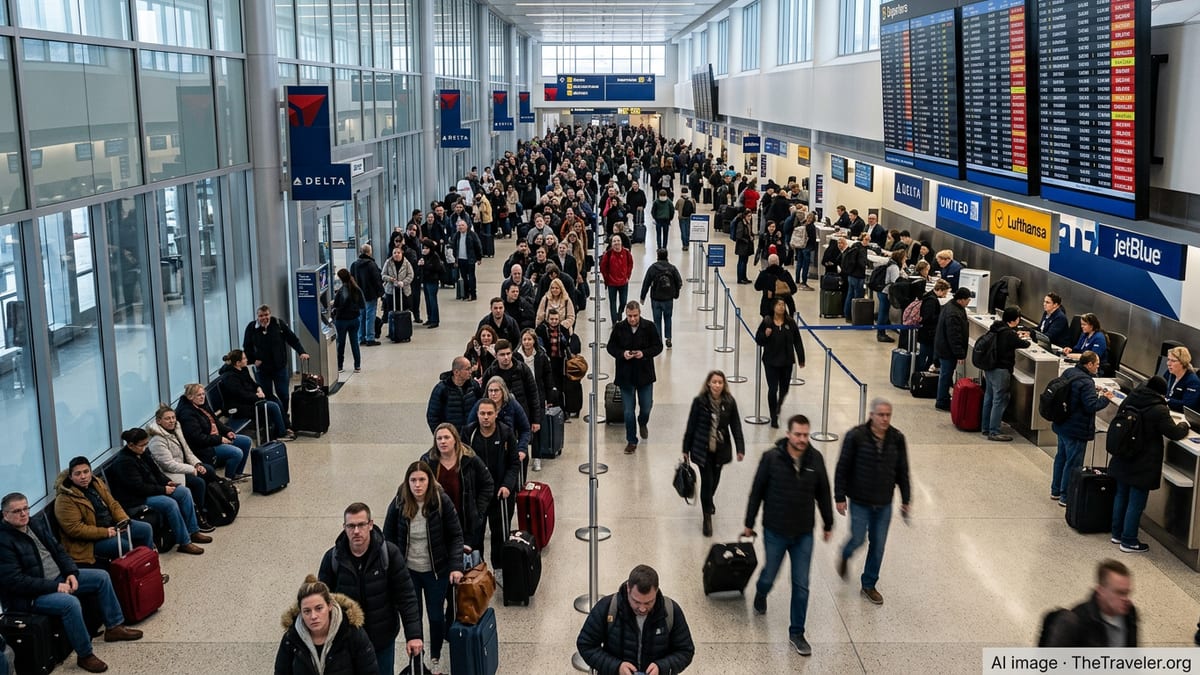
Weather Disruptions Surge As New Rules Take Effect
From winter storms in the United States to intense summer downpours in Europe and Asia, adverse weather has become one of the most common reasons for large-scale flight disruption. Recent coverage of major storms in late 2025 and early 2026 highlighted thousands of delayed and canceled flights in a single weekend, stranding passengers at hub airports and exposing gaps in how well travelers understand their rights.
Publicly available information from aviation regulators shows that weather, including heavy rain, is generally treated as outside an airline’s control. That distinction is important. In most jurisdictions, it limits cash compensation for inconvenience but does not eliminate a traveler’s right to get their money back when flights are canceled or significantly changed and they decide not to travel.
In the United States, the Department of Transportation has updated and clarified refund rules over the past two years, including a final rule on refunds and other consumer protections issued in April 2024 and subsequent enforcement guidance in late 2025. Consumer advocates say these changes make it easier for passengers to claim money they are already owed when trips fall apart.
At the same time, airlines have expanded customer service commitments that go beyond legal minimums, particularly for disruptions they control. Many carriers publicly list when they will provide hotel rooms or meal vouchers, although assistance for heavy rain or storm-related cancellations remains more limited than for mechanical problems or crew scheduling issues.
When U.S. Travelers Can Demand Cash Refunds
Under long-standing U.S. rules, strengthened by the 2024 refund regulation, passengers are generally entitled to a refund when a flight is canceled and they choose not to be rebooked. This applies even if the cause is severe weather, such as heavy rain, and even if the original ticket was sold as nonrefundable. Guidance from legal information sites and travel consumer resources emphasizes that the refund must cover the full ticket price, including taxes and most mandatory fees, if the passenger declines alternative transportation.
Recent federal rules and enforcement notices also define when a “significant change” to a flight can trigger refund rights. These changes can include very long delays, substantial schedule shifts, additional connections or a change in departure or arrival airports. If a storm prompts an airline to rework its schedule so drastically that a trip no longer resembles what was originally sold, passengers may again be eligible for their money back instead of accepting a rebooked flight or a travel credit.
However, current U.S. policy does not require airlines to pay extra cash compensation for most delays or cancellations, including those tied to controllable issues like maintenance, let alone uncontrollable weather. A proposal that would have mandated compensation payments for major airline-caused disruptions was dropped in 2025, keeping the United States out of line with the more generous compensation framework in Europe.
For heavy-rain disruptions, this means the core right in the United States is the right to a refund when a flight is canceled or significantly changed and the traveler chooses not to travel. Passengers who accept a new itinerary, travel voucher or frequent-flyer miles in place of refund may give up that right, which is why consumer groups generally advise asking for a cash refund first if the trip no longer works.
European Rules: Care And Assistance Even In Bad Weather
In the European Union, passengers on flights departing from or operated by EU and certain partner airlines are protected by Regulation 261/2004. Public summaries from the European Commission describe a two-part system: compensation for certain disruptions within an airline’s control, and standardized “right to care” obligations that apply even when extraordinary circumstances such as severe weather are to blame.
Heavy rain and storms are typically classed as extraordinary circumstances. In most cases, this removes the airline’s duty to pay monetary compensation for the delay or cancellation itself. However, travelers may still be entitled to meals, refreshments and hotel accommodation if they are stuck overnight while waiting for a new flight, provided they present themselves for check-in and accept rebooking.
European guidance also indicates that when re-routing pushes the new departure to at least the day after the original flight, airlines must, where necessary, arrange hotel stays and transport between the airport and the accommodation. As in the United States, passengers can opt instead for a refund if they no longer wish to travel, but in that case, the obligation to provide ongoing care typically ends once the refund is issued.
National enforcement bodies within the EU have reiterated that airlines must prove both that bad weather caused the disruption and that it could not have been avoided even if all reasonable measures had been taken. For passengers grounded by torrential rain, that standard can be relevant when assessing whether the carrier met its obligations to minimize knock-on delays and cancellations.
Hotel Stays, Meal Vouchers And What Is Voluntary
The largest gap between traveler expectations and legal reality often involves hotel rooms and meal vouchers. In the United States, there is no law requiring airlines to pay for a hotel when a delay or cancellation is caused by heavy rain or other weather outside their control. Reports on winter storms and hurricanes note that some carriers voluntarily hand out hotel or meal vouchers, while others offer nothing more than a seat on the next available flight.
To address this patchwork, the U.S. Department of Transportation maintains a public dashboard comparing airline commitments, including whether a carrier will provide meals or hotels after controllable cancellations or long delays. For uncontrollable weather, many airlines list more limited support, sometimes restricted to meal vouchers or discounted hotel rates negotiated with nearby properties. Because these commitments are voluntary, passengers must often ask at the airport or through customer service channels to receive them.
In Europe, the situation is more structured. Even when heavy rain counts as an extraordinary circumstance, Regulation 261/2004 obliges airlines to provide “care and assistance,” including hotel stays, when an overnight wait is necessary due to re-routing. This right applies regardless of whether the disruption is within the airline’s control, so long as the passenger chooses to continue the journey rather than accept a refund.
Other regions, including parts of Latin America and Asia-Pacific, have adopted hybrid systems. National regulations sometimes require airlines to provide accommodation or meals during major disruptions but may exempt events classified as force majeure. As climate-driven extreme weather intensifies, several governments are reviewing these frameworks, and travelers are advised to check the specific rules that apply to their itinerary before departure.
How Travelers Can Protect Themselves Before And During Storms
Consumer advocates and travel law specialists emphasize preparation as the best defense against heavy-rain disruptions. Public guidance from legal and financial publications recommends booking early flights when possible, since delays often cascade throughout the day, and avoiding tight connections in weather-prone hubs during storm seasons. Travelers are also urged to monitor airline apps and airport notices closely as storms approach, because early weather waivers can allow itinerary changes without fees before the worst delays hit.
Travel insurance has become another key tool. Many policies sold in the United States and Europe offer trip cancellation or interruption coverage when flights are grounded by severe weather, potentially reimbursing additional hotel nights, meals and replacement transportation that fall outside airline obligations. Insurance experts caution that coverage terms vary widely and that buying a policy after a storm is already forecast may limit benefits, making it essential to read conditions carefully at the time of purchase.
Documentation is equally important. Advisories from consumer organizations suggest keeping boarding passes, delay notifications, receipts and screenshots of airline communications, particularly when seeking a refund or submitting an insurance claim. In Europe, written proof of the cause and length of a delay can also help when pursuing assistance or, in controllable cases, compensation under Regulation 261/2004.
With heavy rain and extreme weather projected to affect flight schedules more frequently, understanding the difference between a right to a refund, a right to care and purely voluntary perks can help travelers make faster decisions at the airport counter. Knowing when to insist on a cash refund, when to accept rebooking with hotel support and when to turn to insurance can significantly reduce the financial sting of a washed-out trip.