


More news on this day
A minor train derailment in Morgan County, Tennessee, has drawn renewed attention to rail safety in the rural county, coming only weeks after a separate Norfolk Southern freight train left more than 100,000 gallons of alcohol-based fuel burning along the Emory River corridor.
Get the latest news straight to your inbox!
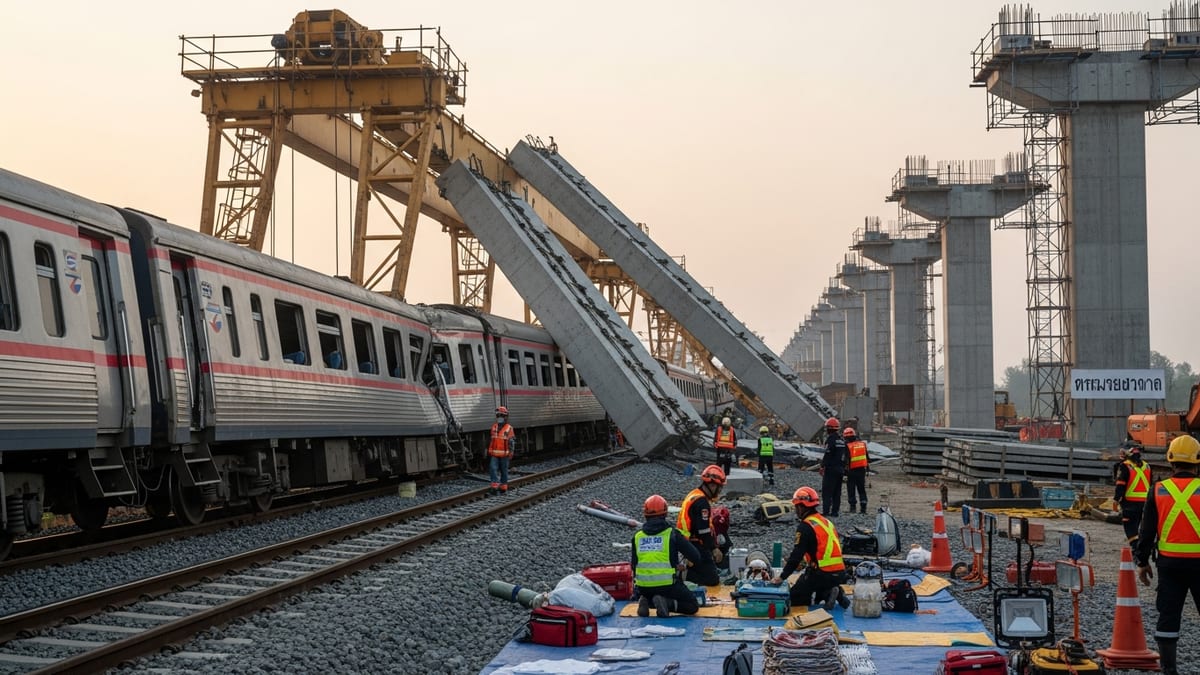
New incident reported on busy freight corridor
Preliminary reports indicate that the latest derailment involved a small number of freight cars leaving the track on a section of line that threads through the hills of Morgan County, a route already under intense scrutiny after June’s high-profile hazardous materials release. Early information available from regional outlets and rail incident summaries suggests the most recent event was classified as minor, with no significant injuries and no large fire reported at the scene.
The line through Morgan County forms part of a key north–south freight artery in eastern Tennessee, carrying mixed freight that can include consumer goods, industrial products and tank cars with chemicals or fuels. Travelers and outdoor visitors are now encountering an area where heavy rail traffic intersects with a popular landscape of rivers, campgrounds and trailheads.
Although detailed cargo information for the minor derailment had not been fully released as of early July, initial coverage indicates there was no repeat of the dramatic fireball and towering smoke plume that became associated with the June accident. The relatively limited scale of the new incident has nonetheless unsettled residents and visitors who are still absorbing the impact of the earlier spill.
June derailment spilled more than 100,000 gallons of alcohols
The backdrop to the latest report is the June 11 Norfolk Southern derailment near Lancing, in Morgan County, which triggered evacuations, riverside closures and a sustained environmental response. According to a preliminary summary from the National Transportation Safety Board and related public documents, 23 cars of a mixed freight consist left the track, including multiple tank cars carrying ethanol and other alcohol-based flammable liquids.
Publicly available estimates compiled in late June indicated that roughly 107,000 gallons of alcohols were released in that accident, feeding a fire that burned for hours along a wooded stretch near the Emory River and the Obed Wild and Scenic River area. State environmental officials later reported dead fish in sections of the river, and emergency agencies imposed a temporary contact advisory that asked people to avoid swimming and paddling in affected reaches while testing continued.
In the days that followed, monitoring data shared through state and local updates showed air quality readings within expected short-term limits and no contamination detected in selected deep groundwater wells on the opposite side of the river from the spill. Even so, the scale of the release and the images of tank cars ablaze left a strong impression on both local residents and visitors who associate the area with clear water and quiet backcountry recreation.
Travel and recreation impacts along the Emory River
For travelers, the June derailment translated into immediate closures at some of Morgan County’s best-known recreation sites. The National Park Service announced temporary closures of the Nemo day-use area and Rock Creek Campground at Obed Wild and Scenic River shortly after the accident, citing visitor safety as cleanup and investigation work ramped up along the tracks and in the river corridor.
State environmental updates issued through late June and early July documented a stepwise loosening of restrictions as sampling results improved. The Tennessee Department of Environment and Conservation lifted its temporary contact advisory for portions of the Emory River in late June, reporting that concentrations related to the ethanol and alcohol spill had declined to levels consistent with regular recreational use.
By early July, local radio and regional news outlets were reporting that well-water testing showed no impacts tied to the spill, an important signal for rural homeowners and lodging operators who rely on private wells. Outfitters, paddlers and anglers have slowly been returning to the river, even as some remain wary of lingering effects that are harder to see than a burned-out railcar.
Community unease and renewed questions about rail safety
The newly reported minor derailment has arrived at a sensitive moment, with Morgan County still in the spotlight as an example of how hazardous materials incidents intersect with recreation-driven economies. Rail safety specialists have long noted that derailments can range from relatively routine equipment problems to major spills with complex environmental consequences, and the juxtaposition of a massive alcohol release followed by a lesser event on the same corridor underscores that spectrum.
Publicly available federal rail safety data and academic analyses highlight that overall freight rail remains one of the more efficient and comparatively low-incident ways to move bulk commodities long distances. At the same time, derailments involving flammable liquids, such as ethanol and other alcohols, can rapidly transform otherwise remote valleys and river gorges into high-consequence sites for nearby communities and visitors.
Local commentary captured by regional media and community forums suggests that some residents are now scrutinizing train frequencies, cargo mixes and emergency notification systems more closely than before. Travelers planning trips to the plateau region are increasingly checking for the latest park service notices, water-quality advisories and campground status reports in the wake of the headlines.
What travelers to Morgan County should know now
For visitors heading to Morgan County in the coming weeks, publicly available information indicates that key recreation areas along the Emory River and within Obed Wild and Scenic River have largely reopened following the June derailment. Water contact advisories related specifically to the alcohol spill have been lifted, and recent testing shared by state and local agencies has not shown impacts to select deep groundwater wells in the vicinity.
Road closures directly linked to the June accident have eased, though travelers may still encounter intermittent work zones or rail-side activity as cleanup contractors and investigators continue their tasks along the right-of-way. It is advisable for drivers using rural routes near the tracks to allow extra travel time and remain alert for service vehicles entering or leaving narrow access roads.
As details continue to emerge about the latest minor derailment, the overall message from publicly available coverage is one of cautious normalcy. The region’s rivers, trails and campgrounds remain open and are welcoming visitors, but the twin incidents have prompted a sharper focus on how closely freight traffic runs alongside some of eastern Tennessee’s most valued outdoor landscapes. For travelers, that means pairing a return to favorite overlooks and paddling runs with a heightened awareness of the rail lines that have long shared the same corridors.