


More news on this day
Travelers across the Middle East and Asia are facing renewed uncertainty after a fresh round of flight disruptions in Saudi Arabia led to eight delays and eight cancellations on routes linking the kingdom with Dubai, Hong Kong, Kuwait and several other major hubs.
Get the latest news straight to your inbox!
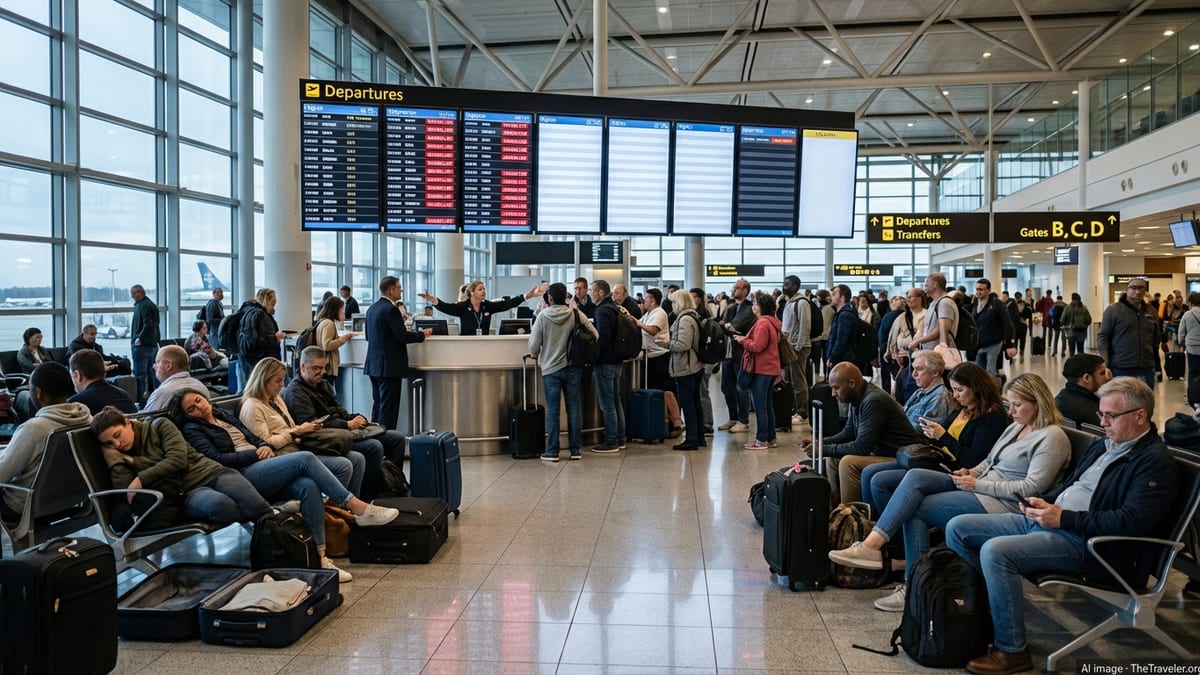
New Wave of Disruptions on Key Regional Routes
Publicly available operational notices and aviation advisories indicate that Saudi Arabia remains a critical but volatile corridor for east west air traffic, with a new cluster of schedule changes affecting at least 16 flights. The latest update points to eight services delayed and eight cancelled, many of them touching major connecting points such as Dubai, Hong Kong and Kuwait City.
The pattern reflects a wider regional picture in which airlines are still recalibrating networks after airspace closures and airport damage earlier in the year. Information compiled from recent factbox coverage and airline statements shows that while some routes have reopened, services through Saudi airspace and Saudi airports continue to be adjusted at short notice.
Travel advisories directed at corporate and leisure travelers alike describe Saudi Arabia’s situation as fluid, with flight suspensions and delays most visible on high demand sectors to the United Arab Emirates, Kuwait and onward to Asia. The latest movements add another layer of disruption for passengers already navigating a patchwork of partial resumptions and ongoing suspensions across the Gulf.
For travelers, the immediate impact is felt in longer journey times, missed connections and last minute rerouting, particularly for those relying on Saudi hubs to reach Dubai, Hong Kong, Kuwait and other regional centers.
Dubai and Hong Kong Links Under Pressure
Dubai, one of the world’s busiest international hubs, continues to experience knock on effects from shifting traffic through Saudi airspace. Recent factbox reporting on Middle East schedules shows multiple international carriers still trimming or suspending services to Dubai, while others are extending temporary suspensions on certain city pairs that normally overfly or connect via Saudi Arabia.
According to published coverage, at least one major Asian carrier based in Hong Kong has extended the suspension of its Dubai services into late summer while it reshapes its long haul network around disrupted Middle East routings. That adjustment reduces options for travelers using Hong Kong as a gateway to Northeast Asia and the Pacific, particularly those previously connecting through Saudi Arabia or the Gulf.
Regional media also note that Dubai bound flights from other Middle Eastern cities, including some Saudi airports, remain subject to day by day schedule revisions. Travel advisories emphasize that passengers on Saudi to Dubai routes are seeing both outright cancellations and rolling delays as airlines balance safety assessments, crew availability and aircraft rotations.
The result is a thinner and less predictable schedule between Saudi Arabia and Dubai at a time when demand for business and family travel is typically strong. With some Hong Kong and Southeast Asia links also reduced, itineraries that once required a single connection via Saudi territory now often involve additional stops or longer detours.
Kuwait Routes Continue to See Cancellations
Kuwait City remains another focal point in the disruption affecting travelers with Saudi itineraries. Recent advisories and regional reporting point to extended suspensions on services involving Kuwait, as well as temporary airport closures following security incidents earlier in the year. These measures have had a direct impact on flights linking Saudi cities with Kuwait and onward destinations.
Publicly available information from Gulf focused outlets describes Kuwait operations as constrained, with some carriers cancelling entire blocks of flights during peak travel weeks. In practice, this has translated into Saudi based passengers losing direct options to Kuwait and facing limited alternatives for reaching onward connections from there to South Asia or Europe.
Online flight tracking discussions and traveler reports reflect this pressure, with accounts of Saudi related itineraries through Kuwait being cancelled or rebooked multiple times. While Kuwait’s authorities have outlined phased reopening plans, analysts note that the combination of infrastructure recovery and regional airspace considerations continues to weigh on schedules connecting the country with Saudi Arabia.
For passengers, the latest tally of eight delays and eight cancellations touches heavily on Kuwait linked services, compounding uncertainty for those who had already rebooked away from previously suspended routes.
Operational Context in Saudi Arabia and Surrounding Airspace
Saudi Arabia has been described in recent risk assessments as one of the few major east west corridors still consistently available to international carriers, even as surrounding airspace has faced intermittent closures or restrictions. That status has drawn additional overflight and diversion traffic into Saudi skies, increasing operational complexity and leaving airlines more exposed to congestion and knock on delays when schedules change.
Recent Middle East port and aviation advisories list Saudi airports as fully operational with open airspace, but they also highlight earlier suspensions of flights from the kingdom to a group of regional destinations including Bahrain, Kuwait, Dubai and Abu Dhabi. Although many of those suspensions have since been partially eased, the structure of routes and timings continues to evolve, feeding into the latest wave of delays and cancellations.
Industry briefings circulating among corporate travel managers describe an environment in which routing decisions are shifting week by week. Carriers that once operated multiple daily frequencies between Saudi Arabia and nearby hubs have reduced services or consolidated flights, making each disruption more visible to travelers.
The newly reported set of 16 affected flights is therefore part of a broader recalibration rather than an isolated incident. On days when schedules are already tight, the loss or delay of even a handful of Saudi linked services to Dubai, Hong Kong, Kuwait and other cities can ripple across networks, affecting connections as far away as Europe, North America and East Asia.
What Travelers Should Do Right Now
Given the continuing volatility, travel experts and advisories recommend that anyone booked on routes touching Saudi Arabia, Dubai, Hong Kong or Kuwait adopt a more hands on approach to their plans. This includes monitoring flight status repeatedly in the 24 hours before departure and again before leaving for the airport, as same day changes remain common on some carriers.
Passengers are also encouraged to familiarize themselves with airline rebooking and refund policies, as many carriers have introduced limited time waiver windows for itineraries involving the Middle East. Public guidance from travel risk consultancies notes that options can vary significantly depending on the ticket type, point of purchase and whether journeys are operated by a single airline or multiple partners.
Those planning new trips are being advised to allow extra connection time, avoid tight self made transfers between separate tickets and consider alternative routings that do not rely on a single vulnerable hub. In some cases, flying a slightly longer route that avoids the most affected airports or air corridors may reduce the risk of severe disruption.
With reports indicating eight delays and eight cancellations tied to Saudi linked routes in the latest update, the region remains challenging but navigable for well informed travelers who remain flexible and proactive about checking their options.