


Most visitors to Nice drift between the Promenade des Anglais, the Old Town and the port, never realizing that just a few blocks inland lies one of the city’s most atmospheric neighborhoods. Quartier des Musiciens, or the Musicians District, is a calm, elegant grid of streets named after composers, filled with Belle Époque and Art Deco facades, corner cafés and small daily rituals that locals love and travelers almost never see. Spend an afternoon here and you will find another side of Nice: slower, softer and quietly glamorous.
Get the latest updates straight to your inbox!
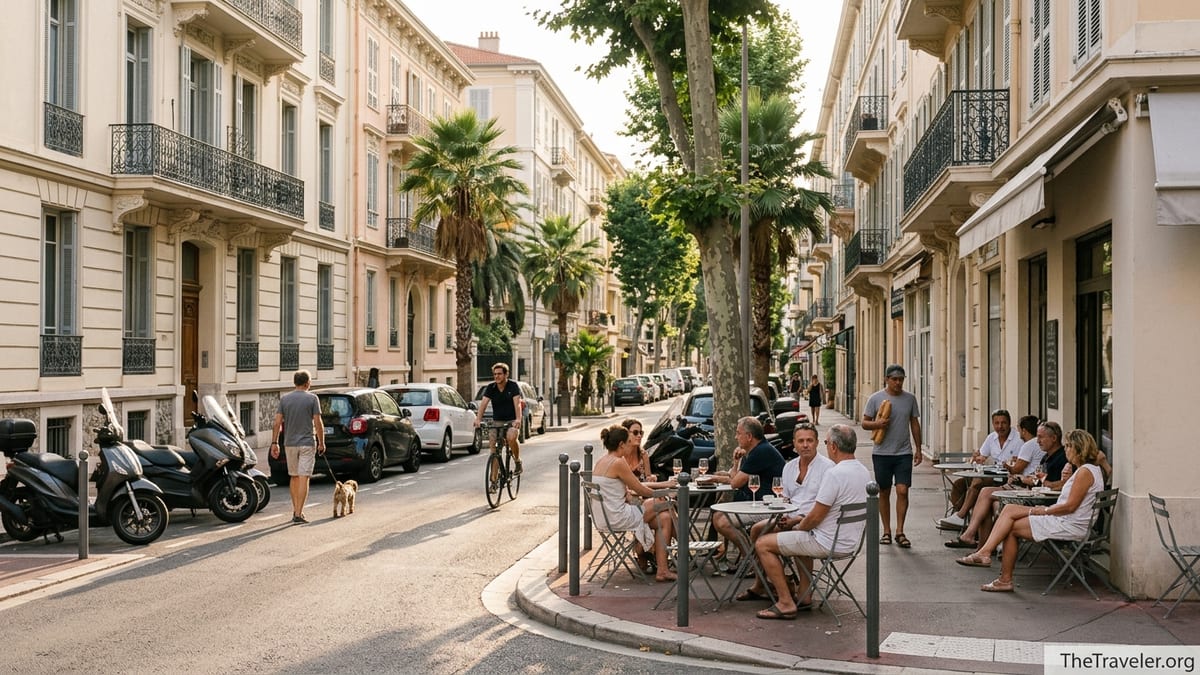
Getting Your Bearings in the Musiciens
The Musiciens quarter sits between boulevard Victor Hugo, avenue Jean Médecin and the main Nice-Ville train station. It is only a 10 to 15 minute walk from the seafront, but the mood changes quickly from beach crowds to residential calm. Streets like rue Verdi, rue Rossini and rue Berlioz cross with avenues Auber, Georges Clémenceau and Thiers in an orderly grid, which makes it one of the easiest parts of Nice to navigate on foot.
The district developed after Nice was annexed to France in 1860, when the arrival of the railway turned the area’s vegetable gardens into a showcase for new apartment palaces and small hôtels particuliers. Today you can still feel that late 19th century optimism in the tall facades, wrought-iron balconies and decorative flourishes that line almost every street. Unlike the Old Town, there are wide pavements, street trees and plenty of light, so wandering here is relaxing even in high season.
For visitors, the Musiciens works best as a half-day or early-evening exploration. A realistic plan is to arrive by tram at Jean Médecin or Alsace-Lorraine, walk slowly south or west through the neighborhood, stop for coffee or an early glass of wine, then continue to the Promenade for sunset. You will not find big-ticket sights or museum queues here. The appeal lies in small discoveries: a carved doorway, a courtyard garden, a neighborhood boulangerie with locals greeting the staff by name.
Because it is primarily residential, services are set up for people who live here, not for tour groups. Supermarkets, pharmacies, small produce shops and a handful of independent boutiques are scattered through the area, which means you can easily pick up picnic supplies for the beach or a bottle of rosé and local olives before heading back to your hotel or apartment.
Belle Époque Facades Without the Crowds
Nice is known for its Belle Époque architecture, and the Musiciens is one of the best places to see it without battling the promenade crowds. Look up along rue Verdi and rue Rossini in particular and you will spot ornate cornices, curved bay windows and façades painted in warm ochres, creams and pale greens. Many buildings date from the late 19th and early 20th centuries, when wealthy visitors from northern Europe commissioned showpiece residences close to the new station.
One of the quiet pleasures here is to choose a corner, such as the junction of rue Verdi and avenue Georges Clémenceau, and simply watch how light moves across the stone during the late afternoon. You will notice carved floral motifs, human faces and swirling ironwork that rarely appear in guidebooks. Stairwell windows are often stained or frosted glass, and heavy wooden entrance doors carry brass nameplates that hint at generations of residents.
Because these are lived-in buildings rather than curated monuments, you see the architecture in daily use. Elderly residents carry shopping bags up marble staircases; delivery cyclists lean their bikes against carved pilasters; shutters open and close according to the sun. It feels almost intrusive to photograph some details, so consider enjoying them quietly and keeping your camera for wider street scenes.
If you are especially interested in architecture, time your walk for mid-morning on a clear day, when shadows are sharp and balconies cast patterned silhouettes onto the façades. Spring and autumn are ideal, with softer light and fewer visitors in Nice overall. You will likely share the streets only with residents heading to the market or children walking home from school.
Café Culture: From Morning Coffee to Apéro
The Musiciens is not full of flashy spots, but it does have a growing handful of small places that locals quietly cherish. One example is Café des Musiciens on avenue Auber, a market-driven bistro that focuses on seasonal produce and natural-leaning wines. Open for lunch several days a week and for dinner on select evenings, it is the sort of place where a chalkboard menu might offer a slow-cooked meat dish, a Mediterranean fish with vegetables and a simple fruit dessert. Prices can vary with the menu, but a lunch entrée and main will usually come in well below what you would pay at a seafront restaurant serving more generic fare.
A few streets away, places like Maison Joia near boulevard Gambetta show another side of the neighborhood’s food scene, with a focus on organic ingredients and lighter, plant-forward plates. It is common to see local office workers and residents sharing a simple plat du jour at midday, then clearing out by mid-afternoon, which means you can often find a quiet table for a late coffee or dessert even in busy months.
If you want to experience the local rhythm, come in the early evening. Between about 6 and 8 p.m., terrace tables begin to fill with neighbors meeting for an apéro. Expect glasses of Provence rosé, a small bowl of olives or tapenade and a low buzz of conversation that rarely tips into party mode. You might pay a few euros for a glass of wine and a little more for a plate of charcuterie or local cheese to share, which makes this an affordable way to soak up the mood of the area.
Unlike the Old Town, where service can be brisk and turnover high, Musiciens cafés tend to let you linger. It is perfectly acceptable to nurse a single espresso while you write postcards or read, especially in the late morning or mid-afternoon when the rush has passed. Staff quickly recognize repeat visitors, so if you are staying nearby for several days, you may find your coffee arriving just the way you like it before you even order.
Everyday Markets, Bakeries and Local Food Rituals
One of the charms of staying or spending time in the Musiciens is how easy it becomes to live like a local, even for a short visit. Rather than relying on hotel breakfasts or tourist-focused snack bars, you can stock up at neighborhood bakeries, greengrocers and supermarkets that cater primarily to residents. A typical morning might start with a baguette or pain au chocolat from the nearest boulangerie, picked up alongside parents buying croissants for their children before school.
Near streets like rue de France and boulevard Gambetta, small fruit and vegetable shops display crates of seasonal produce on the pavement. In spring you might see fat artichokes and bundles of asparagus; summer brings sun-warmed tomatoes, peaches and local melons; autumn offers figs and wild mushrooms. Prices tend to be more reasonable than on the markets closest to the seafront, and vendors are patient even if your French is limited.
Supermarkets in and around the neighborhood stock the ingredients you need for simple Niçoise-style meals at home. Look for socca chips or chickpea crackers, jars of tapenade and anchoïade, small tubs of olives and local cheeses that pair well with a chilled rosé. With a loaf of bread, a few ripe tomatoes and a tin of tuna, you can assemble your own pan bagnat-style sandwich before walking down to the beach, avoiding the inflated prices often charged directly on the Promenade.
Pay attention to local routines. Many shops close for a long lunch break, especially outside the peak tourist season, and Sunday afternoons can feel very quiet. Plan to buy essentials in the late morning or early evening. If you need a pharmacy or supermarket in a hurry, ask at your hotel or café; staff usually know which branches keep slightly longer hours than the rest.
Quiet Green Corners and Short Walks
Although the Musiciens is dense and urban, several small parks and planted squares provide breathing space within walking distance. Jardins off boulevard Victor Hugo or near avenue Georges Clémenceau offer benches under palm trees and plane trees, where office workers eat takeaway salads and grandparents supervise children on the playground. These are not manicured show gardens but everyday green spaces that make the neighborhood feel livable.
One pleasant short walk is to start near the tram stop at Alsace-Lorraine, stroll through the neighboring park there, then drift south into the Musiciens streets. From that point you can meander along rue Verdi or rue Berlioz, cross boulevard Gambetta and eventually reach the sea near the western end of the Promenade des Anglais. The route takes around 20 to 30 minutes at a relaxed pace, longer if you stop for photographs or coffee.
The area is also a convenient base for slightly longer urban explorations. From most streets in the Musiciens, you can reach the Russian Orthodox cathedral, the shopping axis of avenue Jean Médecin or the refined squares of the Carré d’Or within 15 minutes on foot. A typical afternoon might include a visit to the cathedral, a slow wander through the Musiciens looking at facades, then a descent toward the sea for a swim or an evening drink.
Because the neighborhood is flat, it is accessible for visitors who prefer to avoid steep hills and stairs. Pavements are generally wide enough for strollers and mobility aids, though some older buildings have steps at their entrances. If accessibility is a priority, consider choosing cafés and restaurants on corners and main avenues, where entrances are more likely to be level with the pavement.
Staying in the Musiciens: What to Expect
For travelers who want to be close to the action without staying directly on busy nightlife streets, the Musiciens can be a strong base. The area offers a mix of small hotels, serviced apartments and private holiday rentals in converted Belle Époque buildings. Rooms may not always have sea views, but they often compensate with high ceilings, tall windows and quieter nights than in the Old Town.
Accommodation prices fluctuate with the seasons, but you can often find better value here than on the seafront, especially in shoulder months like April, May, late September and October. Being slightly removed from the most famous squares means you are paying more for local convenience and charm than for postcard views. In practical terms, you save money on restaurants and day-to-day expenses by using neighborhood cafés and shops rather than beachfront venues aimed at short-term visitors.
Distances are manageable. From many streets in the Musiciens, it is a 10 to 15 minute walk to the Promenade des Anglais and around the same to the main station for regional trains. The tram along avenue Jean Médecin connects you quickly to the airport or the port. If you are traveling with children, the ability to return to your room for a rest in the middle of the day without needing a taxi can make a significant difference.
The trade-off is that nightlife is low-key. You will not find late-closing bars or clubs immediately outside your door, which many visitors view as a positive. After about 10 or 11 p.m., residential streets grow very quiet, with the occasional sound of a scooter or late tram in the distance. If you do want a livelier evening, the Old Town and port areas are a short tram ride or a 20 to 25 minute walk away.
Practical Tips for Experiencing the Neighborhood Like a Local
To get the most from the Musiciens, slow your schedule. Instead of rushing through on the way to the beach, plan at least half a day just to wander. Start with a coffee at a corner café, then pick a composer’s street name and follow it from one end to the other, noticing how the architecture shifts from older buildings to slightly more modern blocks as you move. Take small side streets and cul-de-sacs when you see an inviting doorway or balcony.
Dress as you would for any European city neighborhood, with comfortable walking shoes and a light layer for breezy evenings, especially outside the height of summer. Because the streets are mostly residential, avoid loud conversations late at night and treat building entrances and courtyards as private spaces. Photography is welcome in public streets, but be discreet when people are entering or leaving their homes.
Language need not be a barrier. Many café and restaurant staff speak some English, but even a few French phrases make encounters much smoother. A simple “bonjour” when entering a shop, “s’il vous plaît” when ordering and “merci, bonne journée” when leaving go a long way. If a menu is written only in French, ask politely if someone can explain a couple of dishes, or use your phone discreetly to look up unfamiliar ingredients.
If you are visiting in peak season, try exploring the Musiciens early in the day. Between about 8 and 10 a.m. the streets feel especially local: children heading to school, office workers grabbing a quick coffee at the bar, delivery vans unloading bakery flour and restaurant produce. You will see Nice at work rather than on holiday, which is exactly the hidden side many travelers are hoping to find.
The Takeaway
Quartier des Musiciens will probably never be a headline attraction in Nice, and that is precisely its charm. In a city known worldwide for its promenade and its old streets, this compact, residential grid holds a quieter story, written in carved stone balconies, neighborhood cafés and the routines of people who call it home year-round. For travelers willing to drift a few blocks inland, it offers one of the most rewarding “everyday” experiences on the French Riviera.
Whether you come for an hour between beach and dinner or choose to base yourself here for several nights, the Musiciens rewards attention to detail rather than a checklist of sights. Look up at the facades, linger over a coffee, listen to the soft hum of local life and follow the composer street names that give the area its identity. You may find that the memory that stays with you from Nice is not a postcard-perfect seafront, but a sunlit corner balcony on rue Verdi or a quiet evening apéro on avenue Auber.
FAQ
Q1. Where exactly is the Musiciens quarter in Nice?
The Musiciens quarter lies between boulevard Victor Hugo, avenue Jean Médecin and the main Nice-Ville train station, roughly 10 to 15 minutes on foot from the Promenade des Anglais.
Q2. Is Quartier des Musiciens safe to walk around at night?
The area is largely residential and feels calm and safe in the evening, with mostly local residents returning home, though normal city precautions such as staying on lit streets and keeping valuables secure still apply.
Q3. How long should I plan to explore the neighborhood?
Allow at least half a day to wander, stop for coffee or a drink and take in the architecture, but you can also enjoy a brief one to two hour stroll if your schedule is tight.
Q4. Are there many restaurants and cafés in the Musiciens?
There are fewer venues than in the Old Town, but you will find a growing selection of small cafés and bistros, including market-driven spots and organic kitchens aimed mainly at locals rather than tourists.
Q5. Is the Musiciens a good place to stay in Nice?
It suits travelers who prefer a quieter, local neighborhood within walking distance of the sea and the station, and who do not mind being slightly removed from the busiest nightlife streets.
Q6. How do I get to the Musiciens from Nice airport?
You can take the tram toward the city center and get off near stops such as Alsace-Lorraine or Jean Médecin, then walk a few minutes into the heart of the neighborhood, or use a taxi or ride-hailing service if you have heavy luggage.
Q7. Is the neighborhood suitable for families with children?
Yes, its flat streets, nearby small parks and proximity to both the beach and the station make it practical for families, especially those who appreciate quieter evenings.
Q8. Will I find budget-friendly options for food and daily shopping?
Local bakeries, greengrocers and supermarkets offer reasonably priced produce, pastries and picnic supplies, which can be cheaper than eating every meal in seafront restaurants.
Q9. Are there notable sights or museums inside the Musiciens itself?
The neighborhood is more about atmosphere and everyday life than major attractions, but its Belle Époque and Art Deco facades are a highlight for architecture lovers.
Q10. When is the best time of day to experience the area like a local?
Early morning and early evening are ideal, when residents are heading to work or gathering for apéro on café terraces and the streets feel most authentically lived-in.