


More news on this day
Record-breaking Fourth of July travel demand is colliding with persistent airport bottlenecks, prompting millions of Americans to swap flights for road trips and amplifying fears of severe highway congestion around major cities including New York, Los Angeles and Miami.
Get the latest news straight to your inbox!
Record Holiday Demand Sets Up a Logistical Stress Test
Independence Day 2026 is shaping up as one of the busiest travel periods on record, turning the long weekend into a nationwide stress test for both air and road networks. Forecasts from motor and travel organizations indicate that roughly 72 million Americans are expected to journey at least 50 miles from home over the extended July 4 window, covering the span from late June through the first week of July. Early regional projections released in recent days, from Texas to Michigan and Tennessee, point to fresh state-level records and reinforce the sense that peak-summer travel appetite remains strong despite higher costs.
Analysts note that the 2026 holiday falls on a Saturday, effectively creating a four-day weekend for much of the workforce and encouraging travelers to stretch short breaks into full-week getaways. Airline booking data for core Independence Day corridors shows elevated demand into major coastal hubs, but also a marked early shift toward flexible dates and alternative airports as travelers seek to sidestep crowding at the busiest terminals. Against this backdrop, transport planners warn that even modest operational hiccups could cascade quickly across both skies and highways.
Recent federal aviation forecasts show overall passenger volumes trending above pre-pandemic levels through mid-2026, with domestic leisure demand remaining particularly strong. That long-running surge has already pushed airports and airlines close to capacity on many spring and early summer weekends, narrowing the margin for error ahead of the July peak. With travel demand no longer concentrated solely on the holiday itself, congestion is likely to build in waves from the final days of June onward.
Airports Brace for Disruptions and Capacity Constraints
On the aviation side, the Independence Day period is expected to bring some of the heaviest daily screening totals of the year as checkpoints around the country continue to process between roughly 2.8 and 3 million passengers on peak days. Publicly available Transportation Security Administration data from recent holidays shows that such volumes now routinely match or exceed previous all-time records. Industry coverage indicates that the agency has responded by moving additional officers into major hubs and emphasizing its goal of keeping typical wait times under half an hour for standard lanes.
Even with those reinforcements, however, the combination of crowded terminals, tight airline schedules and weather-sensitive summer operations leaves little slack in the system. In the Washington region, recently announced flight restrictions at Reagan National Airport on July 3 and July 4, tied to large-scale ceremonial events and air shows, will sharply curtail operations during key daytime hours. Airlines serving the airport have already adjusted schedules around those constraints, illustrating how quickly capacity can be reduced at a single choke point when airspace or runway access is limited.
Similar vulnerabilities exist at other busy coastal gateways. New York’s three major airports, Los Angeles International and Miami International all rely on finely balanced daily schedules that can be disrupted by thunderstorms, low clouds or ground-stop programs. Industry analysts caution that any combination of convective storms in the Northeast, marine layers on the West Coast or tropical downpours in South Florida could trigger rolling delays and cancellations. For travelers, those risks are helping to tilt the calculus toward the perceived control of a car trip, particularly for journeys of several hundred miles or less.
Highways Around New York, Los Angeles and Miami Face Gridlock
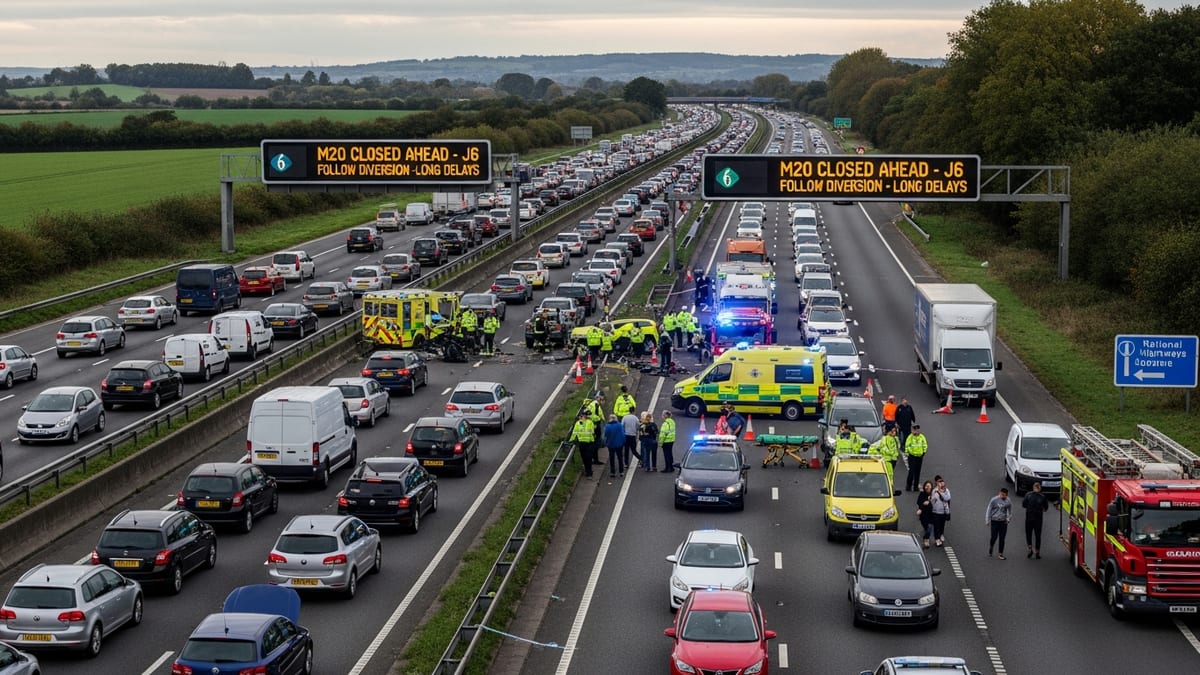
While airports absorb much of the attention, forecasts show that the majority of July 4 travelers will be on the road, with roughly eight out of ten holiday trips expected to be taken by car. That continuing preference is set to magnify congestion on approach routes into major metropolitan areas, especially in and around New York, Los Angeles and Miami. Traffic modeling used by regional transport agencies typically flags the afternoons and evenings of July 2 and July 3, as well as the return flow on July 5, as the most vulnerable periods for multi-hour delays.
In the Northeast, that pressure is likely to be felt on the New Jersey Turnpike, the Garden State Parkway, and key river crossings into Manhattan and the outer boroughs as city residents head toward coastal destinations and visitors converge on the region’s fireworks displays. Analysts expect traditional bottlenecks at bridge and tunnel approaches to worsen as some travelers opt to drive to secondary airports in New Jersey or Connecticut to avoid crowded New York terminals, further entangling commuter and leisure traffic.
On the West Coast, Los Angeles is preparing for heavy volumes on the I-5, I-10 and US-101 corridors as residents disperse between beach cities, desert resorts and theme park districts. Local transport reports suggest that weekend getaway traffic has already been running high this summer, raising concerns that merging airport traffic near LAX could feed into existing jams at freeway interchanges. In South Florida, Miami’s notorious congestion on I-95 and the Dolphin and Palmetto expressways is expected to intensify as visitors flock to coastal celebrations and cruise terminals amid a strong rebound in cruise travel.
Travelers Pivot to Cars in Search of Control and Flexibility
The emerging pattern for this Independence Day is not simply one of more travelers, but of travelers recalibrating how they move. Surveys conducted in the run-up to July 4 indicate that concerns over airline delays, lost baggage and rapid schedule changes remain top of mind, particularly among families traveling with children. Some respondents also point to the convenience of loading up a vehicle for regional trips and avoiding security lines entirely, even if driving times stretch well beyond normal.
Published analyses of 2026 booking data suggest that road trips remain resilient despite fuel prices that are higher than in previous summers. Industry observers note that travelers are trimming other discretionary spending to preserve vacation plans, often shortening stays rather than canceling outright. That mindset is visible in the way many households are choosing destinations within a day’s drive, effectively trading the unpredictability of peak-season flights for the slower certainty of the highway.
This pivot has implications beyond simple congestion. With so many travelers converging on the same interstates and urban arterials, planners warn of heightened risks from fatigue, distracted driving and breakdowns in extreme heat. Emergency services in large metro areas typically prepare surge staffing for peak holiday periods, but the combination of record volumes and longer travel windows can stretch those resources thin. Travelers are being urged through public advisories to build in extra time, check vehicles carefully and avoid attempting overnight drives immediately after work.
What the July 4 Crunch Signals for U.S. Tourism
For the tourism and hospitality sector, the coming Independence Day holiday offers both reassurance and warning. On one hand, record projections for overall traveler numbers confirm that Americans remain eager to travel and willing to absorb higher prices for lodging, car rentals and entertainment. Hotel outlooks for popular beach, lake and urban destinations point to strong occupancy across the nine-day holiday window, and major attractions in cities such as New York, Los Angeles and Miami are preparing for robust gate traffic.
On the other hand, the recurring strains on core transport infrastructure underline how delicate the travel ecosystem has become during peak periods. Airlines continue to refine schedules and add larger aircraft to busy routes, but staffing, maintenance and airspace constraints limit how quickly capacity can grow. Highway networks face their own structural challenges, from aging bridges to construction zones that cannot be fully cleared even during holiday rushes.
Analysts argue that the July 4 travel crunch is increasingly less about a single chaotic day and more about an extended season of elevated stress on systems designed for lower baselines. With federal aviation forecasts pointing to continued growth in passenger numbers through the next decade, and with car travel remaining the dominant mode for domestic holidays, similar convergence of airport disruption and highway gridlock is likely to become a recurring feature of the U.S. summer travel calendar.