


More news on this day
Hitachi’s Evero intercity trains operating on Britain’s West Coast Main Line have surpassed 8 million kilometers in service, a milestone that highlights how new bi-mode and electric rolling stock is reshaping both passenger experience and the carbon profile of one of the country’s busiest rail corridors.
Get the latest news straight to your inbox!
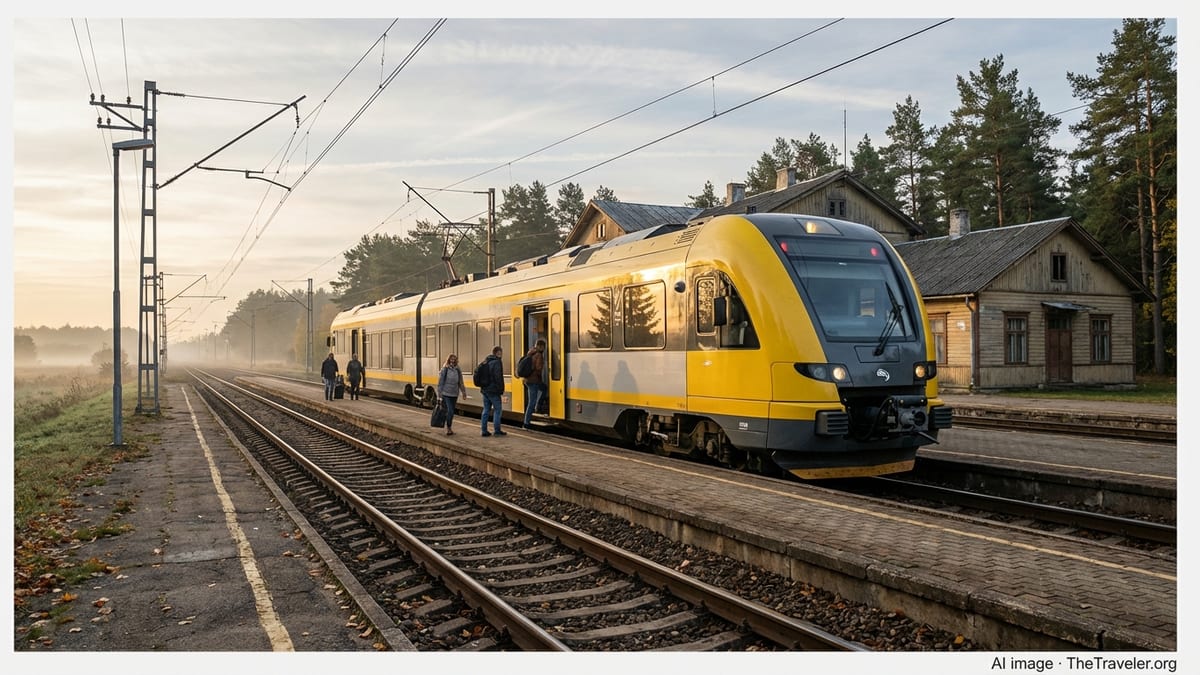
Milestone for a new generation of West Coast trains
Publicly available operational data indicates that Avanti West Coast’s fleet of Evero trains, built by Hitachi Rail, has now exceeded 8 million kilometers since entering regular passenger service. The figure, equivalent to around 5 million miles, reflects intensive use on the core intercity routes linking London with North Wales, Cheshire and the West Midlands.
The Evero brand covers two closely related train types based on Hitachi’s A-train family: the Class 805 bi-mode units, which can operate on both overhead electric power and diesel, and the Class 807 pure electric units. Together, the 23-strong fleet is gradually replacing older diesel-powered sets on key West Coast Main Line flows.
The milestone comes roughly two years after the first Evero services began carrying passengers and less than a year after the full bi-mode fleet was deployed along the North Wales Coast. Since then, timetable changes have steadily shifted more diagrammed work onto the new trains, allowing the mileage total to ramp up quickly.
Industry coverage notes that the trains were ordered in 2019 as part of a roughly 350 million pound investment package backed by rolling stock financier Rock Rail. The Evero fleet sits alongside the operator’s existing Pendolino tilting sets, which continue to work long-distance services to destinations such as Glasgow and Manchester.
Carbon savings on the London to North Wales corridor
Reports indicate that the Class 805 Evero units have already delivered a marked reduction in carbon emissions on the partially electrified route between London Euston and Holyhead. On this corridor, the new trainsets have replaced diesel-only Class 221 Voyager units that previously handled most services into North Wales.
Data published by Avanti West Coast shows that over a recent 12‑month period the Evero bi-mode fleet cut carbon dioxide emissions per vehicle‑kilometer by around two thirds compared with the Voyagers they displaced. The gains stem from spending a larger share of the journey under the overhead wires between London and Crewe, and from more efficient modern diesel engines on non-electrified sections west of Crewe.
The mileage threshold of 8 million kilometers therefore represents more than just an operational benchmark. It points to a growing absolute saving in emissions as diagramming increasingly favors the newer trains. Each additional kilometer run by an Evero unit instead of a legacy diesel set compounds the reduction in fuel use and tailpipe pollution along one of Britain’s most heavily used main lines.
These changes are aligned with wider United Kingdom transport policy, which identifies rail decarbonisation as a lower-cost and higher-impact measure than cutting road capacity. Bi-mode fleets such as the Class 805 are viewed as a transitional tool that delivers near-term savings while electrification schemes on complex mixed-traffic routes proceed in stages.
Passenger experience and capacity improvements
Beyond environmental performance, the Evero program is designed to address long-standing capacity and comfort issues on the West Coast Main Line. The new trains offer more seats than the Voyagers they supersede, with Avanti West Coast’s fact sheets pointing to a double‑digit percentage increase in seat numbers on some diagrams.
On board, the interiors reflect Hitachi’s now-familiar intercity layout, with a mix of airline-style and bay seating, power outlets at every seat and modern passenger information systems. Luggage space has been reconfigured compared with previous fleets, and the design incorporates improved accessibility features including dedicated wheelchair spaces and universally accessible toilets.
Passenger reaction captured in rail enthusiast forums and social media is mixed but generally notes quieter running and a smoother ride compared with older diesel stock. Some comments highlight firmer seat padding in standard class, a recurring theme across several contemporary British fleets, while others welcome brighter interiors and better alignment between tables, seats and windows.
The 807 electric-only sets, which operate on fully wired sections of the network such as London to Liverpool and Blackpool, complement the 805s and allow operators to tailor capacity and performance to the level of infrastructure available on each route.
Positioning within Hitachi’s wider A-train platform
The Evero family forms part of Hitachi’s broader AT300 platform, which has generated a significant installed base across the United Kingdom and several overseas markets. Variants of the same core design operate under brand names such as Azuma in eastern England, Nova on TransPennine Express and Aurora on East Midlands routes.
From a manufacturing perspective, the Evero vehicles combine bodyshells produced at Hitachi’s Kasado works in Japan with assembly and fit-out at the company’s Newton Aycliffe facility in County Durham. This split production model has been used across multiple A-train contracts, supporting a domestic supply chain while leveraging established Japanese fabrication lines.
The 805 units are configured as five-car bi-mode formations rated for up to 200 km/h, while the 807s are seven-car electric trains designed for the same maximum speed. Both sub-fleets use aluminium car bodies and modern traction packages engineered to provide relatively quick acceleration, which helps operators recover time on congested main lines.
In mileage terms, the 8 million kilometer mark for Evero adds to a much larger figure accumulated by the A-train family as a whole. Industry analyses suggest that Hitachi’s intercity fleets in Britain have collectively covered hundreds of millions of miles since their introduction, providing a substantial pool of operational experience to feed into future design refinements and midlife refurbishments.
Implications for future rolling stock and infrastructure plans
The performance of the Evero trains is likely to influence upcoming decisions on both rolling stock procurement and electrification priorities in the United Kingdom. Demonstrated emission reductions on part-electrified routes lend weight to the case for bi-mode or battery-augmented trains where conventional electrification is technically challenging or slow to deliver.
At the same time, the reliance on diesel traction over non-electrified sections underlines the longer-term advantages of extending wires further along strategic corridors. Engineers and planners have highlighted that each additional kilometer of overhead line between Crewe and Holyhead would allow more of the Evero mileage to be delivered using zero local-emission electric power rather than fossil fuel.
For Hitachi, the 8 million kilometer milestone provides a reference point in future tenders, illustrating how quickly a new intercity fleet can scale up to intensive daily use. For Avanti West Coast and its successors on the West Coast franchise, the data will feed into fleet planning models that balance maintenance intervals, spare ratios and diagram complexity against desired reliability and capacity outcomes.
More broadly, the experience gained with the Evero program is expected to inform the next wave of United Kingdom rolling stock orders, which are likely to place a premium on flexibility, emissions performance and compatibility with an evolving mix of fully electrified, partially wired and unelectrified routes.