


More news on this day
Japan’s plan to drive the Hokuriku Shinkansen south from Tsuruga to Osaka is entering a critical phase, as new cost estimates, route studies and local resistance collide over the project’s environmental footprint.
Get the latest news straight to your inbox!
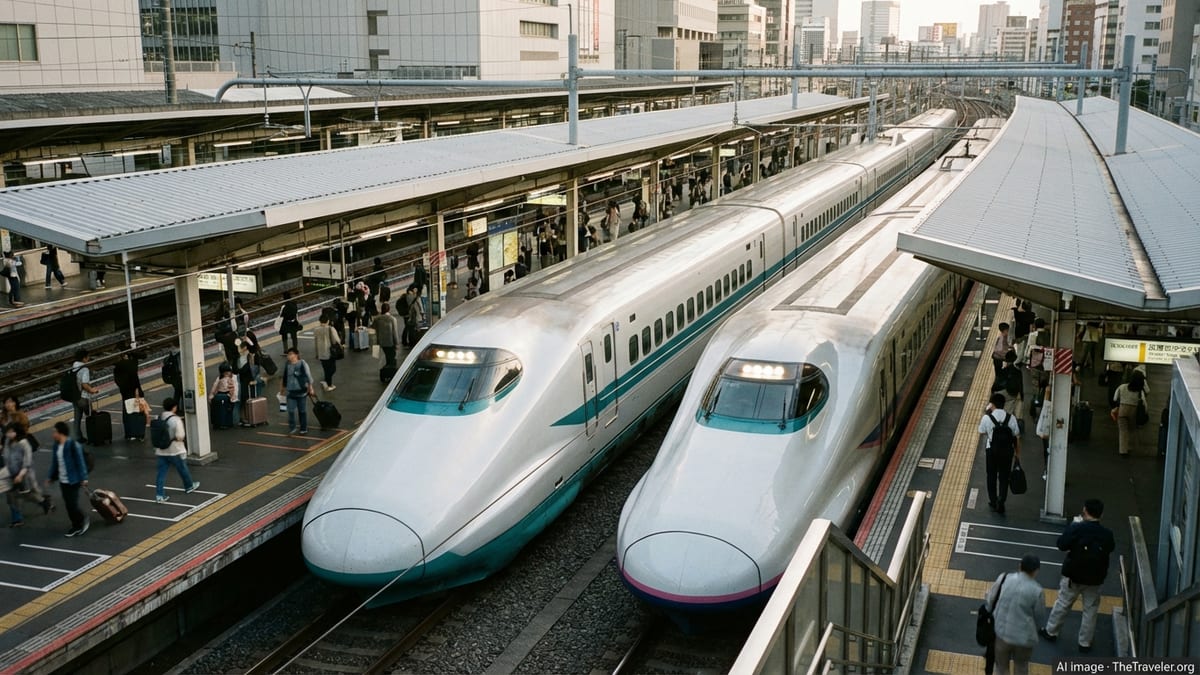
From regional lifeline to contested mega project
The Hokuriku Shinkansen already links Tokyo with the Sea of Japan coast, and since March 2024 its services have reached Tsuruga in Fukui Prefecture. The next stage, an extension through Kyoto Prefecture to Shin-Osaka, has long been promoted as the final piece that would knit the Hokuriku region into Japan’s main high speed rail grid and strengthen resilience when natural disasters disrupt coastal routes.
Publicly available planning documents describe the Tsuruga to Shin-Osaka section as a high priority national project intended to cut journey times between Osaka, Kyoto and cities such as Kanazawa and Toyama, while giving travelers an alternative to the busy Tokaido Shinkansen corridor. Local governments in Fukui and parts of Kansai have framed the line as a lifeline for regional tourism and business, especially after the 2024 opening drew more visitors to Hokuriku destinations.
Behind that vision, however, the project has grown significantly more complex. Studies referenced in recent research on the economic impact of the extension compare multiple route scenarios, weighing the promised gains in visitor numbers and productivity against construction costs and environmental risk. Debate over how, and even whether, the line should ultimately reach Osaka has intensified as those trade offs become clearer.
Obama Kyoto route under pressure as costs surge
The central government previously selected an “Obama Kyoto” option, sending the line south from Tsuruga via the coastal city of Obama before turning inland toward a new station in Kyoto and then on to Shin-Osaka. That choice sidelined a Maibara connection to the existing Tokaido Shinkansen, on the grounds that the Obama route would spread benefits more widely and offer fresh capacity into Kansai.
New figures released in June 2026 show how dramatically the project has swollen. Transport ministry estimates now put construction for the main candidate route at roughly 5.5 trillion to 5.8 trillion yen, significantly higher than both the initial 2.1 trillion yen projection and later revisions in 2024. Separate reporting on the cost of alternative alignments, including variations around Kyoto, indicates that even the cheaper options would still require several trillion yen in public and private investment.
Those numbers have sharpened scrutiny in Tokyo and Osaka over how to finance the extension. According to recent coverage, the ministry has already signaled that construction is unlikely to start in the originally targeted fiscal 2026 period, with ruling coalition lawmakers calling for a review of the schedule and the route. Discussions inside the governing parties now include fresh evaluations of multiple corridors between Tsuruga and Shin-Osaka that would balance cost, engineering feasibility and environmental impact.
Kyoto, Lake Biwa and fears over water and landscape
Environmental concern is increasingly centered on Kyoto Prefecture and the Lake Biwa watershed. Lake Biwa, northeast of Kyoto, is Japan’s largest freshwater lake and the primary source of drinking water for millions of people in Kyoto and Osaka. Civil society groups and local commentators warn that large scale tunneling and viaduct work in the surrounding mountains could alter groundwater flows, disrupt ecosystems and increase the risk of sediment inflow into rivers feeding the lake.
Local media in Kansai have reported that the government’s preferred route would require long tunnels under or near key river basins connected to Lake Biwa, prompting calls for more detailed hydrological studies. Critics argue that environmental impact assessments must fully examine worst case scenarios such as construction accidents, spoil disposal and long term changes to springs and wetlands that attract both residents and international visitors.
Kyoto itself faces its own risks. While improved rail access could ease congestion and help shift tourists from highways to rail, conservation advocates fear that new high speed infrastructure and a potential new Shinkansen station in the city’s northern or eastern districts would add development pressure to historic neighborhoods and fragile hillsides. Some local opinion pieces highlight the contradiction between promoting Kyoto as a model of sustainable heritage tourism and approving a project perceived as threatening its natural setting.
Travel benefits weighed against climate and community impacts
Supporters of the Hokuriku Shinkansen extension argue that high speed rail offers a relatively low carbon alternative to domestic air travel and long distance car journeys. Research on Japan’s rail system notes that Shinkansen services already account for a sizable share of medium range trips between Tokyo and western Japan, with significantly lower emissions per passenger kilometer than aircraft.
For Hokuriku, closer ties to Osaka and Kyoto could reshape travel patterns. Studies modeling demand suggest that a completed line to Shin-Osaka would divert more travelers from expressways and regional airports, expand short break tourism from Kansai into coastal towns, and improve access to Kansai Airport via Osaka. Rail operators in western Japan are already positioning new trains and marketing campaigns around the 2024 extension to Tsuruga, anticipating that the eventual Osaka link would complete a powerful tourism corridor for domestic and inbound visitors.
Environmental groups counter that the emissions and ecological damage associated with a decade or more of large scale construction, combined with induced travel demand, could offset many of those benefits. They point to Japan’s climate commitments and argue that truly sustainable mobility investments should prioritize reinforcing and electrifying existing local lines, buses and cycling networks rather than building entirely new high speed corridors through sensitive terrain.
Uncertain timeline as route review continues
The combination of rising costs, unresolved environmental questions and political debate over routing has clouded the project’s schedule. Recent reporting indicates that national planners no longer expect full scale works between Tsuruga and Shin-Osaka to begin in the mid 2020s, a delay that pushes projected opening dates well beyond the early 2040s window once mentioned in policy discussions.
Planning bodies continue to publish technical material and explanatory videos on the proposed section, underlining that preliminary surveys and design work are still advancing. However, calls from within the ruling coalition for a route reconsideration, plus persistent opposition from some Kyoto based groups, suggest that the alignment adopted in 2016 is no longer politically assured.
For travelers and the tourism industry in Hokuriku and Kansai, that means an extended period of uncertainty. The 2024 extension to Tsuruga has already altered domestic itineraries, making coastal cities more accessible from Tokyo, but the dream of a seamless loop from the capital through Hokuriku to Kyoto and Osaka remains decades away. Whether that loop ultimately threads its way through the Lake Biwa basin as originally planned, or follows a different path shaped by environmental and financial realities, will help define how sustainable Japan’s high speed rail ambitions really are.