


More news on this day
New analysis of recent airline performance data highlights a clutch of popular holiday airports where travelers are significantly more likely to face late departures and missed connections, raising fresh questions about how to plan resilient itineraries during peak season.
Get the latest news straight to your inbox!
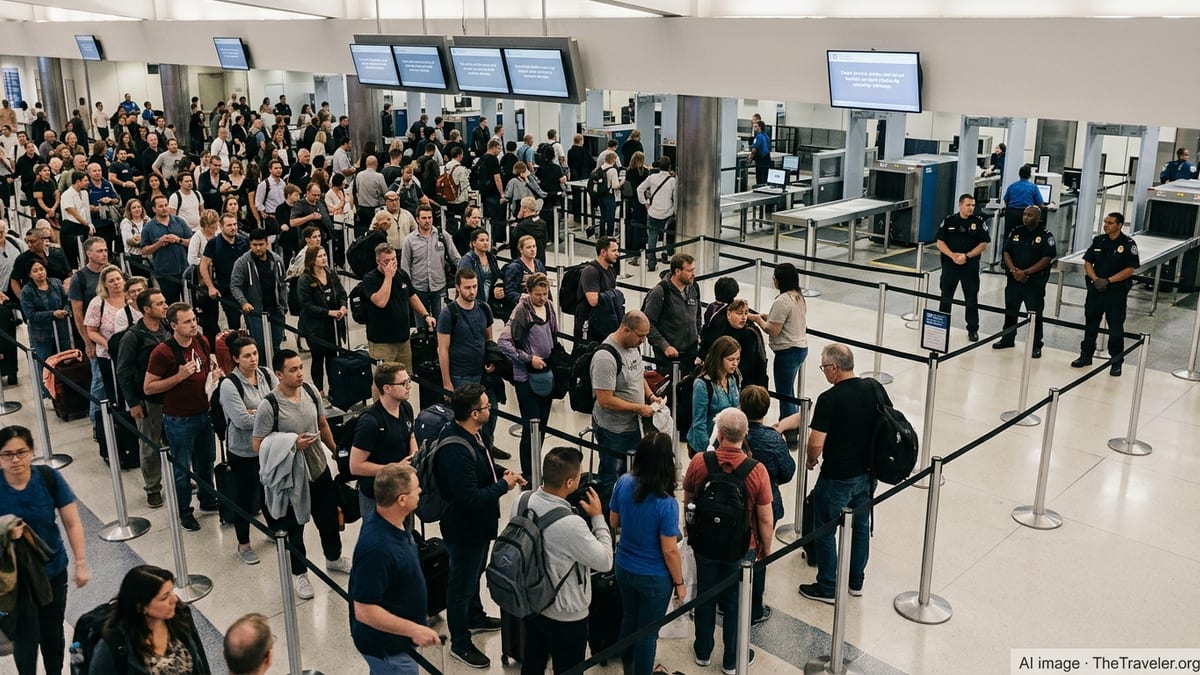
Newark and Chicago top U.S. disruption rankings
Recent rankings of major U.S. hubs show that Chicago O’Hare and Newark Liberty have emerged as two of the most delay-prone big airports, a concern for travelers using them as gateways to summer holidays. One industry analysis of 2025 operations found that O’Hare recorded one of the highest shares of delayed flights among large U.S. airports, while Newark posted the greatest overall disruption when delays and cancellations were combined.
Consumer-focused coverage based on Department of Transportation statistics indicates that only around seven in ten flights at Newark arrived on time last year, compared with a national figure in the mid‑70 percent range. Travel outlets report that nearly three in ten passengers passing through the New Jersey hub in 2025 experienced some form of disruption, whether a late arrival, missed connection or cancellation.
O’Hare’s performance is equally closely watched because of its role as a primary connecting point for domestic and international trips. When a high number of departures leave late from Chicago, knock‑on effects can ripple across popular leisure routes to Florida, the West Coast and Europe, turning a single thunderstorm or ground delay program into widespread schedule chaos for holidaymakers.
For travelers, the implication is simple. When booking key family or long‑haul trips that rely on tight connections, itineraries that transit through Newark or O’Hare warrant extra buffer time or alternative routings if a similarly priced nonstop option is available.
Sun‑belt holiday hubs struggle with summer storms
Warm‑weather holiday gateways in Florida and the broader U.S. Sun Belt are also featuring prominently in current delay tables. Aggregated tracking data up to mid‑2026 places Orlando and Fort Lauderdale among the large airports with some of the highest proportions of delayed departures, with several metrics putting late flights in the mid‑20 percent range or higher.
Analysts point to a combination of factors: intense afternoon thunderstorms in summer, heavy reliance on high‑frequency leisure routes, and tight aircraft and crew scheduling by low‑cost and ultra‑low‑cost carriers. Publicly available federal transportation reports have previously highlighted Orlando and Fort Lauderdale as having some of the lowest on‑time arrival percentages among the top U.S. airports.
Weather specialists note that the typical summer pattern of humid air and rapidly developing storms across Florida can quickly trigger ground stops, ramp closures and air traffic flow restrictions. When that happens, departure queues build, and a late‑afternoon bank of flights to beach resorts or cruise ports can easily run an hour or more behind schedule, forcing missed hotel check‑ins or boarding cut‑offs for connecting cruises.
Travelers headed to these hubs during peak holiday periods may want to favor early‑morning departures, when thunderstorm risk and cumulative delays are often lower, and to build in additional time before any onward connections that cannot be missed.
European vacation routes hit by air traffic control delays
In Europe, recent reporting from aviation bodies shows that systemic air traffic control constraints have become a major source of delays at popular holiday airports. Industry data indicates that average delays attributed to air navigation service providers more than doubled over the past decade, with staffing and capacity shortfalls accounting for the vast majority of en‑route and flow‑management hold‑ups.
European network performance summaries for 2024 and 2025 show that peak summer months brought notable increases in weather‑related and air traffic control delays, especially on routes into Mediterranean leisure destinations. Popular coastal airports serving islands and resort regions experienced seasonal bottlenecks when thunderstorm activity or limited runway capacity forced regulators to meter departures and arrivals through slot controls.
Airport punctuality reports for 2024 suggest that, across a panel of more than 30 major European airports, just over 70 percent of flights arrived within 15 minutes of schedule for the full year, with departure performance lower still. While the statistics vary by city, this means that almost one in three holiday flights into or out of many busy hubs arrived late to some degree.
Holidaymakers connecting through Europe can reduce their exposure by avoiding very tight minimum connection times, especially on itineraries that combine busy hubs with small island or regional airports. Flying a day earlier than strictly necessary for cruise departures or resort package check‑ins can also provide a cushion when a flow‑control delay strands passengers at their intermediate hub.
Summer weather and knock‑on delays drive the pattern
Across both the United States and Europe, a consistent theme in the latest datasets is the role of summer weather and reactionary delays in turning minor disruptions into holiday‑ruining holdups. Network statistics from European performance monitors show that reactionary delay, where one late flight causes the next rotation to depart late, now accounts for a large share of total minutes lost.
In practical terms, this means that a thunderstorm that slows arrivals into a major hub in the afternoon can continue to ripple through the system for hours or even into the next day. Analysis of U.S. delay patterns in 2025 similarly found that July was the worst month for disruptions, with widespread thunderstorms across the East Coast and central states driving an elevated rate of late and canceled flights.
Even airports not normally associated with poor punctuality can see delay spikes when infrastructure or operational constraints collide with busy schedules. Recent local reporting from San Francisco, for example, highlighted that average departure delays temporarily quadrupled in spring 2026 during runway construction and federal restrictions on certain high‑density landing patterns, even though the airport is not typically among the very worst for annual on‑time performance.
These patterns suggest that no single airport can guarantee a smooth trip. Instead, travelers benefit from understanding when and why delays are most likely at their chosen gateway and planning accordingly with timing, routing and contingency arrangements.
How travelers can protect holiday plans
Experts analyzing delay data emphasize that travelers are not powerless, even when flying through notoriously congested hubs. One of the most effective strategies is to choose early‑morning departures whenever possible. At that point in the day, knock‑on delays from earlier flights have not yet accumulated, and convection‑driven thunderstorms are typically less active, particularly in regions like Florida.
Booking nonstop flights instead of connections, even when slightly more expensive, can sharply reduce the odds of severe disruption for critical holiday legs. Where a connection is unavoidable, itineraries should allow at least 90 minutes at delay‑prone hubs and longer for international transfers requiring passport control or terminal changes. Avoiding last departures of the day on key routes can also prevent overnight stranding when earlier delays cascade.
Frequent‑flier and consumer advocates recommend making full use of airline and airport technology. Official airline apps and text alerts can provide early warning of creeping delays, offer self‑service rebooking, and sometimes allow free switches to earlier flights when weather is expected to deteriorate. Monitoring the incoming aircraft on tracking platforms can also give clues about potential knock‑on delays long before they are announced at the gate.
Finally, robust travel insurance and flexible booking terms are increasingly important for peak‑season trips that involve complex or high‑value elements such as cruises, safari packages or once‑in‑a‑lifetime tours. Policies that cover missed connections, additional accommodation and alternative transport can turn a severe delay at Newark, Orlando or a busy Mediterranean airport from a financial crisis into a manageable detour, preserving the core of the holiday even when the schedule falls apart.