


More news on this day
Hong Kong Air Cargo has expanded its footprint in India with a dedicated freighter service to Mumbai, a move that logistics analysts say could significantly strengthen air freight connectivity between South Asia and global manufacturing hubs across Asia.
Get the latest news straight to your inbox!
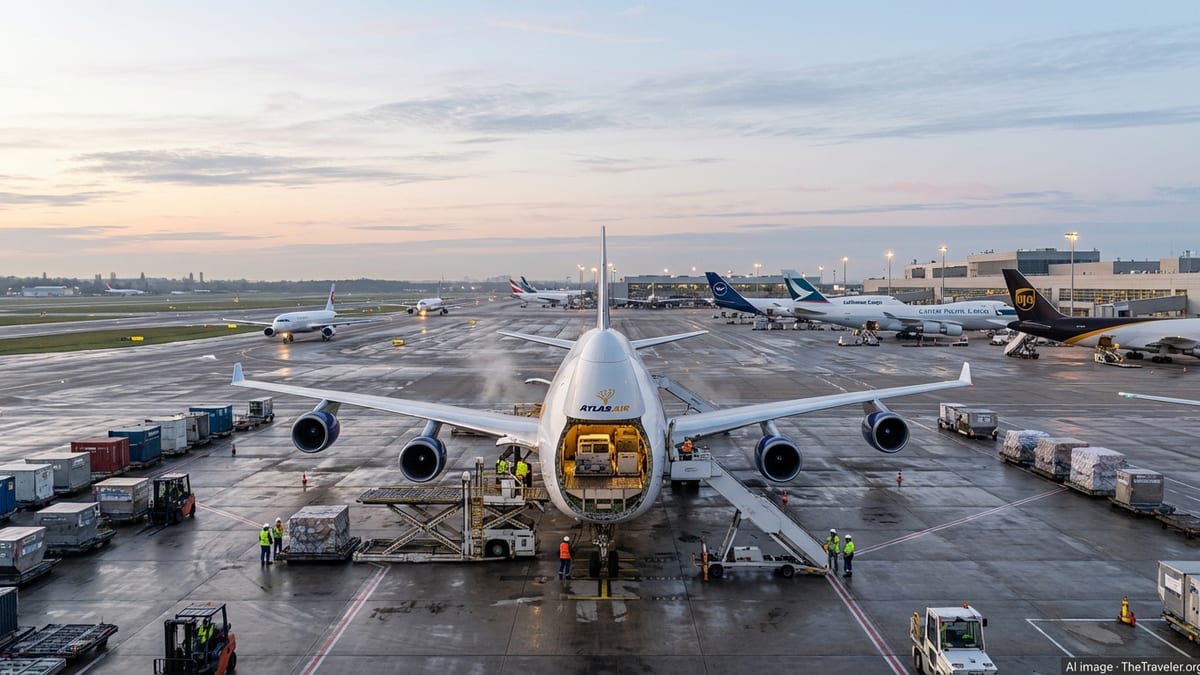
New Mumbai Freighter Service Targets High-Growth Trade Lane
The new Hong Kong–Mumbai service positions Hong Kong Air Cargo to capture rising volumes on one of Asia’s busiest trade corridors. Publicly available information on the route indicates that the airline is deploying widebody freighter capacity capable of handling dozens of tonnes of cargo per flight, linking Hong Kong International Airport with Chhatrapati Shivaji Maharaj International Airport in India’s financial capital.
The launch comes as trade between India and East Asia continues to deepen across sectors such as electronics, automotive components, engineering goods and textiles. Increased freighter capacity on this lane is expected to provide shippers with additional options beyond passenger bellyhold space, which can fluctuate with seasonal travel demand.
While Hong Kong has long served as a major consolidation hub for goods originating in mainland China and Southeast Asia, Mumbai has emerged as a key gateway for western and central India. The direct link between the two cities is viewed by industry observers as a way to shorten transit times, reduce the need for intermediate stops and improve schedule reliability for time-sensitive shipments.
Market watchers note that the move also supports Hong Kong’s broader ambition to reinforce its status as a leading cargo hub, even as competitive pressure grows from other airports in the region. By adding India-focused capacity, Hong Kong Air Cargo is aligning itself with trade flows that are forecast to grow faster than many traditional transpacific and Europe-bound lanes.
Strengthening India’s Position in Global Logistics Networks
The new service into Mumbai is being introduced at a time when India is investing heavily in logistics infrastructure and seeking to position itself as a global manufacturing and distribution base. Policy initiatives promoting multimodal transport, along with airport and warehousing upgrades, have contributed to increased throughput across major gateways, including Mumbai.
Industry reports highlight that Indian airports have seen robust year-on-year growth in cargo volumes, supported by sectors such as pharmaceuticals, engineering goods and fast-moving consumer products. Additional direct freighter connections to Hong Kong are expected to support these segments by improving speed to market for exports headed toward North Asia and onward global destinations.
For imports into India, the route offers improved access to electronics, machinery, components and high-value consumer goods consolidated in Hong Kong from production centers across southern China and Southeast Asia. Shorter lead times and more predictable schedules are especially important for firms operating on just-in-time models or managing complex regional supply chains.
Analysts also point out that the Hong Kong–Mumbai link could bolster India’s role in regional distribution strategies, enabling multinationals to treat India not only as an end market but also as a re-distribution hub for South Asia, the Middle East and parts of Africa, using Mumbai’s connectivity to secondary Indian cities and regional gateways.
Implications for E-Commerce, Pharma and High-Value Cargo
E-commerce and express shipments are expected to be among the main beneficiaries of the new capacity. With Indian online retail continuing to expand rapidly, cross-border e-commerce flows from East Asia to India are becoming more substantial, requiring reliable, frequent and trackable air freight services.
Dedicated freighter operations typically offer greater flexibility in handling volumetric and irregular cargo associated with e-commerce compared with passenger aircraft bellies. The ability to optimize loading for parcels, fashion, electronics and other high-value online orders can translate into better yields for carriers and more consistent delivery times for platforms and consumers.
Pharmaceuticals and healthcare products are another area where the Hong Kong–Mumbai connection is expected to add value. Mumbai already serves as a major gateway for India’s pharma exports, many of which require stringent temperature control and rapid transit. By linking into Hong Kong’s established cold-chain facilities and regional distribution capabilities, the new service can facilitate smoother door-to-door solutions for temperature-sensitive cargo.
High-tech and automotive components, which rely on just-in-time supply to factories across India, may also benefit from the additional redundancy the new route provides. In periods of capacity constraints or disruptions on other lanes, shippers will have an additional option for rerouting critical components through Hong Kong without significant detours.
Competitive Dynamics Across Asian Cargo Hubs
The Mumbai service underlines the intensifying competition among Asian cargo hubs to secure a larger share of India-related traffic. Airports in the Middle East, Southeast Asia and mainland China have all invested in expanding their role as transshipment points for goods moving to and from the Indian subcontinent.
Hong Kong’s advantage traditionally lies in its dense network of connections to manufacturing clusters in the Pearl River Delta and beyond, combined with an experienced logistics community and advanced handling infrastructure. By adding more India-focused services, Hong Kong Air Cargo contributes to reinforcing that position, even as some long-haul shipping alliances in the maritime sector reconfigure their use of Hong Kong for container traffic.
Observers note that the air cargo market remains highly sensitive to macroeconomic trends, currency movements and fuel prices. Direct freighter services such as the Hong Kong–Mumbai route give shippers and forwarders an additional lever to manage these variables, particularly when they need to balance cost and speed across multiple routing options.
As airlines across Asia recalibrate their networks in response to shifting demand, the presence of dedicated capacity between Hong Kong and Mumbai may also influence how other carriers plan their own India strategies, potentially prompting additional services, code-sharing arrangements or block-space agreements centered on the India–Greater China corridor.
Outlook for Capacity, Connectivity and Supply Chain Resilience
Looking ahead, logistics specialists expect the new Mumbai operation to play a growing role in how companies design resilient supply chains between India and East Asia. With global manufacturers increasingly adopting a “China plus one” or “Asia plus one” approach, India is emerging as an alternative production base, and reliable air connectivity is central to that shift.
Should demand on the lane continue to strengthen, additional frequencies or capacity upgrades may follow, particularly during peak seasons such as year-end holidays and major retail sale periods. The service also has potential to integrate more tightly with hinterland trucking and regional air links, enabling smoother movement of cargo from secondary Indian cities into Mumbai for onward uplift to Hong Kong.
For Indian exporters, improved access to Hong Kong’s extensive international network could translate into more competitive transit times to North America, Europe and other Asian markets. For Hong Kong-based consolidators and forwarders, Mumbai offers deeper reach into one of the world’s fastest-growing consumer and manufacturing markets.
In combination, these factors suggest that Hong Kong Air Cargo’s decision to place dedicated freighter capacity on the Hong Kong–Mumbai corridor is likely to resonate beyond a single route, contributing incrementally to reshaping how goods move between India and the wider global economy.