


Hong Kong International Airport is one of Asia’s major hubs, but its expanding terminal setup can confuse even frequent flyers. With Terminal 1, a newly redeveloped Terminal 2, a midfield concourse and the dedicated SkyPier ferry facility all in play, understanding how the pieces fit together will save you time, stress and unnecessary walking. This guide explains how Hong Kong International Airport’s terminals work in 2026, using real-world examples so you know exactly what to expect when you land or depart.
Get the latest updates straight to your inbox!
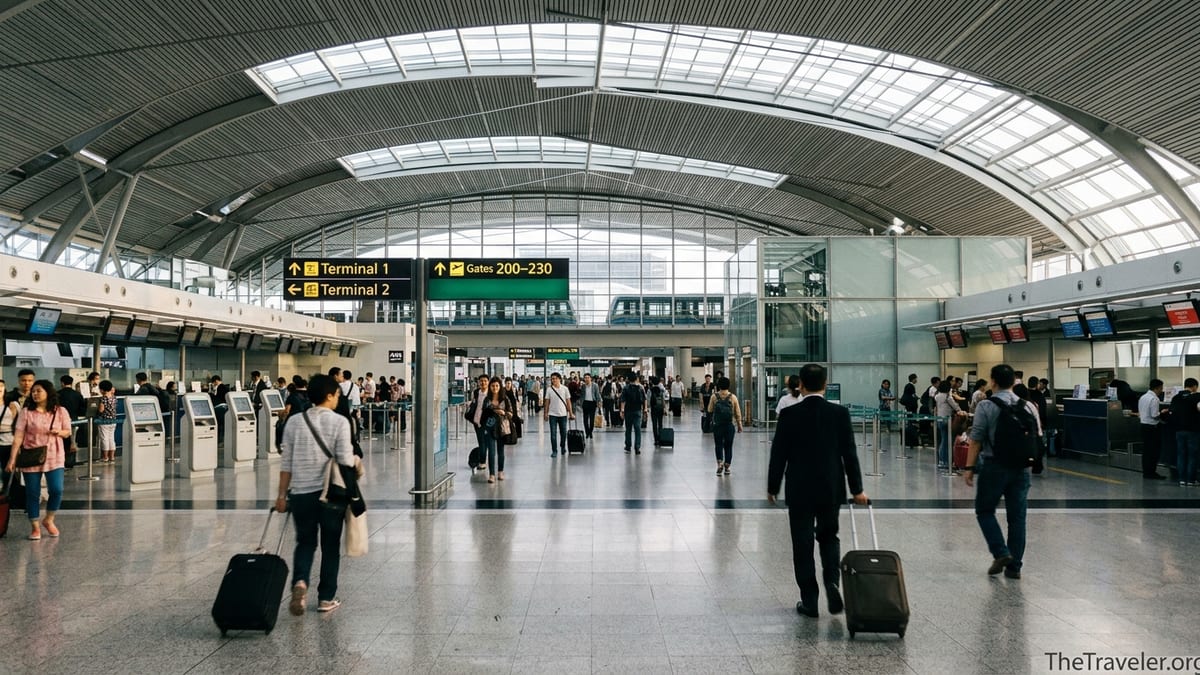
The Big Picture: How Hong Kong Airport Is Laid Out
Hong Kong International Airport sits on an artificial island at Chek Lap Kok, and its passenger complex has grown in stages. The heart of the airport is Terminal 1, a huge Y-shaped building that handles the majority of departing and arriving flights. It stretches out into two main wings known informally as the East Hall and West Hall, with boarding gates running into the 60s and 70s at the far ends. Many airlines, including Cathay Pacific, Emirates and British Airways, still check in and depart from Terminal 1, so this is where most first-time visitors will spend their time.
Next to Terminal 1 is the redeveloped Terminal 2, located to the east across the Airport Express railway tracks and ground transport hub. For years, the original Terminal 2 functioned only as a landside check in hall, but in 2024 and 2025 it began reopening in phases as part of the airport’s three-runway expansion. Today, it offers full check in facilities, security and immigration, with new airside concourses progressively coming online. Practically, this means some airlines now check in and process passengers entirely in Terminal 2, even though you may still board from gates physically connected to the broader Terminal 1 and midfield complex.
Further out between the runways, linked to the main terminals by an automated people mover, is the Midfield Concourse. When you see a gate number in the 200 series, such as Gate 211 for a Cathay Pacific flight to Singapore, you will be boarding at this separate building. The Midfield Concourse has its own duty free, food options and even small outdoor viewing terraces, but you must factor in the time it takes to ride the train there from the main terminal.
On the seaward side is SkyPier, a dedicated ferry terminal built into the airport for connections to nearby ports in mainland China and Macao. SkyPier is strictly for transiting passengers, not people entering Hong Kong. A traveler flying in from London to Hong Kong, for example, can transfer directly to a ferry to Shenzhen or Macao without formally entering Hong Kong immigration, using a secure corridor and people mover that links the main terminals to the pier.
Terminal 1: Main Hub, Gates and What They Mean
Terminal 1 is still the workhorse of Hong Kong International Airport. Its departure level is a vast hall of check in islands labeled A to Z, with airlines grouped by alliance or region. Cathay Pacific and other oneworld carriers typically occupy central aisles, while carriers such as Emirates or Qatar Airways use other dedicated banks. Arriving passengers funnel into a large baggage reclaim and customs area on the lower levels, then emerge into arrivals halls where taxis, buses and the Airport Express trains are clearly signposted.
The gate numbering in Terminal 1 is not intuitive at first glance, but once you understand the logic it becomes easier to navigate. Lower numbers like 1 to 24 sit closer to the central security checkpoint and immigration area. Higher numbers such as 40 to 50 and 60 to 71 are farther out along the concourse arms of the Y-shaped building. In practice, a short-haul Cathay Pacific hop to Taipei might leave from Gate 17, while a long-haul British Airways flight to London could use a higher-numbered gate at the end of the West Hall, adding 10 to 15 minutes of walking time after security.
Boarding gates in the 500 range, and a few in the high 200s, are “bus gates.” When a flight is assigned to Gate 520, passengers line up at a conventional gate lounge, then board apron buses that drive out to an aircraft parked on a remote stand between taxiways. This is common for peak-hour regional flights on airlines such as Hong Kong Express or low-cost carriers from Southeast Asia. From a time-planning perspective, assume boarding will start earlier and allow extra minutes after the gate appears on screens, since bus transfers add a layer of logistics.
Terminal 1 has some of the airport’s best-known amenities. The Plaza Premium lounges near Gates 1 and in the West Hall serve many credit card and pay-per-use customers, while Cathay Pacific operates multiple lounges that range from business to first class. On the concourse itself, recognizable brands such as Starbucks, Pacific Coffee and chain restaurants like Tsui Wah and Pret A Manger are scattered between gates. It is entirely realistic to pick up a coffee and a boxed dim sum set for around 80 to 120 Hong Kong dollars before walking to a flight at Gate 65, as many business travelers do on morning departures.
Terminal 2: New Check In Hall and Emerging Airside Facilities
Terminal 2 has undergone a significant transformation as part of the three-runway system project. Before the pandemic it was largely a landside facility with check in counters for low-cost airlines and an entertainment mall. Now it is reopening in phases as a full-service terminal. Passengers on certain carriers, including selected Hong Kong Airlines and low-cost regional operators, are being moved here for check in, security and immigration. If your email confirmation or airline app states “Terminal 2” next to the departure information, you should go directly to this building on arrival at the airport train or drop-off area.
At present, Terminal 2’s airside gates are gradually coming into service, while many flights still board from concourses physically connected to the Terminal 1 complex. As a result, a traveler might check in for a Hong Kong Airlines flight to Tokyo at Terminal 2, pass through its dedicated security and immigration, then follow signs to the automated people mover platform for a short train ride to the Midfield Concourse gates around 201 to 230. The process feels seamless once you understand it, but it can surprise those who expect traditional “one building equals one set of gates” arrangements.
Facilities inside the new Terminal 2 are designed to mirror or even improve on Terminal 1. You will find spacious check in areas, self-service kiosks for airlines that support online or mobile check in, and bag drop belts for passengers who have already obtained mobile boarding passes. Retail and dining are still filling out, but expect familiar quick-service options such as local noodle chains and international fast food alongside duty free cosmetics and electronics. For example, family travelers catching an evening flight to Bangkok might choose to eat at a casual cha chaan teng style cafe on the departures level, paying roughly 70 to 100 Hong Kong dollars per set meal, before proceeding through security.
Because Terminal 2 is relatively new, signage is generally crisp and multilingual, with English, Chinese and often Korean or Japanese wayfinding panels. Look closely at the digital displays above check in aisles, which clearly state not only airline names but also whether the counters are open for early bag drop. Many long-haul passengers arriving from mainland China by bus or coach service into the adjacent transport hub now choose Terminal 2 precisely because its landside layout makes it easier to move between bus bays, the Airport Express and airline counters without crossing the full width of the original Terminal 1 complex.
Midfield Concourse and SkyPier: Remote Gates and Ferry Transfers
One of the more distinctive features of Hong Kong International Airport is the Midfield Concourse, located between the main runways and served by the airport’s Automated People Mover. Gates in the 200 series, like 209 or 218, indicate that your flight will depart from this separate building. It is modern, glassy and bright, with its own central atrium, duty free shops and mid-sized food court. On a typical afternoon, it is common to see several widebody aircraft from airlines such as Cathay Pacific, Qatar Airways and Air Canada parked nose-to-tail outside the windows while passengers sit at cafe tables waiting for boarding calls.
Midfield Concourse is especially significant for airlines and routes that require efficient boarding for large aircraft. For instance, a Cathay Pacific Airbus A350 flight to Sydney might operate from a midfield gate to free more central berths closer to immigration for short-haul regional traffic. If your itinerary shows a 200-series gate, factor in at least 15 minutes from the main security zone to reach the gate, which includes a ride on the driverless train and a short walk up escalators or lifts. During peak times such as Friday evenings or pre-holiday rushes around Lunar New Year, the trains can be crowded but they run every few minutes.
SkyPier, by contrast, is not a conventional passenger terminal but a dedicated ferry transfer facility strictly inside the security perimeter. It serves routes to ports such as Macao Taipa, Shenzhen Shekou, Zhuhai and other Pearl River Delta cities. A traveler flying from Los Angeles to Hong Kong on Cathay Pacific, then continuing to Macao, can purchase a through-ticket that includes a same-day ferry from SkyPier. After landing, they follow special “Mainland / Macao ferries” signs instead of “Arrivals to Hong Kong,” proceed through a transfer security check and then ride the people mover to the pier. Their checked baggage is automatically routed to the ferry operator, so they do not technically enter Hong Kong at all.
This arrangement is particularly attractive for business travelers who want to avoid immigration queues and long highway transfers. For example, a corporate traveler heading to a conference in Shenzhen’s Nanshan district might land in Hong Kong mid-morning, board an early afternoon ferry to Shekou from SkyPier, and be at their hotel in under three hours door to door. Ticket prices vary by route and operator, but economy-class crossings often fall in the range of 300 to 400 Hong Kong dollars, competitive with the combined cost of coach services and border formalities through land checkpoints.
Getting Between Terminals: Automated People Mover and Walking Times
Given the scale of Hong Kong International Airport, the way you move between terminals and concourses matters. The primary connector is the Automated People Mover, a driverless train system that runs underneath the main buildings and out to the Midfield Concourse and SkyPier. Trains typically operate from early morning until just after midnight, with frequencies of a few minutes during peak periods. For most passengers, the APM ride is free and integrated into the secure area, so you simply follow overhead signs to the appropriate platform after clearing security.
As an example, a passenger who checks in at Terminal 2 for a late-night flight to Kuala Lumpur may pass through Terminal 2 security and immigration, then board the APM to reach their gate at the far side of Terminal 1’s West Hall. The total time from clearing immigration to sitting at the gate area might be 12 to 18 minutes depending on walking speed and crowd levels. Similarly, an economy passenger landing at a 200-series gate in the Midfield Concourse and connecting to a European flight at a 40-series gate in Terminal 1 could expect a 20- to 25-minute journey, including following transfer signs, riding the train and walking through the main concourse.
Walking alone can cover many journeys without using the train, particularly within Terminal 1 itself. The central security zone sits roughly at the base of the Y, so reaching mid-range gates like 23 or 45 might involve a 5- to 10-minute walk along moving sidewalks. The airport’s design favors long, straight lines of sight, so you can usually see well ahead to confirm you are moving in the right direction. Travelers with reduced mobility or heavy carry-on bags can request wheelchair assistance when booking or at airline counters, and the airport provides lifts and step-free routes to gates and transfer points.
For landside connections between Terminal 1 and Terminal 2 before security, passengers can walk through a series of indoor corridors and overbridges that cross above the ground transport and Airport Express tracks. This walk is manageable with luggage in tow and typically takes around 10 to 15 minutes at an unhurried pace. An example scenario would be a family who arrives by Airport Express at the main station under Terminal 1, realizes belatedly that their low-cost carrier now checks in at Terminal 2, and then follows overhead signs to the adjacent building, rolling suitcases along tiled walkways and escalators.
Check In, Security and Boarding: What To Expect in Practice
Check in times and procedures at Hong Kong International Airport are comparable to other major Asian hubs, but the split between terminals adds a small layer of planning. Most long-haul airlines recommend that economy passengers arrive at least three hours before scheduled departure, with two hours usually adequate for short-haul regional flights. For example, Cathay Pacific’s morning flight to Tokyo may open check in counters around 6:00 a.m. for a 9:00 a.m. departure, while a budget carrier flying to Manila from Terminal 2 could begin accepting bags about two and a half hours beforehand.
Many airlines and the airport itself encourage self-service options. Throughout Terminal 1 and the new Terminal 2, you will find self check in kiosks where you can scan a passport and retrieve a boarding pass in under a minute. After tagging and dropping checked baggage at dedicated self bag drop belts, passengers proceed directly to security. It is common to see business travelers with carry-on-only luggage bypassing traditional counters entirely, relying on mobile boarding passes stored in airline apps like Cathay Pacific, Singapore Airlines or Emirates.
Security and immigration procedures are centralized in each terminal. Departing passengers clear a security check before reaching passport control, with separate e-channel lines for eligible Hong Kong residents and frequent visitors. During mid-morning bank times, queues can stretch to 15 to 25 minutes, while late-night or mid-afternoon departures often pass through in under 10 minutes. Once airside, passengers should monitor flight information displays carefully. Gate assignments sometimes change, particularly within the same wing of Terminal 1 or between adjacent 500-series bus gates, and screens near cafes and duty free shops update in real time.
Boarding usually begins around 40 minutes before departure for widebody long-haul flights and closer to 30 minutes for short-haul routes. Premium cabins and elite status holders often receive separate boarding lanes. At a typical evening departure for an Emirates flight to Dubai, for example, you might see Business Class passengers invited first at Gate 43, followed by economy zones called by row numbers. When boarding from Midfield Concourse gates, additional checks for travel documents may take place at the top of the jet bridge, especially on routes to North America or Europe, so travelers should keep passports and any required visas easily accessible.
Connections, Transfers and Overnight Stays
Hong Kong International Airport is designed for smooth international and regional connections, but the mix of terminals and concourses means transfer passengers should pay attention to signage. Most through-tickets between international airlines are set up as airside transfers, meaning you remain within the secure area after landing. Large yellow and black “Transfer” signs appear near the head of each arrival corridor, guiding you away from regular immigration lines and toward dedicated security screening points before you rejoin the departures level.
An example itinerary might involve arriving from Paris on a Cathay Pacific flight at a high gate in Terminal 1, then connecting to a Cathay Dragon-marketed service to Chiang Mai from a 200-series midfield gate. In that case, the passenger would follow transfer signs, pass a quick security scan, then take the APM to the Midfield Concourse and walk to the new gate, all without clearing Hong Kong immigration. Airlines generally recommend at least 60 minutes as a legal minimum connection time, but experienced travelers often prefer 90 minutes or more, especially when changing between different concourse zones.
For passengers who need to overnight, the landside layout between Terminals 1 and 2 offers convenient options. The Regal Airport Hotel is connected to Terminal 1 by an enclosed walkway, allowing travelers with early morning departures to sleep only a few minutes’ walk from check in. Budget-conscious visitors often stay in nearby Tung Chung, one stop away on the Airport Express and also reachable by local buses. In practice, a solo traveler arriving late on a regional flight from Bangkok and departing the next afternoon for Vancouver could clear immigration, take the Airport Express one stop to Tung Chung, stay at a midrange hotel for significantly less than the on-site property, and return to either Terminal 1 or 2 the next day in under 15 minutes.
Long layover passengers who remain airside can make use of shower facilities in pay-per-use lounges, as well as rest zones with reclining chairs scattered around quieter gates. At night, you will often see transit passengers sleeping on padded benches near underused 60-series gates, with staff generally tolerant as long as walkways remain clear. For those with at least six to eight hours, the Airport Express into Central Hong Kong and back is practical, especially during daylight hours. A return ticket costs more than typical urban metro rides in other cities but offers a fast, direct link with luggage racks and city check in services at Hong Kong and Kowloon stations for certain airlines.
The Takeaway
The growing complexity of Hong Kong International Airport’s terminals reflects its status as a global hub, but it does not need to be intimidating. Think of Terminal 1 as the main house handling most flights and amenities, Terminal 2 as a new and growing check in and departure hall for a selection of airlines, the Midfield Concourse as the 200-series remote wing linked by train, and SkyPier as a specialist node for ferry transfers to mainland China and Macao. Once you understand these roles, the signage and gate logic fall into place.
For a smoother journey, always check which terminal your airline uses before you travel, allow extra minutes for APM rides when you see a 200- or 500-series gate, and consider your layover time in light of the airport’s size. In real terms, that might mean arriving three hours early for a long-haul flight from Terminal 2, budgeting 20 minutes to ride to the Midfield Concourse for a 200-series departure, or planning a 90-minute buffer when connecting between long-haul and regional services. With a bit of advance knowledge, Hong Kong’s terminals become not a maze, but a well-organized gateway to the rest of Asia and the world.
FAQ
Q1. Which terminal does my airline use at Hong Kong International Airport?
Airline terminal assignments can change, but as a general rule many full-service international carriers, including Cathay Pacific and most oneworld partners, still use Terminal 1, while a growing number of regional and selected airlines check in and depart from the redeveloped Terminal 2. Always confirm on your e-ticket or airline app shortly before travel, because moves between terminals sometimes coincide with schedule changes or new route launches.
Q2. How early should I arrive for my flight from Terminal 1 or Terminal 2?
For long-haul flights, aim to arrive at the airport around three hours before departure, regardless of whether you are using Terminal 1 or Terminal 2. For regional routes within Asia, two hours is often sufficient outside peak times, though families traveling with children or passengers needing special assistance may prefer extra time. Check in counters usually open two and a half to three hours before departure, with self-service kiosks and bag drop often available slightly earlier.
Q3. What does a 200-series gate number mean on my boarding pass?
A 200-series gate, such as Gate 210 or Gate 223, indicates that your flight will depart from the Midfield Concourse, a separate building between the runways connected by the Automated People Mover train. From the main departure security zone in Terminal 1 or Terminal 2, you should allow at least 15 minutes to reach these gates, including the train ride and walking. Facilities at the Midfield Concourse include duty free shops, cafes and seating areas similar to those in the main terminal.
Q4. How do I transfer between Terminal 1 and Terminal 2?
Landside, before security, you can walk between Terminal 1 and Terminal 2 via covered corridors and bridges in about 10 to 15 minutes, following clear overhead signs. Airside, after security and immigration, the airport’s Automated People Mover connects the Terminal 1 and Terminal 2 gate areas as well as the Midfield Concourse. If you have a through-ticket and are staying in transit, simply follow “Transfer” signs and staff directions; you will not need to exit to the public area in most cases.
Q5. What is SkyPier and can I use it to enter Hong Kong?
SkyPier is a dedicated ferry terminal built into Hong Kong International Airport for passengers connecting between flights and ferries to ports in mainland China and Macao. It is located inside the secure area and is intended for air-to-sea or sea-to-air transfers, so you do not pass through regular Hong Kong immigration when using it. You cannot use SkyPier to enter Hong Kong as a regular visitor; if your destination is the city itself, you should follow “Arrivals” signs, clear immigration and customs, and then use the Airport Express, buses or taxis into town.
Q6. Are there good food and shopping options in both terminals?
Yes, both Terminal 1 and the redeveloped Terminal 2 offer a broad mix of local and international food outlets and duty free shops. In Terminal 1 you will find everything from quick coffee chains and bakeries to sit-down Hong Kong style cafes and international restaurants, as well as large duty free stores for cosmetics, liquor and electronics. Terminal 2’s selection is still expanding but already includes familiar fast food brands, local noodle and rice restaurants, and convenience-style shops, so you can comfortably eat and shop regardless of which terminal you depart from.
Q7. How long does it take to transfer between flights at Hong Kong Airport?
Official minimum connection times differ by airline and itinerary, but a safe practical guideline is at least 60 minutes for same-terminal transfers and 90 minutes when moving between concourse zones such as Terminal 1 and the Midfield Concourse. This allows time for walking, a possible ride on the Automated People Mover and any additional security scans. If you are changing airlines on separate tickets, consider longer buffers, particularly during busy travel periods such as major holidays and summer peaks.
Q8. Are there showers and rest areas available during layovers?
Yes, several pay-per-use lounges in both Terminal 1 and Terminal 2 offer shower facilities, often available to passengers regardless of airline or cabin class for a fee. In addition, the general terminal areas include quiet seating zones, reclining chairs and, in some sections, lightly padded benches where transit passengers frequently rest during overnight layovers. If you have an extended connection and prefer a bed, the on-site Regal Airport Hotel connected to Terminal 1 or nearby hotels in Tung Chung are practical options.
Q9. What should I do if my flight uses a bus gate in the 500 series?
If your boarding pass shows a 500-series gate number, plan on being at the gate earlier than you might for a standard jet-bridge departure. Bus gate boarding involves passengers queuing at a standard gate lounge before being directed down to apron buses that transport them to a remote stand, adding several minutes to the process. Airline staff typically call boarding earlier for these flights, and final calls may come sooner, so keep an eye on screens and listen to announcements even if the departure time appears to be some distance away.
Q10. Is Hong Kong International Airport easy to navigate for first-time visitors?
Despite its size and multi-terminal setup, Hong Kong International Airport is generally considered straightforward to navigate thanks to clear bilingual signage, logical color-coding and frequent information displays. First-time visitors can rely on overhead signs indicating terminals, gates and transfers, and can ask at information counters if unsure about directions. By checking your terminal and gate number in advance, allowing reasonable walking and transfer time, and following the large, well-lit wayfinding boards, you should find moving through the airport manageable even on a first visit.