


More news on this day
Iran’s move to make the reopening of the Strait of Hormuz conditional on new security and traffic arrangements is injecting fresh uncertainty into Oman’s Musandam winter tourism season and the wider Gulf cruise market, just as the remote peninsula seeks to consolidate its position as a peak-season destination.
Get the latest news straight to your inbox!
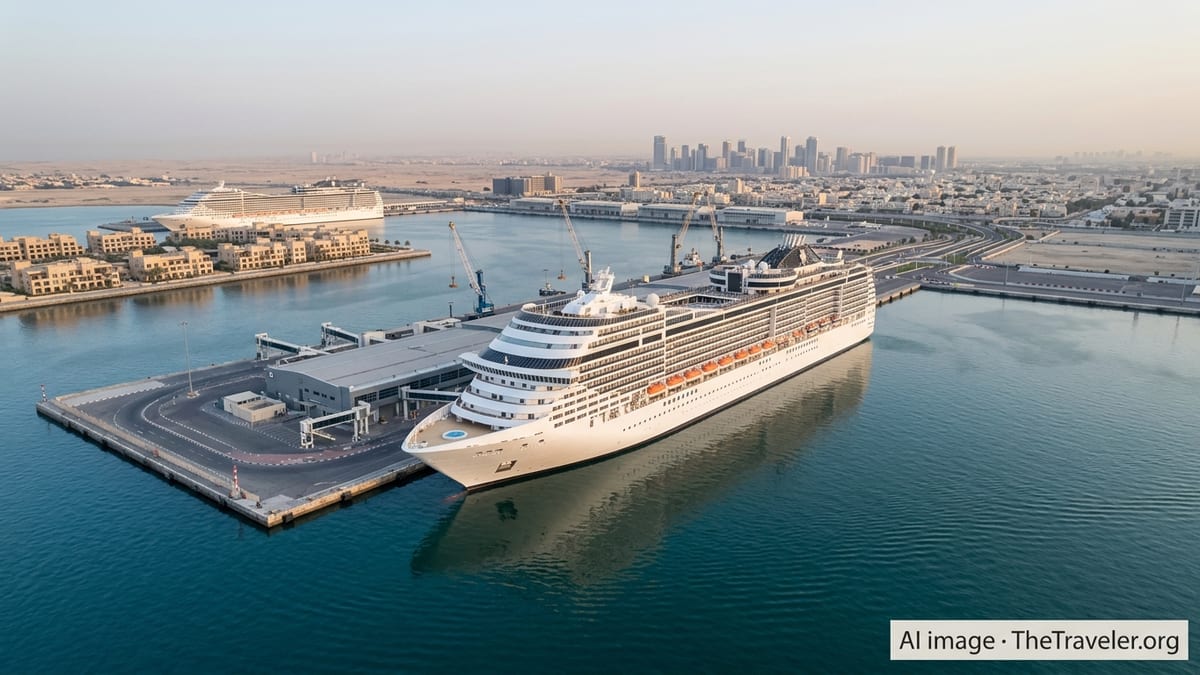
Conditional Hormuz Reopening Alters Regional Shipping Map
After months of disruption in one of the world’s busiest chokepoints, Iran has linked the gradual reopening of the Strait of Hormuz to a series of political and security conditions, including tighter control over ship routing and the exclusion of foreign military vessels from key lanes. Recent analyses describe the current phase as a cautious, managed reopening rather than a return to normal shipping patterns.
Publicly available briefings on the U.S.–Iran framework indicate that Tehran has agreed in principle to allow commercial flows for limited windows, backed by a toll and monitoring regime operated through a new Persian Gulf authority. At the same time, maritime advisories continue to flag elevated risks from sea mines, past attacks on merchant vessels and warnings from Iran’s Revolutionary Guard for ships to comply with routes it endorses.
Diplomatic reporting from recent Iran–Oman talks suggests that inbound traffic to the Gulf is expected to run almost entirely through Iranian territorial waters, with outbound corridors split between Iranian and Omani control. The prospect of an arrangement that effectively turns passage into a revocable privilege has heightened concerns in Gulf tourism hubs that rely on predictable, year-round sea access.
Industry updates from freight and insurance providers emphasize that container and tanker operators are still treating the strait as a constrained corridor, with many cargo flows diverted to ports on the Arabian Sea and the Gulf of Oman. That posture is now bleeding into the passenger segment, with cruise planners weighing whether seasonal calls near the Strait can be safely sustained.
Musandam’s Winter Season Faces New Strategic Vulnerability
The Musandam Peninsula, an Omani exclave jutting into the Strait of Hormuz, has long marketed its fjord-like khors, dolphin-watching excursions and traditional dhow cruises as a cool-season escape from hotter Gulf cities. Local tourism campaigns describe the main winter season as stretching from late October through April, when milder temperatures and calm seas underpin visitor demand.
Omani tourism authorities have positioned the dedicated “Musandam Winter” program as a cornerstone of the governorate’s economic strategy. The fourth edition of the season, running through the 2025–2026 winter, is set to feature more than 60 cultural and adventure events designed to boost occupancy at hotels and guesthouses and to increase local spending across transport and services.
Recent figures published in regional tourism bulletins show how closely Musandam’s fortunes are tied to maritime access. In 2024 the governorate received more than 45 cruise ship calls with over 58,000 passengers, alongside tens of thousands of visitors drawn to historic forts and coastal viewpoints. Many of these arrivals originate from Dubai- and Abu Dhabi-based itineraries that dip in and out of the Strait of Hormuz on short Gulf circuits.
With Iran asserting an expansive role over future transits through the strait and signaling that access can be tightened or eased depending on broader negotiations, Musandam’s exposure has become more apparent. Any renewed restrictions or security scares could quickly affect small-ship calls to Khasab and bookings for day cruises along Musandam’s intricate shoreline.
Gulf Cruise Lines Reassess Routes and Risk Calculus
For international cruise operators, the Strait of Hormuz has always been a highlight and a hazard: a gateway to dramatic scenery and culturally rich ports, yet also a corridor subject to periodic geopolitical shocks. The latest phase of conditional reopening has prompted itinerary planners to revisit their risk models for calls that pass close to Musandam.
Travel trade coverage of the Gulf market notes that even before the most recent tensions, some cruise brands had experimented with “Arabian Sea only” seasons, calling at ports such as Salalah, Muscat and Fujairah without entering the narrowest parts of Hormuz. The new conditions articulated by Iran, combined with security advisories that still reference past attacks on commercial vessels in nearby waters, make such alternatives more attractive for operators reluctant to add further uncertainty to their schedules.
Freight-sector analysis of the post-closure period points to a broader pattern of rerouting toward ports on the UAE’s Gulf of Oman coast and along Oman’s Arabian Sea seaboard, with cargo then moved overland into Gulf markets. While passenger shipping follows different dynamics, similar logic applies: operators can still offer regional exposure without threading the strait, at least until confidence in navigation safety and political predictability improves.
Specialist maritime publications have also highlighted reports of Iranian radio warnings to vessels at anchor off Musandam, instructing them to relocate to other anchorages closer to Dubai. Although these incidents have primarily involved smaller commercial ships, they underline how quickly the security picture around the peninsula can shift, and how sensitive the area is to real-time decisions by Iranian forces.
Oman Balances Tourism Ambitions With Maritime Uncertainty
Oman has spent years promoting Musandam as an integrated tourism destination, leveraging road links to the UAE, expanded domestic flight connections, and investment in small ports capable of handling both cruise and local excursion traffic. Government-backed plans describe tourism as a pillar of economic diversification for the sparsely populated exclave.
The conditional reopening of Hormuz adds a layer of strategic uncertainty just as Musandam’s winter program appears to be gaining traction. Travel planners note that while air and land routes provide some resilience, the most iconic experiences in Musandam rely on tranquil coastal waters that share the same geography now at the center of maritime negotiations.
Publicly available tourism strategies from Oman emphasize collaboration with regional partners to improve port infrastructure and visitor handling capacity. Those plans may now need to integrate more explicit contingency measures, including flexible event scheduling and diversified access routes, to reassure both international cruise brands and independent travelers tracking developments in the Strait.
Observers of Omani policy point out that Musandam’s position at the mouth of Hormuz is both an asset and a vulnerability. The same geography that brings visitors within sight of busy shipping lanes also situates the peninsula at the front line of any future tightening of transit conditions, whether through higher fees, route mandates or temporary closures.
Winter Bookings Caught Between Demand and Perceived Risk
As the November-to-April peak approaches, tour operators and hoteliers with a presence in Musandam are navigating competing signals. On one side, demand indicators for nature-based and small-ship cruising remain robust, especially among travelers seeking shorter, regional voyages from Gulf hubs. On the other, continuing headlines about negotiations over Hormuz and reports of lingering security incidents inject a perception of fragility into travel decisions.
Regional travel advisors report that some prospective visitors are paying closer attention to cancellation policies and the availability of overland alternatives via the UAE, even when booking sea-focused stays. Cruises that still include Khasab and other Musandam calls tend to highlight safety protocols and the possibility of last-minute itinerary adjustments subject to maritime conditions.
Analysts of Gulf travel flows suggest that, for now, the impact on confirmed winter bookings is likely to be uneven. Travelers already familiar with the region may differentiate between broader geopolitical narratives and on-the-ground conditions in specific destinations such as Musandam. First-time visitors, by contrast, may gravitate toward itineraries that avoid the strait altogether, at least until reports indicate a sustained period of stable passage and reduced tensions.
Looking ahead, the degree to which Iran’s conditions for reopening Hormuz evolve into a predictable, rules-based regime will be crucial for Musandam’s tourism ambitions and for Gulf cruise planners. A managed reopening that remains vulnerable to sudden reversals could keep winter seasons on edge, even as the peninsula continues to invest in becoming one of the region’s standout coastal escapes.
Will the Strait of Hormuz reopen after the US-Iran deal? - Brookings
4th Musandam Winter season to drive tourism growth - Oman Observer
Ocean freight impacts and Hormuz status update - Freightos
IRGC threatens ships at anchor off Musandam - The Maritime Executive