


More news on this day
A Houston Fire Department engine responding to a call collided with a METRORail train near downtown Houston on Friday evening, derailing the light rail vehicle and leaving one person hospitalized, according to published coverage.
Get the latest news straight to your inbox!
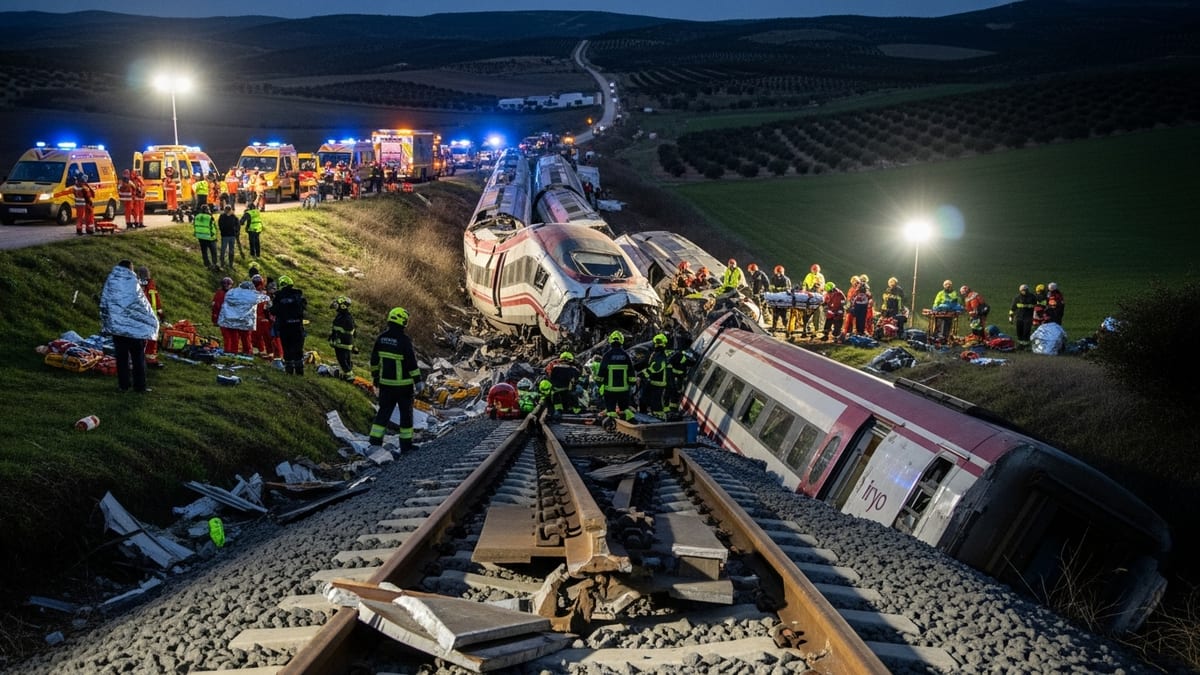
Collision Near Downtown Disrupts METRORail Service
Published reports indicate that the crash occurred in Houston’s Near Northside area, just north of downtown, at the intersection of Hogan Street and Main Street. The fire engine and the METRORail Red Line train came into contact in the middle of the crossing, causing the train to derail partially off the tracks.
Coverage from local outlets describes a significant emergency response as crews converged on the scene to secure the derailed train and assess damage to both vehicles. Initial information indicates that one person was transported to a hospital for treatment, while others at the scene were evaluated for possible minor injuries.
Publicly available information shows that rail service through the area was immediately disrupted. METRO arranged for bus shuttles to bypass the affected section while crews worked to re-rail the train and clear debris from the right of way, leading to delays for evening commuters and visitors traveling through the corridor.
Images shared by local media depict the front of the fire engine pressed against the side of the light rail train, with emergency personnel inspecting the undercarriage and track area. The visible damage appeared focused on the lead section of the train and the front of the fire apparatus.
Response Underway and Early Safety Questions
According to published reports, the fire engine involved was identified as Engine 9, a unit based in north Houston. The vehicle was reportedly operating with lights and siren activated while heading to an emergency call when the collision took place at the rail crossing.
Early accounts describe conflicting movements between the emergency vehicle and the METRORail train as they entered the intersection. Local coverage notes that investigators are reviewing on-board video from the train, as well as any nearby security cameras, to piece together the sequence of events and determine how both operators approached the crossing.
Publicly available information indicates that rail controllers temporarily halted additional trains on the Red Line segment around the crash site to allow responders space to operate safely. Crews inspected the track, overhead power system, and train wheels before any attempt to move the derailed cars was made.
Reports also mention that the fire engine suffered front-end damage but remained upright, while the train’s lead car slipped off the rails. Specialized equipment was brought in to lift and guide the light rail vehicle back onto the track once safety checks were completed.
History of METRORail Incidents and At-Grade Risks
The crash adds to a history of at-grade incidents involving Houston’s METRORail system, which operates primarily on surface streets through busy urban corridors. Background information on the system shows that trains share intersections with vehicle traffic and must navigate frequent cross-street movements.
Past coverage of METRORail operations has highlighted the challenges of mixing light rail vehicles with automobiles, commercial trucks, and emergency responders in dense areas. While the majority of trips are completed without incident, collisions have periodically occurred when vehicles enter rail crossings during train movements.
Transportation safety discussions in Houston have often focused on visibility at intersections, driver awareness of train movements, and adherence to traffic signals near the tracks. Because fire engines and ambulances sometimes travel against normal signal patterns while responding to calls, interactions with trains at crossings can present additional complexity.
Analysts routinely point to on-board cameras, data recorders, and intersection signal logs as important tools in reconstructing such crashes. These records are expected to play a central role in clarifying how the Near Northside collision unfolded and whether any procedural or engineering changes might reduce similar risks in the future.
Impact on Riders and Nearby Neighborhoods
The derailment occurred along a segment of the Red Line that connects residential neighborhoods north of downtown with the central business district and other key destinations. Reports indicate that the disruption forced riders to transfer to shuttle buses or seek alternate transportation, lengthening trip times on a busy travel evening.
Residents and businesses along the route experienced a heavy presence of emergency vehicles, blocked streets, and temporary detours as crews worked the scene. Access to some side streets near the rail alignment was limited while officials conducted documentation and cleared debris.
Published coverage suggests that METRO worked to restore regular service as quickly as possible, with rail operations resuming gradually after the derailed train was re-railed and removed. Riders were advised to allow extra time and to expect possible delays while equipment and track inspections continued.
The incident also drew renewed attention to pedestrian and motorist behavior near the corridor. Safety campaigns in Houston routinely urge people to avoid stopping on tracks, to look both ways for trains, and to obey traffic signals, guidance that takes on added urgency in the wake of a high-profile collision.
Ongoing Review and Possible Safety Improvements
Reports indicate that both the transit agency and the fire department have opened internal reviews into the circumstances of the collision. Such examinations typically look at operator training, communication protocols, and adherence to policies governing emergency responses through rail crossings.
Transit safety specialists often use major incidents as opportunities to reassess signage, pavement markings, and signal timing at complex intersections. In some previous cases, agencies have added additional warning lights, adjusted train speeds, or refined priority rules where emergency vehicles and trains may come into conflict.
Publicly available information shows that investigators are expected to review radio traffic, dispatch logs, and timeline data to determine how much notice each party had of the other’s approach. Findings from that analysis may guide recommendations on how to better coordinate between street-level emergency responses and fixed rail operations.
Until those reviews are complete, transportation observers note that drivers and riders will remain focused on the recovery of the person who was hospitalized and on efforts to prevent similar crashes along Houston’s expanding light rail system.