


More news on this day
Severe thunderstorms over Houston have triggered a cascading aviation breakdown, with mass cancellations at George Bush Intercontinental Airport rippling across United Airlines and American Airlines networks and disrupting travel plans worldwide.
Get the latest news straight to your inbox!
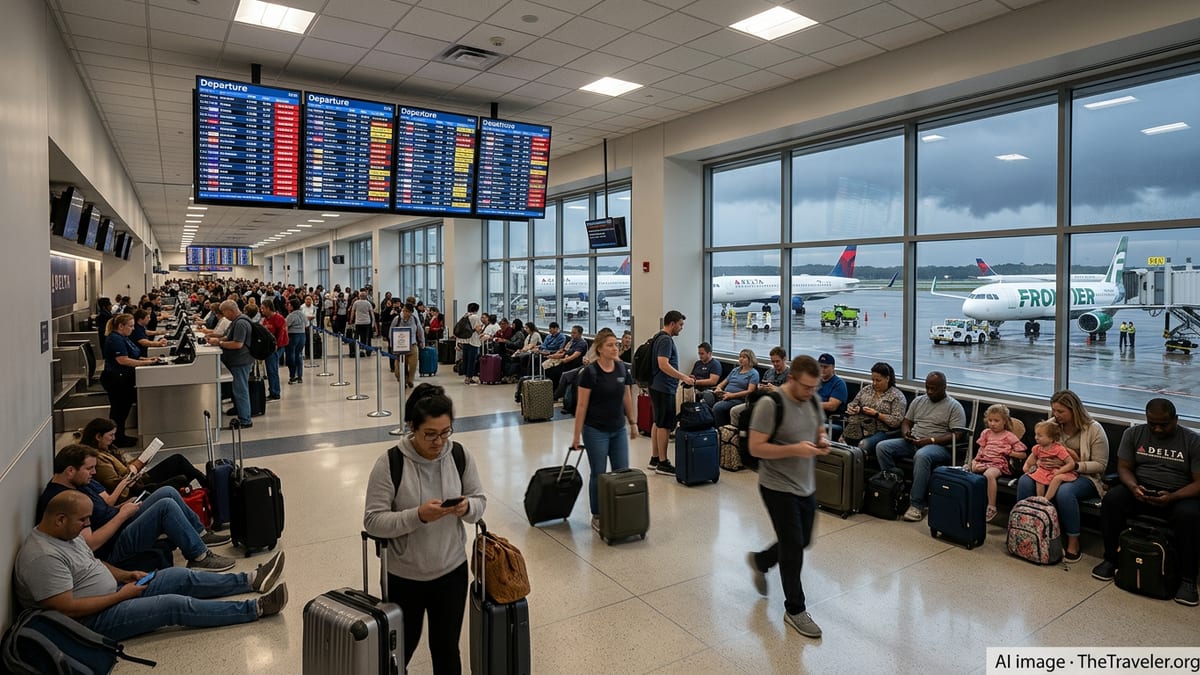
Storms Over Houston Spark Sudden Operational Breakdown
Thunderstorms moving through the Houston area over the weekend forced a ground stop at George Bush Intercontinental Airport, sharply limiting arrivals and departures and quickly overwhelming normal contingency plans. Local coverage indicates that traffic at the airport was repeatedly throttled as storm cells passed over critical approach and departure corridors, leaving aircraft and crews out of position across the region.
George Bush Intercontinental is one of United Airlines’ primary hubs, handling a dense schedule of domestic and long haul international services. When operations slowed and departures stacked up, the result was an immediate surge in delays followed by widespread cancellations as aircraft and crew duty limits were reached. The impact was magnified by ongoing construction and capacity constraints identified earlier this year in federal planning documents, which had already highlighted the airport as particularly vulnerable to disruption during peak traffic and adverse weather.
While some flights were able to depart during short weather windows, the resulting stop and start pattern led to congestion on taxiways and at gates, making it harder for carriers to recover once the heaviest storms moved on. Passengers arriving in Houston found themselves without onward connections, while others never left their origin airports as airlines began to preemptively cancel downline services.
United Hub Disruption Sends Shockwaves Through Global Network
As the largest carrier at George Bush Intercontinental, United bore the brunt of the immediate cancellations, with its hub effectively functioning at a fraction of normal capacity. Flight tracking boards showed waves of red across domestic routes into Houston, followed by thinning schedules on transcontinental and transatlantic services as equipment and crews became misaligned.
Reports from passengers and live flight data suggest that United responded with a mix of last minute cancellations, rolling delays and schedule thinning designed to preserve a smaller, more sustainable operation through the hub. Travel waivers issued earlier in June for severe weather in the Houston region had already allowed some customers to rebook, but the latest storm system caught many mid-itinerary, leading to missed connections and unexpected overnight stays.
The airline’s extensive international network from Houston meant that disruption rapidly extended far beyond Texas. Flights between Houston and major European and Latin American destinations saw late departures, diversions or cancellations, forcing rebookings through other United hubs and partner airlines. Travelers heading from Asia or Europe to secondary U.S. cities via Houston often found themselves rerouted through Chicago, Newark or Washington, further crowding those airports and tightening available seat capacity across the system.
American Hit by Knock-On Effects Across Texas and Beyond
Although American Airlines operates its primary Texas hub in Dallas Fort Worth rather than Houston, the carrier was far from insulated from the turbulence in the state’s airspace. Recent storms had already prompted American to issue travel alerts and adjust schedules across Texas, and the additional weather-driven strain around Houston contributed to new waves of cancellations and delays as the airline sought to rebalance aircraft and crews.
Published coverage of earlier severe weather events shows that American has increasingly relied on proactive cancellations to manage major storm systems, trimming schedules in affected regions to maintain reliability elsewhere. Over the past month, thunderstorms over Texas have repeatedly forced American to thin flights, particularly on short haul routes that connect into its Dallas Fort Worth hub. The latest Houston storm pattern compounded these pressures, as air traffic control restrictions and congested diversion airports limited rerouting options for both American and its competitors.
For passengers, the distinction between a Houston-centered United problem and a broader Texas weather issue was largely academic. Travelers on American reported multi leg journeys unraveling as inbound aircraft failed to arrive, crew rotations fell apart and aircraft were repositioned away from threatened corridors. Even when Dallas Fort Worth remained operational, limited airspace capacity and broader regional storm activity meant more cancellations and longer recovery times.
Global Passengers Confront Chain Reactions and Thin Resilience
The Houston disruptions highlighted how tightly coupled global airline networks have become, and how a localized weather event can quickly metastasize into a worldwide scheduling puzzle. A canceled regional flight into Houston often translated into an empty seat on a long haul departure, which then translated into missed onward connections for travelers continuing to Asia, Europe or South America.
Publicly available flight tracking data over the weekend showed significant knock on effects on routes far removed from Texas, including delayed departures from European gateways as carriers waited for connecting passengers and crews, and scattered cancellations on long haul services operated by alliance partners. Each missed connection added pressure to subsequent flights as airlines attempted to rebook stranded travelers into already busy peak summer loads.
Industry analysts note that these ripple effects are intensified during the northern summer travel season, when load factors are high and spare seats for reaccommodation are limited. Even modest weather events can produce outsized disruption when networks are running near capacity, leaving little buffer to absorb unexpected outages at a major hub such as Houston.
Stranded Travelers Face Long Lines, Limited Options and Rising Costs
For individual travelers, the macro level network story translated into full customer service lines, packed airport terminals and scarce near term rebooking options. Social media posts and traveler accounts from the past week describe customers waiting hours to speak with airline agents, only to be offered replacement itineraries departing one or two days later, sometimes from different airports.
With hotel rooms near major Texas airports filling quickly during the worst of the disruption, many travelers reported turning to more distant suburban properties or sharing accommodations with friends and family. Others opted to abandon air travel altogether for regional trips, choosing long distance drives or intercity buses rather than waiting for new flights. Additional out of pocket costs for last minute lodging, meals and ground transportation added to frustration, especially among passengers whose flights were canceled for weather related reasons that generally fall outside U.S. compensation rules.
Airlines emphasized flexibility policies through existing travel waivers, encouraging customers with nonessential trips to postpone travel or rebook to later dates where possible. Even so, the episode underscored how quickly severe weather can expose the limits of airline contingency plans, and how a single storm system affecting a vulnerable hub can cascade into days of difficulty for travelers far beyond the immediate impact zone.