


More news on this day
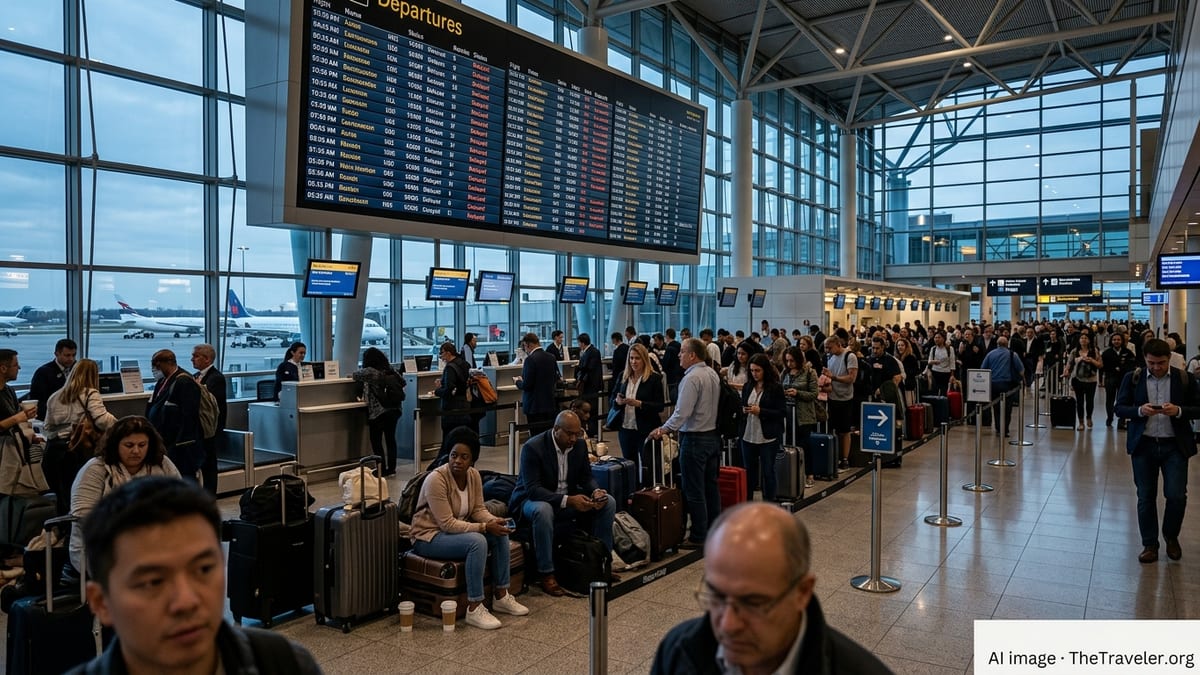
Travel plans across the Gulf and beyond were thrown into fresh uncertainty this week after Yemen’s Houthi movement targeted Saudi Arabia’s Abha International Airport with missiles and drones, triggering renewed government travel warnings and a second consecutive day of widespread flight cancellations.
Get the latest news straight to your inbox!
Missile and drone strike shuts Abha airport again
Publicly available reporting indicates that Abha International Airport in Saudi Arabia’s mountainous Asir region remained partially shut on Wednesday, July 15, after a Houthi missile and drone strike earlier in the week damaged airport infrastructure and forced inbound flights to divert. Regional news coverage describes the operation as one of the most serious escalations against the facility since a United Nations brokered truce in Yemen took hold in 2022.
Flight tracking data cited in regional media shows that on Tuesday at least 10 departures were cancelled in the hours after the attack, including services operated by Saudia, flynas, Flyadeal and flydubai. On Wednesday, Gulf-based outlets reported at least 11 departures from Abha listed as cancelled, extending the disruption into a second day and leaving hundreds of passengers needing rebooking on alternative routes.
The attack followed airstrikes on Sanaa International Airport in Yemen on Monday, which the Houthis blamed on Saudi forces. In response, Houthi military statements broadcast on aligned channels claimed responsibility for targeting Abha with a combination of ballistic missiles and drones, presenting the strike as retaliation and part of a broader campaign linked to the conflict over Yemen’s airspace and access for humanitarian flights.
Visual material carried by regional broadcasters and online platforms appears to show explosions and smoke rising from the Abha airport area around the time of the reported attack. While full damage assessments have not been made public, aviation notices and airline decisions to divert or cancel services indicate that key parts of the airfield were considered unsafe for normal civil operations for at least 48 hours.
Airlines cancel and divert services across the Gulf
Carriers serving Abha moved quickly to adjust schedules once the attack and temporary closure became clear. Reports from the United Arab Emirates note that a flydubai service from Dubai International to Abha on Monday diverted to Taif, another airport in western Saudi Arabia, after Abha’s airspace was closed at short notice. Additional flydubai rotations scheduled for Tuesday and Wednesday were subsequently cancelled.
Saudi airlines were also heavily affected. Local media and passenger accounts point to the cancellation of multiple Saudia, flynas and Flyadeal flights linking Abha with major domestic hubs such as Riyadh and Jeddah, as well as regional destinations in the Gulf. Egypt-based Ahram Online reported that Air Cairo suspended its Abha services from Tuesday, citing the airport’s closure and ongoing security concerns.
The cancellations have had knock-on effects for transit passengers using Saudi Arabia as a connection point. Travellers posting on aviation and travel forums in recent days describe itineraries involving Saudi stopovers being rebooked or rerouted, with some shifting to direct flights bypassing Saudi airspace where possible. Others report longer layovers or last-minute changes to departure times as airlines work within evolving operational constraints.
Although most disruptions have so far been concentrated on Abha and nearby routes, analysts note that Houthi warnings directed at international airlines to avoid Saudi airspace have the potential to influence scheduling decisions more broadly, particularly for carriers with flexibility to route flights through alternative regional hubs.
Governments tighten travel advice on southern Saudi Arabia
The latest Abha attack has prompted a rapid review of travel guidance by several governments. Updated advisories from Canada and the United Kingdom now highlight elevated risks in areas of Saudi Arabia bordering Yemen, with particular emphasis on airports and infrastructure that have previously been targeted by missiles and drones.
Canada’s travel advice for Saudi Arabia, revised on July 14, explicitly cautions against non-essential travel to Abha International Airport due to the risk of renewed strikes and potential for sudden flight disruptions. The advisory notes that military activity in the region can resume with little warning and may lead to airport closures, diversions or cancellations that strand passengers or separate them from checked baggage.
The United Kingdom’s guidance on regional risks in Saudi Arabia similarly underscores the history of cross-border attacks originating from Yemen and urges travellers to stay alert to developments in the southern provinces. While much of the existing wording predates the latest incident, recent public updates have drawn renewed attention to the pattern of Houthi launches targeting airports, civilian infrastructure and energy facilities inside the kingdom.
Media monitoring suggests that the United States has also strengthened its messaging on the security situation in southern Saudi Arabia, though exact wording varies between public travel advisories and security notices distributed through enrolment systems for citizens abroad. Collectively, the warnings reinforce a picture of heightened volatility around Abha and other locations near the Yemeni frontier.
Escalation raises wider concerns for regional aviation
The strike on Abha has revived long-standing concerns about the vulnerability of regional aviation to spillover from armed conflicts. Abha has been hit multiple times in previous years, including attacks documented by international monitoring bodies between 2019 and 2021, and the latest incident appears to signal that the facility remains within range of increasingly sophisticated Houthi weapons systems.
Recent coverage by international and regional outlets frames the Abha attack as part of a broader escalation involving airstrikes on Sanaa and tensions over control of Yemeni airspace. Analysts quoted in those reports argue that the pattern of tit-for-tat strikes increases the risk of miscalculation, with airports on both sides serving as highly visible and disruptive targets.
The warning from Houthi spokespeople for airlines to avoid Saudi airspace has further complicated risk assessments. While there is no indication that civilian aircraft cruising at high altitude are being directly targeted, the stated intention to continue striking Saudi airports has raised questions for route planners and insurers about exposure to ground-based attacks during approach and departure phases.
Aviation experts observing the situation point out that airlines have, in other regional crises, chosen to reroute flights around perceived hotspots even in the absence of formal airspace closures, balancing fuel costs and scheduling pressures against safety considerations and passenger confidence.
What travellers should know before flying through Saudi Arabia
For travellers holding tickets to or through Saudi Arabia in the coming days, the evolving situation around Abha underscores the importance of closely monitoring bookings and official advice. Public travel guidance from multiple governments now stresses the need to check with airlines before departure, particularly for itineraries involving airports in the south of the country or connections that rely on domestic feeder flights.
Passengers are being advised in open-source guidance and airline notices to ensure contact details are up to date in booking records so that carriers can issue real-time alerts about schedule changes. Flexible or refundable tickets, as well as comprehensive travel insurance that covers security-related disruptions, are being highlighted as useful safeguards when planning trips through potentially affected areas.
Travel industry commentary suggests that major international hubs such as Jeddah, Riyadh and Dammam continue to operate normally, with disruptions still largely localized around Abha and associated routes. However, observers warn that further military activity or additional attacks could prompt rapid changes in airline scheduling and government advisories, especially if targeting widens beyond a single airport.
With tensions between Saudi-aligned forces and the Houthi movement again in sharp focus, the situation remains fluid. Travellers with imminent plans are being urged by publicly available sources to stay informed through airline channels and official advisories, and to be prepared for last-minute adjustments as carriers and authorities respond to developments on the ground.